LAND & INGENUITY
Unusual places & landscapes
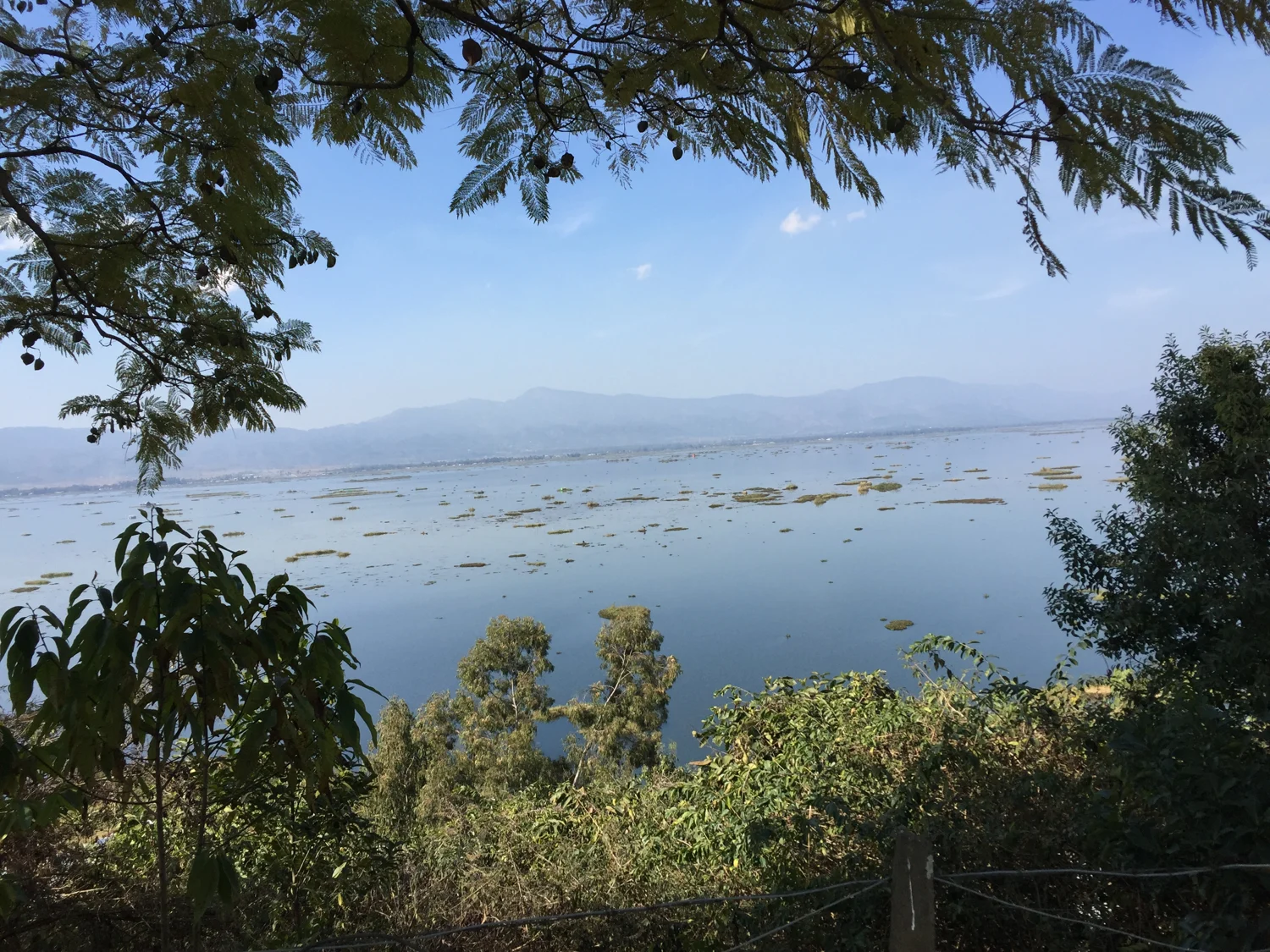
Root bridges shaped across generations, a meteorite crater and the floating wetlands of Loktak.
Read moreLOOK BEYOND THE FAMILIAR
Explore India through its living heritage, global contributions, culinary knowledge, family traditions and documented achievements.

Here, “unique” means distinctive in its setting, history or local expression. Many Indian traditions are also practised in Nepal, elsewhere in South Asia and by communities around the world. We explain the specific place or practice instead of assuming it exists nowhere else.
LAND & INGENUITY
Root bridges shaped across generations, a meteorite crater and the floating wetlands of Loktak.
Read moreEXPLORE THE HILLS
Compare celebrated destinations with lesser-known hill towns, valleys and plateaus, state by state.
Read moreMORE WAYS TO UNDERSTAND INDIA
THE PAST IN EVERYDAY LIFE
Discover how ancient learning, sacred sound and historic cities remain part of contemporary life.
Read moreMANY WAYS TO BELONG
Explore the languages and religious communities that make a single description of India feel incomplete.
Read moreKNOWLEDGE IN THE KITCHEN
How Indian cooking developed, why vegetarian traditions flourished, and how ingredients and techniques vary across regions.
Read moreGEOPOLITICS & HUMANITARIAN ACTION
Vaccine gifts, earthquake relief and support to neighbours reveal a practical dimension of India’s international role.
Read morePEOPLE, KNOWLEDGE & CONNECTIONS
How India-born professionals contribute to international science and engineering, and how migration connects economies.
Read moreASTRONOMY, CALENDARS & BELIEF
Explore how astronomical calculations and inherited ideas of auspiciousness give time a cultural character.
Read moreFAMILY, RESPECT & RECIPROCITY
Multigenerational households and respect for elders offer a perspective on belonging, supported by a specific international comparison.
Read moreSPECIFIC ACHIEVEMENTS, CLEAR MEASURES
Real-time payment volumes and a pioneering lunar landing show why national income alone cannot describe technological capability.
Read moreTHE PAST IN EVERYDAY LIFE
In India, an encounter with antiquity can begin with a voice, a lesson or a journey to a sacred city. The past survives through people who learn, practise and reinterpret inherited traditions. This living relationship is one of the most compelling ways to explore the country: history is present in everyday activity as well as in monuments and manuscripts.
Sanskrit: an ancient language and a living inheritance. Sanskrit is one of India’s ancient classical languages. Its Vedic form carries the hymns of the Vedas, while its later literary traditions encompass philosophy, poetry, drama, grammar, medicine, astronomy and mathematics. Pāṇini’s Aṣṭādhyāyī is a landmark in its grammatical tradition. Sanskrit continues to be studied, taught and used in worship, linking readers and practitioners with a long history of learning.
Devavāṇī — “language of the gods”. In Hindu tradition, Sanskrit is revered as Devavāṇī or Devabhāṣā, reflecting its sacred association with the Vedas, mantras and worship. This is a traditional religious designation. Alongside that sacred role, Sanskrit preserves a wide range of literary and intellectual works. Its continuing life can be encountered in a classroom, a manuscript or a recited prayer; Vedic chanting offers a particularly vivid example.
Vedic chanting offers a documented example. UNESCO describes a body of Sanskrit compositions reaching back more than 3,500 years and the specialised oral techniques used to transmit them. Training in pronunciation, tonal accents and recitation patterns helps carry this heritage between generations. This is evidence of a sustained tradition of learning, rather than proof that every modern Hindu ritual has remained identical since Vedic times.
Historic cities give continuity a physical setting. UNESCO describes Varanasi as one of the world's oldest continuously inhabited cities, where music, festivals and teaching remain active. Madurai Corporation describes its city as a major settlement for two millennia, with a continuing identity shaped by Tamil culture and pilgrimage. Their streets belong to modern residents as well as to remembered histories.
Continuity includes adaptation: a tradition may retain a name, text or sacred place while its participants and forms change. These examples reveal India's remarkable cultural depth without requiring a claim that it is the world's only living ancient civilisation. For a visitor, the rewarding question is how a particular practice is being passed on today. Our living-customs guide explores that relationship in greater detail.
MANY WAYS TO BELONG
India invites a traveller to keep learning how to read a place. Language, script, food and religious life can change across regions—and overlap within the same neighbourhood. Its diversity is not a sequence of sealed cultural compartments. A person may speak one language at home, another at work and draw on several traditions in everyday life.
Twenty-two languages are listed in the Constitution's Eighth Schedule. This is constitutional recognition, not a count of every language spoken in India or a declaration that all twenty-two are official languages of the Union. The 2011 Census received 19,569 raw mother-tongue returns: names supplied by respondents, rather than 19,569 separately verified languages. After scrutiny and grouping, its published language presentation contained 121 languages. These figures describe different stages of counting and should not be used interchangeably.
Religious plurality is another dimension. Pew Research Center's analysis of census data covers India's Hindu, Muslim, Christian, Sikh, Buddhist and Jain populations. A national label alone cannot describe the regional and community differences within any of these traditions. Our existing sacred-places section introduces places associated with several faiths, while Unity in Diversity explores the wider cultural picture.
Pluralism means more than counting differences: it concerns how people make room for them. Pew's 2021 survey found widespread support for respecting religions alongside substantial preferences for social separation. Recognising both gives readers a more useful account than assuming either perfect harmony or permanent division. Travel with curiosity: ask which languages people use, how they describe their community and what a local celebration means to them. Cultural boundaries do not follow a fixed fifty-mile rule.
KNOWLEDGE IN THE KITCHEN
A bowl of dal, a millet roti or a banana-leaf feast carries stories of farming, belief, trade and household invention. Explore how Indian cooking developed, why vegetarian traditions have a strong place in its history, and how local ingredients and techniques give regional cuisines their distinctive flavours.
Early farming created a varied foundation. Archaeobotanical research by Petrie and colleagues, published in Antiquity in 2016, identified dated evidence of rice, millets and tropical pulses at Indus settlements near Rakhigarhi. Different crops and growing seasons helped supply early urban communities. These finds establish the use of ingredients; they do not show that today's recipes existed unchanged thousands of years ago.
Belief and exchange transformed the kitchen. Over centuries, religious ideas, household customs, local harvests and access to ingredients shaped what people cooked. A 2022 socio-historical review by Antani and Mahapatra traces these influences alongside courtly and colonial encounters. Persianate and Mughal kitchens contributed to an expanding repertoire of rice dishes, rich sauces and sweets. Early modern trade brought American crops, including chillies, potatoes and maize, which Indian cooks adapted into regional favourites. What feels deeply local today can also tell a story of international exchange.
Practical knowledge accumulated through cooking. Fermentation is one clear example: CSIR–CFTRI research describes the transformation of rice-and-black-gram batter used for idli and dosa. Microbial activity changes its texture, acidity and flavour. Skills developed through observation and repetition can be investigated scientifically without assuming that every traditional explanation is a proven scientific mechanism.
Compassion is an important strand. Ahimsa, or non-harm, has influenced Jain, Hindu and Buddhist ethical thought, although food rules differ within and between these traditions. Harvard's Pluralism Project documents the especially close connection between Jain nonviolence and avoiding animal foods. In some Hindu devotional traditions, preparing vegetarian food and offering it to a deity makes cooking an act of worship. ISKCON Educational Services describes this relationship between food, ahimsa and prasad from its religious perspective.
Family upbringing, community expectations, religious observance and regional circumstances also matter. There is no single cause—or one dietary rule followed by every Indian. India has a substantial vegetarian population, but it is not accurate to say most Indians are vegetarian. Pew Research Center's 2019–2020 survey, published in 2021, found that 39% of adults described themselves as vegetarian; 81% observed some restriction on meat. Avoiding meat on particular days is different from avoiding it altogether. These are dated survey findings, not a current population census.
Pew also found strong variation by region and religion. Vegetarian traditions deserve appreciation alongside an honest account of India's many food cultures. Encouraging a plant-rich meal works best as an invitation grounded in flavour, compassion and evidence, while respecting people's circumstances and choices.
Climate and crops help explain regional differences, but trade, migration and community traditions shape them too. The following examples are starting points, not fixed menus for everyone in a region.
North: Wheat breads, pulses and dairy feature prominently in many northern kitchens. Punjab's winter pairing of sarson ka saag and makki ki roti combines mustard greens with maize bread. Its flavour and seasonality offer a different experience from a rice-centred southern feast.
South: Rice, pulses and fermented batters take many forms, alongside distinct millet traditions. Kerala's vegetarian sadya brings rice together with dishes such as parippu, sambar, avial and thoran, with coconut used in several preparations. Karnataka's Udupi vegetarian cooking and Telangana's rice, millet and pulse traditions show why the South cannot be reduced to one cuisine.
East: Rice, lentils and vegetable preparations sit alongside important fish and other animal-food traditions. Bihar's litti with sattu filling and vegetable chokha offers a plant-rich example; Odisha's pakhala and Bengal's panta bhat show different local expressions of soaked or fermented rice. These preparations illustrate how a familiar staple can be transformed by technique.
West and the northwest: A Gujarati thali assembles vegetables, pulses, breads, rice and accompaniments, often balancing sweet, sour and savoury tastes. Rajasthan's ker sangri, made from a local shrub berry and khejri pods, connects cooking to an arid landscape. These differ from the coastal food traditions of Goa and Maharashtra: western India also has longstanding seafood and meat cuisines.
The Northeast adds further variety: Assam's rice cakes, or pitha, and dishes called khar introduce another vocabulary of ingredients and techniques. Assam is only one part of this diverse region. Exploring a specific community's food is more revealing than treating an entire direction on the map as one culinary identity.
GEOPOLITICS & HUMANITARIAN ACTION
A country's global contribution can be seen in what it does when others face an emergency. India's vaccine manufacturing, medical teams, rescue personnel and financial assistance have supported countries through specific crises. These examples deserve attention on their own evidence, with a clear distinction between gifts, sales and repayable support.
India did supply COVID-19 vaccines free of charge. The Ministry of External Affairs' Vaccine Maitri table, dated 15 June 2023, records approximately 15.13 million doses as grants. Its total of approximately 301.25 million doses also includes about 234.09 million commercial doses and 52.03 million supplied through COVAX. The grants were gifts; the entire export total was not a donation. This dated record illustrates both humanitarian assistance and India's role as a manufacturing and supply partner.
Türkiye and Syria, February 2023: Operation Dost sent Indian search-and-rescue teams and medical support following the earthquakes. The official 8 February account describes a 30-bed Army field hospital for Türkiye, staffed by a 99-person team, and emergency medical supplies delivered separately to Syria. These were concrete contributions to relief alongside the work of local responders and other countries.
Nepal, November 2023: India's embassy reported more than 34 tonnes of emergency relief delivered following the Jajarkot earthquake by 21 November. The fourth consignment included medical supplies based on needs communicated by the Nepal Medical Association.
Sri Lanka, 2022: The Indian High Commission records roughly US$4 billion in crisis assistance, including credit facilities, a currency swap and deferred payments supporting essential imports. This was substantial support, but describing the whole package as a cash donation would conceal its financial structure.
Ahimsa: strength guided by care. The idea of ahimsa, or non-harm, gives Indian ethical thought a powerful question: how can we act without causing unnecessary suffering? In Jain practice, it reaches into daily choices and care for living beings. Mahatma Gandhi made nonviolence central to political resistance, showing how the pursuit of justice could be joined with restraint. The United Nations observes his birthday, 2 October, as the International Day of Non-Violence. This is an enduring Indian contribution to the world’s search for peace.
A prayer whose concern embraces everyone. The Sanskrit prayer Sarve bhavantu sukhinah expresses a wish for the happiness and health of all, and for freedom from suffering. Its appeal does not stop at a national border or a religious community. Another cherished expression, Vasudhaiva Kutumbakam, presents the world as one family. The verse associated with the Maha Upanishad contrasts a narrow division between “ours” and “others” with a generous understanding of human belonging. These are philosophical and spiritual invitations to widen our compassion; they continue to appear in India’s public language of cooperation.
The Preamble: dignity and belonging in a diverse republic. India’s Constitution describes a secular democratic republic and places justice, liberty, equality and fraternity at its foundation. The Preamble includes freedom of belief and worship, equality of status and opportunity, and respect for individual dignity. Article 14 guarantees equality before the law; Article 15(1) prohibits the State from discriminating against citizens solely on grounds of religion, race, caste, sex or birthplace. Article 25 protects freedom of conscience and religious practice, subject to its stated limits. These are constitutional commitments against exclusion, not a claim that prejudice has disappeared from society.
World peace has a specific constitutional home. Article 51, a Directive Principle, asks the State to pursue international peace and security, fair relations between nations, respect for international law and treaties, and arbitration of international disputes. The Preamble sets out the republic’s foundational ideals; Article 51 expressly addresses its responsibilities towards peace abroad.
Coexistence in diplomacy. Panchsheel, formally expressed in the 1954 India–China agreement, sets out mutual respect for sovereignty and territorial integrity, non-aggression, non-interference, equality and mutual benefit, and peaceful coexistence. India’s Ministry of External Affairs also identifies anti-colonialism and opposition to racism among the strands of its foreign policy. These principles offer a standard by which international conduct can be judged.
Empire and conquest: a careful historical comparison. British and French colonial expansion, Alexander of Macedon’s conquests in the ancient Greek world, and the territorial expansion of Qing rulers in China are documented histories. Each belongs to particular states, rulers and periods. India’s own past also includes expanding kingdoms: Rajendra Chola I’s naval campaign against Srivijayan ports in Southeast Asia in 1025 is a clear example. It would therefore be inaccurate to say that India, across its entire history, never pursued conquest. Earlier kingdoms must also be distinguished from the modern Republic of India.
India’s heritage offers something more meaningful than a claim of a flawless past: influential traditions of nonviolence, prayers for universal welfare, and a constitutional vision of equal dignity and peaceful relations. The humanitarian assistance described above gives this aspiration a practical expression. Its promise is an India that strengthens its own people while contributing to the well-being of others.
PEOPLE, KNOWLEDGE & CONNECTIONS
India's international influence also travels with people: their education, work and ability to build connections across countries. The contribution is broader than a few prominent executives. Workforce statistics help make that scale visible without relying on unsupported claims about the nationality of entire companies or research agencies.
The US National Science Foundation's Science and Engineering Indicators 2026, using 2023 American Community Survey data, reports 1,041,654 India-born workers in US STEM occupations. Of these, 727,625 worked in science and engineering occupations, making India the largest birthplace group in that foreign-born occupational category. The reported figures for China and Mexico in that category were 309,759 and 128,863 respectively.
These counts concern birthplace, not ancestry, current citizenship or where every qualification was earned. They are evidence of a major India-born contribution to a particular workforce—not a measurement of national intelligence or a claim that all those workers were trained entirely in India. Their work also reflects opportunities, institutions and colleagues in their destination country.
The World Bank's updated World Development Indicators discussion reports approximately US$138 billion in remittance inflows to India in 2024. Remittances connect overseas earnings with households at home. They come from workers across many occupations and must not be treated as an earnings figure for scientists or software professionals alone.
Migration can create channels for collaboration, investment and the exchange of ideas, while also raising questions about retaining skills at home. The useful ambition is to strengthen both India's domestic opportunities and the relationships its diaspora builds abroad. This is shared human achievement: celebrating Indian contributions does not require erasing the contribution of international teams.
ASTRONOMY, CALENDARS & BELIEF
A date can carry more than a number. In many Hindu traditions, time is understood through festivals, seasons, observances and the suitability of a moment for a particular ceremony. This gives the calendar a place in family memory and religious practice. It is one Indian expression of meaningful time, rather than a worldview shared identically by everyone in India or absent everywhere else.
The India Meteorological Department's Positional Astronomy Centre publishes the Rashtriya Panchang, a standardised almanac begun in 1957–1958. IMD describes computer calculations based on modern astronomy for sunrise, moonrise, celestial positions, tithis, nakshatras and other calendrical quantities. These provide a mathematical framework for locating events in the cycles of the Sun and Moon.
India's calendar traditions are varied, including solar and lunisolar systems. The familiar five-part Panchang considers the weekday, tithi, nakshatra, yoga and karana. These are calendrical categories; yoga here is not the physical practice of yoga. For the way lunar dates shape festivals, continue to our festival-calendar guide.
A shubh muhurta is a time regarded as favourable within a religious or astrological tradition. The practitioner almanac Drik Panchang documents the use of location, calendrical factors and traditional rules when selecting marriage times, and notes differences of opinion between authorities. Some families follow these recommendations closely; others combine them with practical circumstances or do not use them.
Astronomy can calculate a celestial position; interpreting it as auspicious is a further cultural or astrological judgement. The precision of the calculation does not by itself demonstrate that the chosen minute causes an event to succeed. Likewise, personal religious observance should not be confused with a spacecraft's engineering schedule: ISRO's Chandrayaan-3 updates describe orbital manoeuvres, braking operations and mission constraints. The richness here lies in understanding how measured time and meaningful time can coexist.
FAMILY, RESPECT & RECIPROCITY
A home shared across generations can bring childhood, working life and old age into daily conversation. Relatives may pool expenses, share childcare, care for an older person and pass on stories or practical skills. This is a valuable possibility within India's family traditions: belonging can involve mutual responsibility as well as individual achievement.
Pew Research Center's 2020 analysis found that two-thirds or more of people aged 60 and above in India lived in extended-family households, compared with 6% in the United States. The study defined such households to include relatives such as grandchildren or adult children's spouses. Its underlying censuses and surveys date from 2010–2018; this is a historical comparison, not a 2026 headcount.
That is a substantial difference in living arrangements. It does not prove that every Indian elder receives good care or that an older American living separately is lonely. Pew also discusses how income, longevity and public support influence the ability to maintain a separate home. Household structure is one part of wellbeing, not a complete measure of it.
In some Hindu communities, charan sparsh—touching the feet of parents, elders or teachers—expresses respect and a request for blessings. BAPS's explanation describes the elder responding with a blessing. This is a participant tradition's account of the gesture's meaning, not evidence of a physical transfer of energy. Its practice varies, and respect can also be expressed through words, attention and practical care.
Interdependence is strongest when it is reciprocal. Elders can share experience and memory, while younger relatives bring new knowledge and support. Living together is one arrangement; families who live apart can also maintain close relationships. Our living-customs guide explores the gesture and its place in everyday relationships.
The constructive lesson is to make room for lasting relationships, shared care and the dignity of older people. A family ideal works better when responsibilities are shared fairly and members have a voice, privacy and freedom of choice. Neither India nor the countries grouped as 'the West' follows one universal family model. The evidence supports appreciating India's extensive family networks; it does not support a promise that they eliminate loneliness or a claim that independence elsewhere means abandoning one's parents.
SPECIFIC ACHIEVEMENTS, CLEAR MEASURES
Countries can lead in a particular technology or achievement while facing serious development needs in other areas. The strongest comparisons name the measure, the year and the source. India's record offers examples that are impressive without needing a blanket ranking of entire societies.
ACI Worldwide and GlobalData's 2024 Prime Time for Real-Time report records 129.3 billion real-time payment transactions in India in 2023, approximately 49% of the global total. India ranked first by that transaction count, ahead of every individual market studied. The report also states that real-time transactions accounted for 84% of India's electronic payments, compared with 8% in Europe in 2023.
This is a dated comparison of payment categories and transaction volumes. It is not a comparison of transaction value, household wealth or every aspect of banking. ACI's India profile describes the contribution of the Unified Payments Interface, introduced in 2016, alongside the earlier Immediate Payment Service. The broader real-time total should not be labelled UPI transactions alone.
On 23 August 2023, Chandrayaan-3 achieved a successful lunar soft landing. ISRO's science-data portal describes India as the fourth country to achieve a soft landing on the Moon and the first to land in its southern high latitudes. This precise description matters: it was not a landing at the exact geographic south pole.
The achievement demonstrates an important capability in mission design, engineering and scientific investigation. It does not establish leadership in every branch of space science, nor does it require treating international cooperation as a weakness. India's accomplishments are worth understanding in their own technical and human detail.
LIFE, FAMILY & BELONGING
These guides focus on Hindu traditions. A textual ideal, a regional custom and what one family does today may differ. There is no single ceremony followed by every Hindu.
CUSTOMS & TRADITIONS
Explore Hindu childhood samskaras as family milestones, with regional variations and meanings that extend beyond any single ceremony.
Read moreCUSTOMS & TRADITIONS
Fire, seven steps, a drawn curtain and a marriage pendant: discover how different communities give a wedding its particular language.
Read moreCUSTOMS & TRADITIONS
Understand final rites, mourning and continuing remembrance through belief, regional practice and the needs of bereaved families.
Read moreCUSTOMS & TRADITIONS
Look closely at the everyday skills and gestures through which people express respect, welcome and continuity.
Read moreFAITH & GATHERING
Sacred rivers, traditional accounts and a gathering with several regional settings.
Read moreREMEMBRANCE
How a fortnight in the religious calendar becomes a time for remembering ancestors.
Read moreLIVING HERITAGE
State-wise performance traditions, community histories and stories.
Read more