Andhra PradeshKuchipudi
A Telugu dance and dance-drama tradition with a history connected to Kuchipudi village. Expressive storytelling, rhythmic footwork and characterisation distinguish its repertoire. The shift from troupe-based drama to the modern solo stage is part of its history, not a loss of one permanently fixed original form.
Read more
Andhra PradeshVeeranatyam
A vigorous devotional performance associated with Veerabhadra and Shaiva traditions. Percussion, forceful movement and ritual settings give it a distinctive character. Narratives of Shiva’s anger explain its religious meaning; they should be identified as sacred stories rather than dated accounts of the dance’s creation.
Read more
Arunachal PradeshAji Lhamu
A Monpa dance-drama tradition related to Tibetan cultural worlds. Costumes, song, character roles and narrative performance make it more than a sequence of steps. Its presentation varies with the community and occasion; a festival-stage excerpt cannot convey the whole dramatic tradition.
Read more
Arunachal PradeshPonung
An Adi performance tradition linking collective movement with the singing of narratives. Community participation and the role of a lead singer are central. Its importance lies in transmitting memory and knowledge as well as providing entertainment; performers’ own explanations are essential to understanding particular songs.
Read more
AssamBihu
Lively group movement, song and instruments such as the dhol and pepa are associated especially with Bohag Bihu. Dance expresses youth, seasonal renewal and social life within a wider agricultural festival cycle. Stage competitions and global performances are newer settings for a tradition with varied local roots.
Read more
AssamBagurumba
A Bodo dance known for graceful group movement and colourful dokhona dress. Nature-inspired gestures and coordinated patterns are commonly highlighted in descriptions of the form. Its relationship to Bodo community life matters as much as its familiar nickname, the butterfly dance.
Read more
BiharJat-Jatin
A folk narrative of a couple’s relationship, often concerned with separation, livelihood and domestic life. Song and dialogue carry social experience as well as emotion. Local versions vary; reducing it to one universal romantic legend hides the different circumstances in which performers tell the story.
Read more
BiharJhijhiya
A group performance associated with the goddess and the autumn festive season in parts of Bihar and neighbouring regions. Dancers may balance perforated pots containing lamps. Collective song, movement and local beliefs give the performance a ritual setting, while staged versions adapt it for new audiences.
Read more
ChhattisgarhPanthi
A devotional dance associated with Satnami communities and the teachings of Guru Ghasidas. Group formations, rhythm and demanding physical coordination support songs about faith and social ideals. Its community history should remain visible when it is presented as a general symbol of Chhattisgarh.
Read more
ChhattisgarhRaut Nacha
A dance associated especially with Raut or Yadav communities and devotion to Krishna. Sticks, rhythmic footwork and group movement draw on pastoral identity and seasonal celebration. Performances connect community memory, religious storytelling and public gathering.
Read more
GoaFugdi
A women’s song-and-dance tradition performed in circles or other formations, often relying on voices and rhythmic breathing rather than a large instrumental ensemble. Village celebrations, religious occasions and shared work histories shape its repertoire. Its oral transmission makes a precise founding date difficult to establish.
Read more
GoaDekhni
A Goan song-and-dance tradition whose musical history reflects encounters among local Indian and Portuguese-influenced forms. Narrative songs, expressive gestures and staged presentation are important. Individual songs have different stories, so a single popular lyric should not be used to explain every performance.
Read more
GujaratGarba
Circular movement around a lamp or other sacred centre expresses devotion to the goddess, especially at Navratri. Clapping, changing patterns and collective participation make the form both devotional and social. UNESCO recognises Garba as living intangible heritage; recognition does not freeze its many local styles.
Read more
GujaratDandiya Raas
Pairs or groups strike decorated sticks in coordinated patterns, accompanied by music and changing formations. It shares Navratri spaces with Garba but is not identical to it. Regional traditions, devotional associations and modern event formats all contribute to contemporary practice.
Read more
HaryanaPhag
A springtime folk performance associated with the month of Phalguna and the festive atmosphere around Holi. Song, playful exchange and group movement express rural social life. Clothing and musical accompaniment vary according to locality and whether the performance is community-based or staged.
Read more
HaryanaDhamal
A vigorous group dance linked to rural celebration and masculine performance traditions in Haryana. Percussion and energetic movements are prominent. Claims of a single ancient military origin need evidence; its living importance can be understood through the communities that continue to perform it.
Read more
Himachal PradeshNati
A family of regional group dances rather than one identical choreography. Linked lines or circles, measured steps, local dress and music make participation central. Kullu, Kinnaur and other areas preserve distinct forms, demonstrating how mountain cultural identities remain connected without becoming uniform.
Read more
JharkhandChhau
A dance tradition shared across Seraikella in Jharkhand, Purulia in West Bengal and Mayurbhanj in Odisha. Martial movement, narrative and powerful bodily expression are important. Seraikella and Purulia traditions use masks; Mayurbhanj generally does not. UNESCO recognises the three-style tradition as intangible heritage.
Read more
OdishaPaika Nrutya
A martial performance associated with the memory and skills of Paika warrior communities. Weapons, shields and forceful movement shape its visual character. Its historical connection with regional military life should not be confused with the claim that every modern performance reproduces one specific battle.
Read more
KarnatakaYakshagana
An elaborate theatre tradition combining sung narration, dialogue, dance, costume and makeup. Epic and Puranic stories unfold through interactions between performers and musicians. Overnight community performances and shorter modern presentations offer different experiences of a richly dramatic form.
Read more
KarnatakaDollu Kunitha
A drum-dance tradition strongly associated with Kuruba communities. Large drums, coordinated rhythm and collective movement create its distinctive impact. Devotional settings, community identity and contemporary performance circuits all help explain its continuing importance.
Read more
KeralaKathakali
A dance-drama form using highly developed gesture, facial expression, music, costume and makeup to stage narrative. Character types are signalled through visual conventions, but understanding a performance requires more than identifying a colour. Training, musicians and the interpretive skill of the actor are central.
Read more
KeralaMohiniyattam
A classical dance tradition known for flowing movement and a distinctive rhythmic and expressive vocabulary. Its modern repertoire and institutional history developed through revival, teaching and experimentation. Mythic associations with Mohini provide religious imagery, not a complete historical explanation of the form.
Read more
KeralaTheyyam
A ritual performance tradition of northern Kerala in which costume, face painting, music and movement accompany the manifestation of a deity or sacred figure. It is not simply a stage dance. Community rights, hereditary roles and the ritual setting matter; visitors should follow local guidance.
Read more
Madhya PradeshMatki
A regional folk dance associated with the Malwa area, often featuring women balancing decorated pots. Controlled movement, community celebration and local dress shape performances. Stage adaptations may differ from the form encountered in family or village occasions.
Read more
Madhya PradeshJawara
A devotional performance associated with seasonal goddess observances in parts of central India. Sprouted grain, carried offerings, singing and movement can connect cultivation with ritual renewal. Names and ceremonial details vary locally, so one account should not be applied to every community.
Read more
MaharashtraLavani
A song-and-performance tradition known for strong rhythm, expressive delivery and the dholki. Its repertoire includes love, humour, social commentary and devotion. Women performers’ labour, artistry and social circumstances belong in its history alongside the familiar costumes and stage imagery.
Read more
MaharashtraKoli dance
Group performances associated with fishing communities often draw on rowing, the sea and coordinated work. They are expressions of coastal identity as well as entertainment. Contemporary choreographies vary, and no single staged routine represents the daily life of all Koli communities.
Read more
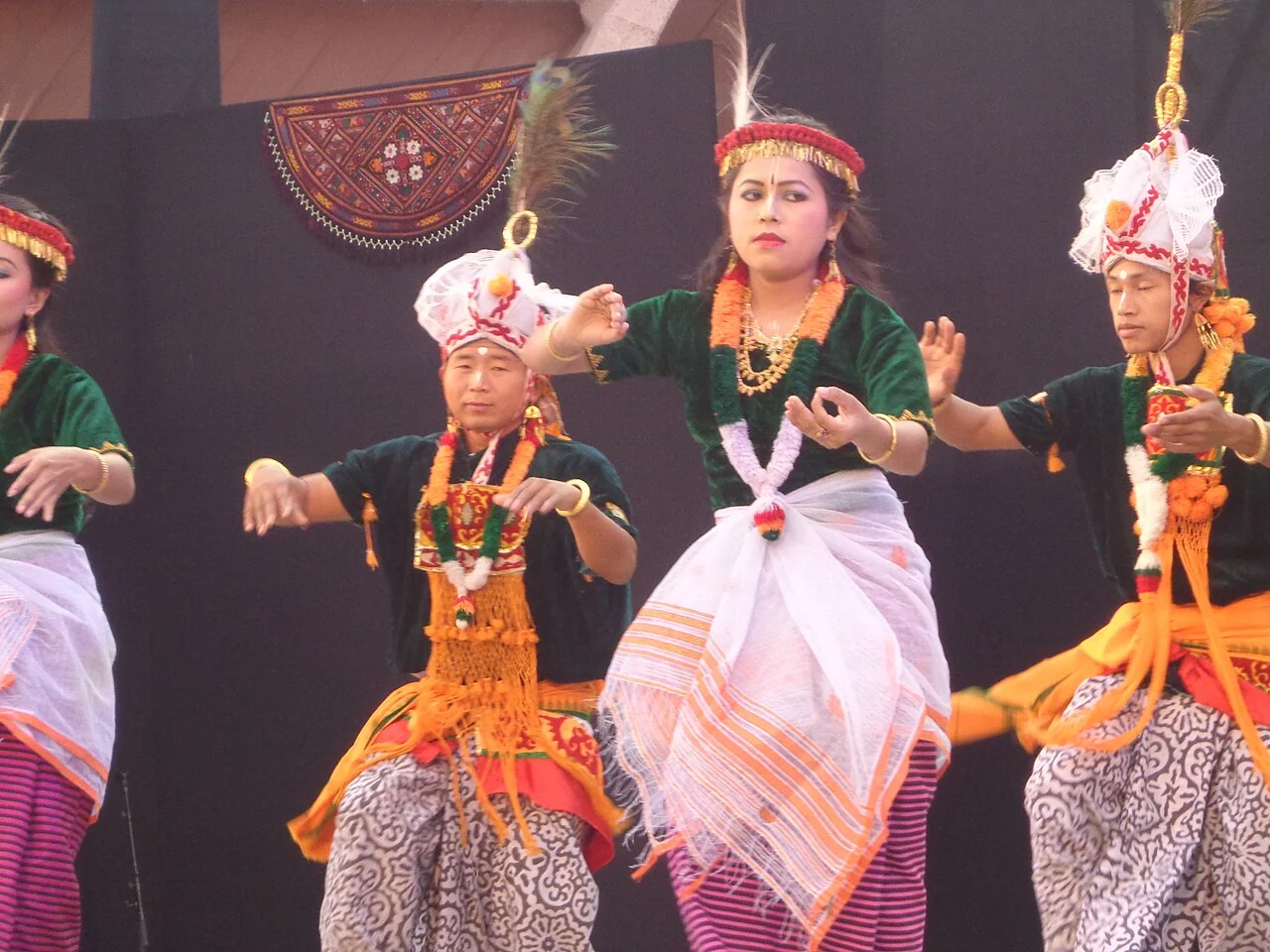
ManipurManipuri dance
A broad performance world whose well-known classical repertoire includes Vaishnava ras traditions and dynamic percussion practices. Meitei sacred traditions such as Lai Haraoba have their own identities and should not be collapsed into the same category. Costume, movement and ritual context vary by form.
Read more
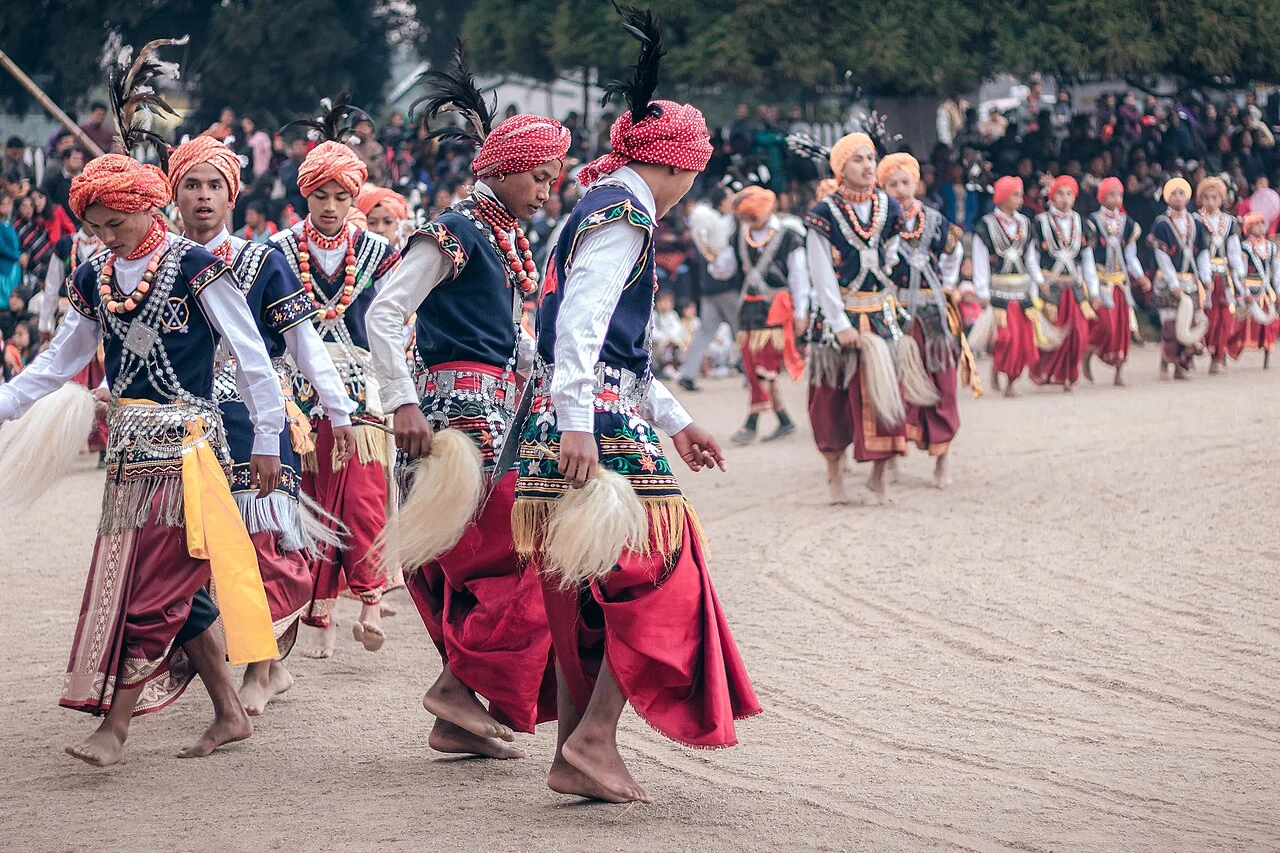
MeghalayaWangala dance
Movement and drumming accompany the Garo harvest festival of Wangala. Large public ensembles make its rhythms widely recognisable, while village observances preserve distinct settings and meanings. The festival cannot be understood solely as a tourism performance.
Read more
MizoramCheraw
Dancers coordinate their steps with bamboo poles opened and closed in rhythmic patterns. Precision, cooperation and timing are essential. Although often called the bamboo dance, Cheraw is embedded in Mizo cultural life and has developed through changing ceremonial and public settings.
Read more
NagalandChang Lo
A performance tradition associated with the Chang Naga community. Group movement and ceremonial dress express community memory, with martial associations in many descriptions. The histories and meanings of different Naga traditions should be distinguished instead of presenting all as one tribal dance.
Read more
OdishaOdissi
A classical dance tradition with a distinctive use of stance, torso movement and expressive storytelling. Temple, mahari and gotipua histories contributed to its modern formation, alongside twentieth-century reconstruction and teaching. Sculpture offers important visual comparisons but does not record a complete choreography.
Read more
OdishaGhumura
A drum-based performance especially associated with Kalahandi. The instrument is worn by the performer, joining percussion with movement and group formation. Martial imagery and community festival settings are both important to how the form is remembered and practised.
Read more
PunjabBhangra
A vigorous Punjabi performance tradition associated with agricultural celebration and later transformed by stage, recordings and diaspora culture. The dhol is central to many presentations. Contemporary Bhangra is a dynamic global genre as well as a regional cultural expression.
Read more
PunjabGiddha
A women’s group performance built around movement, clapping and short sung verses or boliyan. Humour, affection and social commentary make it a space for expressive voice. Its everyday observations are as important as the colourful visual forms familiar from festival stages.
Read more
RajasthanGhoomar
A group dance known for turning movement and the circular flow of skirts. It is associated with several community histories and with festive occasions. Regional variations should be respected; presenting it only as a royal court spectacle leaves out wider participation.
Read more
RajasthanKalbelia
A performance tradition associated with Kalbelia communities, combining song and distinctive movement. Its public life is tied to changes in livelihood and cultural representation. UNESCO recognition highlights the bearers of the tradition, whose knowledge extends beyond a recognisable costume or dance pose.
Read more
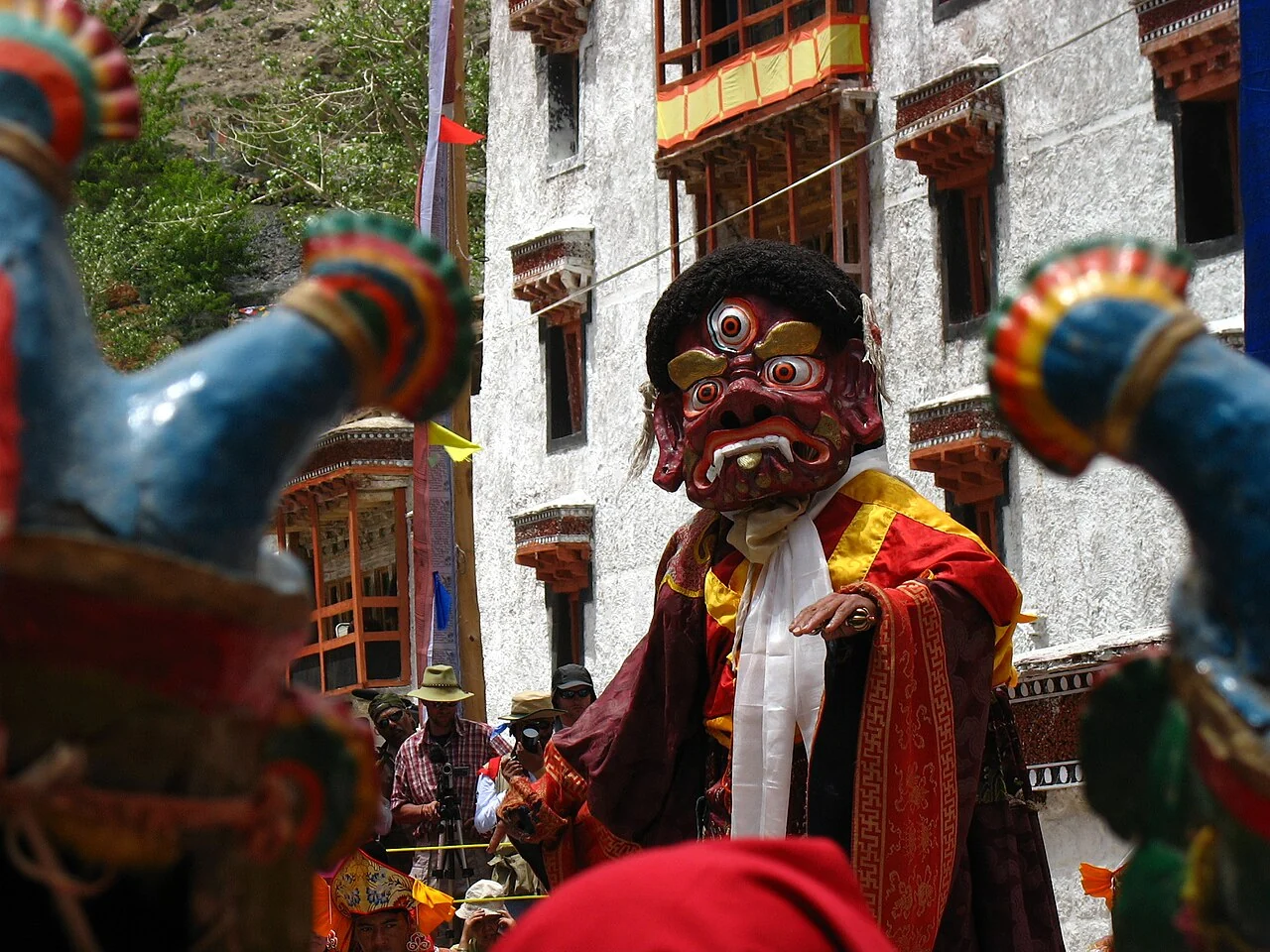
SikkimSingi Chham
A masked performance representing the snow lion, a figure with religious and regional symbolism in Himalayan Buddhist worlds. Elaborate costume and coordinated movement create its dramatic presence. The relevant festival or monastery provides the best context for understanding a particular performance.
Read more
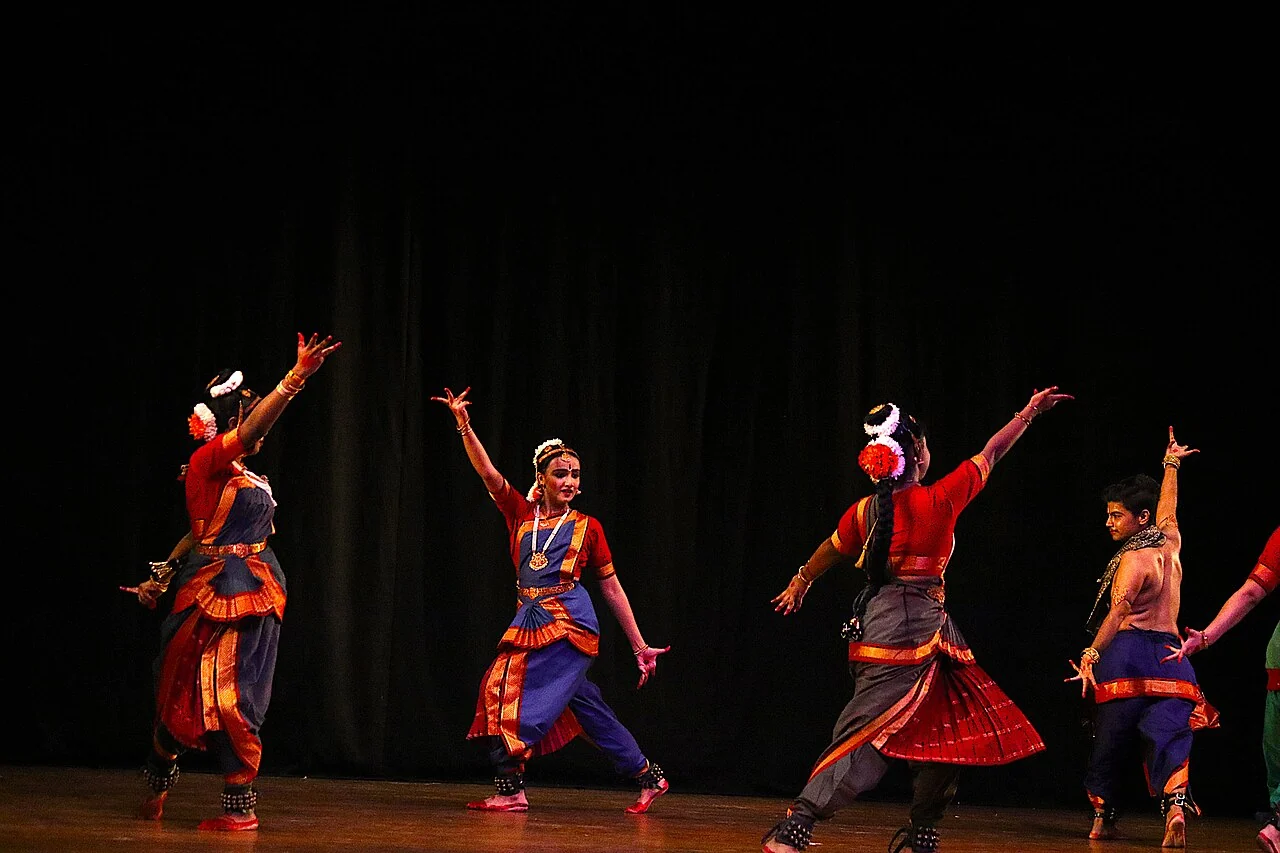
Tamil NaduBharatanatyam
A classical dance form shaped by older temple and court performance traditions, hereditary artists and major twentieth-century changes. Rhythmic movement and abhinaya work with music and poetry. Its modern history includes difficult questions about caste, gender, respectability and who received credit for preserving the art.
Read more
Tamil NaduKaragattam
A balancing performance involving decorated pots, with devotional and entertainment forms. Music, dexterity and bodily control are prominent. Its relationship with local goddess worship differs from professional stage adaptations; the setting helps explain which meanings are being emphasised.
Read more
TelanganaPerini Shiva Tandavam
A vigorous Shaiva dance form associated in modern revival with the heritage of the Kakatiya period. Rhythmic energy and devotional interpretation are central. Surviving sculpture, textual references and modern reconstruction should be distinguished when discussing its history.
Read more
TelanganaLambadi dance
Group dances of Lambadi or Banjara communities are associated with shared celebration, dress and ornament. Song and coordinated movement express social identity. Communities live across several states, and the regional label here is an entry point rather than an exclusive geographic boundary.
Read more
TripuraHojagiri
A performance associated with Reang or Bru communities, especially noted for controlled balancing and movement. Accompaniment and ceremonial contexts are part of its meaning. The performers’ skill should be understood within a living community tradition, not simply as an acrobatic attraction.
Read more
Uttar PradeshKathak
A classical performance tradition shaped by storytelling, devotional settings, courts and modern teaching lineages. Rhythmic footwork, turns, improvisation and expressive interpretation work with music. Lucknow and Banaras are important centres, while Jaipur and other traditions show that Kathak is not confined to one state.
Read more
Uttar PradeshRaaslila
Devotional theatre associated especially with Krishna in the Braj region, combining song, dialogue and enacted narrative. Seasonal and community settings shape its presentation. It should be distinguished from similarly named ras traditions elsewhere, including those of Manipur and Gujarat.
Read more
UttarakhandChholiya
A Kumaoni performance with martial imagery, swords and shields, often associated with wedding processions. Its movement and music connect public celebration with regional memory. Local forms and performance roles vary across communities.
Read more
UttarakhandJhora
A Kumaoni group dance in which linked participants move together to song. Collective rhythm and shared participation are central to its social character. Lyrics and occasions can range across devotion, seasonal celebration and community life.
Read more
UttarakhandLangvir Nritya
An acrobatic performance tradition involving demanding movements around a pole, associated with parts of Garhwal. Balance, strength and musical accompaniment distinguish it. It should be observed in an appropriate organised setting rather than imitated without specialist training.
Read more
UttarakhandJagar
A ritual tradition of sung invocation and the awakening of deities or ancestral powers. Music, oral narrative and ritual specialists are central. Although movement may occur, describing Jagar simply as a folk dance misses its religious and social purpose.
Read more
West BengalPurulia Chhau
The masked Purulia form of Chhau uses vigorous movement, spectacular headgear and epic or Puranic narratives. Mask-making and musicians are integral to the performance economy. It is one branch of a wider tradition shared with Seraikella and Mayurbhanj.
Read more
West BengalGambhira
A performance tradition associated with the Malda region, using song, dialogue and often satire to discuss social concerns. Religious festival settings and public commentary intersect. Its humour can provide a way to address everyday problems and unequal power.
Read more
No matching entries. Try a different name or clear a filter.