Distinctive does not mean exclusive
A tradition can be strongly associated with India without being absent everywhere else. Hindu communities practise and reinterpret their traditions across the world, as Harvard's Pluralism Project documents. Within India, the form and meaning of a custom also depend on language, community, region and personal choice. “Unique India” is an invitation to notice this richness, not a claim that neighbouring cultures or overseas communities have no related practices.
A useful approach is to ask who keeps a practice alive, how it is learned and what it means to its participants. This reveals a living relationship rather than an exotic object.
Namaste and respect for elders
Namaste is a greeting often accompanied by joined palms, as the Cambridge Dictionary explains. It offers a familiar example of how a word and gesture can work together. Greetings vary across India's languages and communities; no visitor needs to assume that one salutation replaces every other way of saying hello.
BAPS's account of charan sparsh describes touching the feet of parents, elders or teachers as an expression of respect and a request for blessings. This is a participant tradition's explanation of its meaning. Claims about invisible energy transfer are religious interpretations, not established scientific mechanisms. A gesture of respect should be welcome to both people; a verbal greeting or another comfortable form of acknowledgement can also be appropriate.
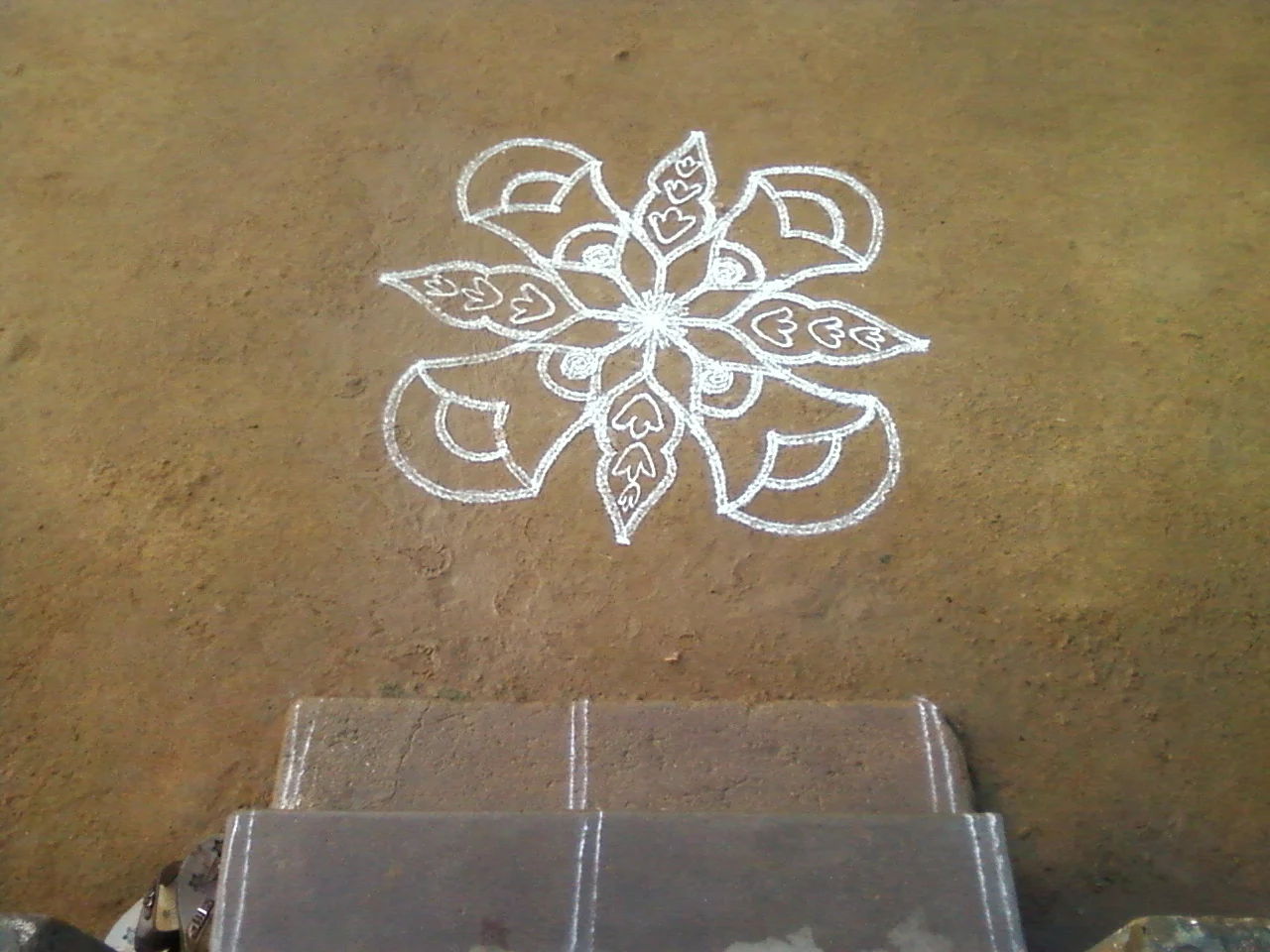
Kolam: a threshold becomes a drawing
Sangeet Natak Akademi's documentation of kolam describes Tamil Nadu's threshold-drawing tradition. Designs learned from elders are renewed through everyday practice, often by women. The drawing belongs to a particular place and moment: the entrance becomes a space where skill, memory and a sense of welcome meet.
Look at the relationship between the repeated elements and the whole design. A pattern can be learned, remembered and recreated without becoming an identical copy each time. Ask the maker about its name or occasion before assigning a symbolic meaning. Do not step across a fresh drawing merely to take a photograph. Related floor-art traditions have their own names and histories; they should not all be flattened into one interchangeable design.
Vedic chanting: heritage carried in sound
UNESCO's account of Vedic chanting highlights the training used to preserve pronunciation, tonal accents and patterns of recitation. Its importance lies in skilled oral transmission as well as the religious significance of the words. Listening carefully means attending to sound and discipline, rather than treating a chant as background music.
These examples preserve different kinds of knowledge: a greeting is shared between people, kolam is practised through the hand, and chanting is learned through voice and hearing. If a practitioner welcomes questions, ask how they learned and what is changing. Avoid recording a private ritual or lesson without consent. Respect for living heritage begins with respect for the people whose work sustains it.
Sources & further reading
Read the evidence and traditions behind this guide.
Sources reviewed in October 2026. Historical accounts describe the settings and communities identified in the text.