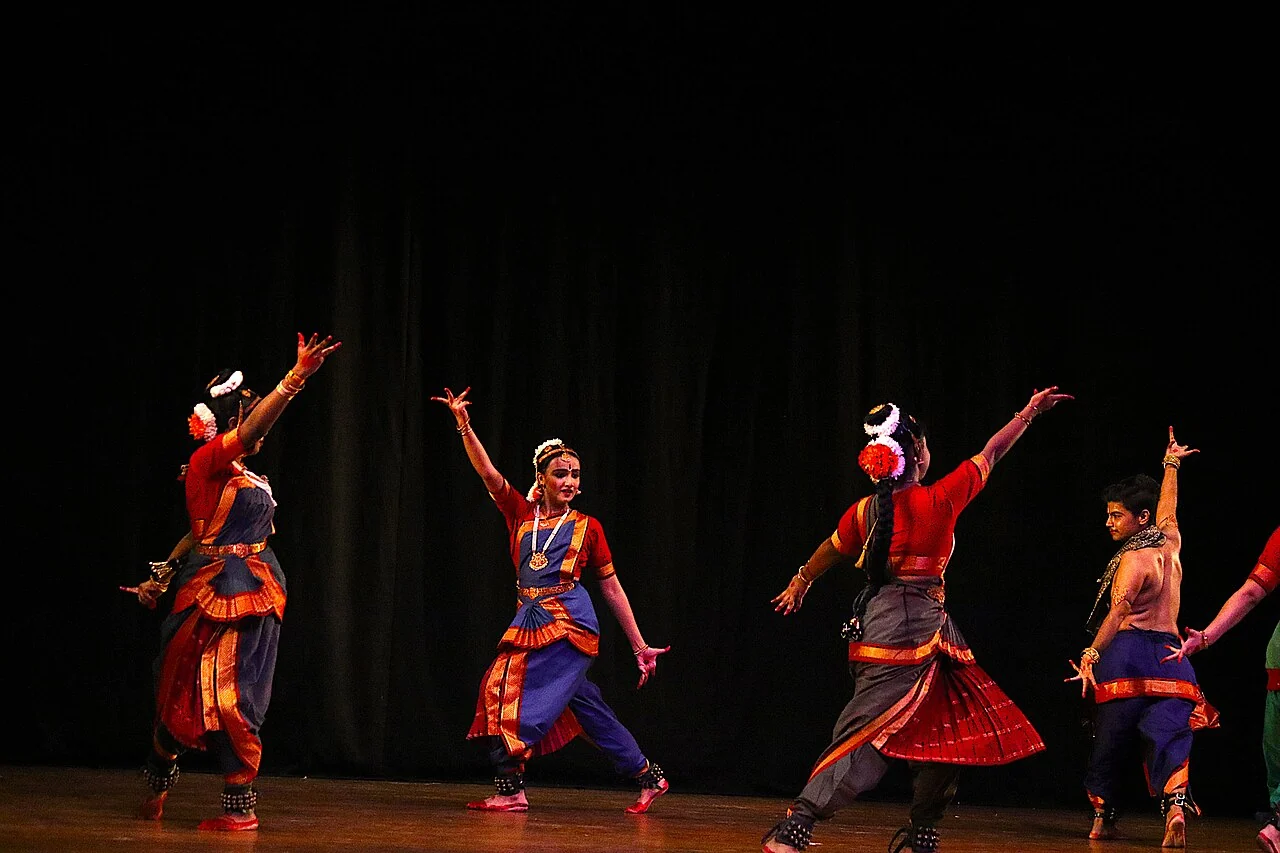
Diversity is the starting point
India contains many languages, religions, food traditions, landscapes and ways of life. Unity need not mean that these become identical. It can mean shared institutions and responsibilities that allow people to belong without surrendering their differences.
Markets, neighbourhoods, schools, migration, music, cinema and public service bring communities into daily contact. Shared culture grows through these encounters as well as through formal declarations. India’s history includes both cooperation and conflict; a meaningful ideal must recognise both.
Religions born here, traditions welcomed here
Buddhism grew from the teaching of Siddhartha Gautama, the Buddha, in the ancient subcontinent. He was born at Lumbini, in present-day Nepal; Bodh Gaya in Bihar is associated with his awakening and Sarnath with his first teaching. These places show why ancient religious history should be understood across modern borders. Compassion, ethical conduct and the path beyond suffering became teachings that travelled widely across Asia.
Jainism also developed in the subcontinent. Mahavira was its twenty-fourth Tirthankara, a great teacher who renewed and organised a path already understood by Jains as ancient. Rishabha, or Adinath, is the first Tirthankara in the traditional cycle. Calling Mahavira the sole inventor of Jainism would overlook that tradition. Ahimsa, self-restraint and attention to the many-sided character of truth remain central themes.
Sikhism arose in Punjab through Guru Nanak and the succeeding Gurus. Hindu traditions developed through many communities and texts rather than one founder. Islam, Christianity, Zoroastrianism, Judaism and many indigenous religious traditions also form part of Indian life. Communities retain distinct beliefs while sharing neighbourhoods, languages, work and public institutions.
North, south, east, west—and the Northeast
Moving across India changes the sound of conversation, the grain on the plate, the drape of clothing and the rhythm of the festive year. The examples below are invitations to explore, not fixed rules about everyone living in a region.
Migration and urban life continually mix these patterns. A person’s language, clothing or meal does not reliably identify their religion or tell us everything about their home region. Explore the state-wise festival guide and dance traditions to follow individual examples.
What makes this unity distinctive
India’s particular combination of scale, long histories, linguistic variety, religious traditions and everyday cultural exchange is remarkable. Diversity is found elsewhere too; appreciating India does not require denying other societies their richness.
Unity becomes visible when people cooperate across these differences: studying in the same institutions, trading in the same markets, celebrating with neighbours and caring for one another. Shared citizenship gives a civic framework, while regional traditions keep their own voices. The phrase unity in diversity is most meaningful when belonging does not demand sameness.
Vasudhaiva Kutumbakam
वसुधैव कुटुम्बकम्
The world is one family.
The expression occurs in the Mahā Upanishad, commonly numbered VI.72 in editions, within a contrast between narrow and generous understandings of belonging. It has become a widely used statement of global responsibility. Its ethical force lies in widening concern beyond the boundary of “my people.”
This is an aspiration that people can choose to practise. It is not proof that every ruler or person in Indian history always acted peacefully.
Voices of openness and collective purpose
Rigveda 1.89.1 invokes openness to beneficial thoughts coming from every direction. Rigveda 10.191 calls for people to move, speak and deliberate together. In their original settings these verses have particular ritual and social contexts; modern readers also use them to reflect on cooperation and dialogue.
The familiar prayer beginning “Sarve bhavantu sukhinah” expresses a wish for everyone’s well-being. Its exact attribution is frequently repeated inaccurately online, so it should not automatically be labelled a verse of the Brihadaranyaka Upanishad. Respect for a prayer includes care about its source.
An ideal with many Indian voices
Compassion and welfare are also expressed through Buddhist concern for sentient beings, Jain ahimsa, Sikh seva and sarbat da bhala, Islamic charity, Christian service and many indigenous traditions. Tamil literature’s “Yaadhum Oore, Yaavarum Kelir” offers another influential language of wide belonging. No one community owns compassion.
Sanskrit texts contribute important resources, while India’s plural heritage gives the conversation many voices. Comparing them thoughtfully means respecting both shared values and real differences.
What welfare for the world asks of us
The ideal becomes concrete through education, care for elders, equal dignity, disaster assistance, environmental responsibility and respectful disagreement. Protecting cultural diversity also means allowing people to interpret tradition differently or choose a nonreligious life.
A country’s policies and institutions should be assessed by their actions, not assumed to fulfil an ancient phrase automatically. Unity in diversity is continuing work: curiosity, fairness and care make it real.
Sources & further reading
Read the evidence and traditions behind this guide.
- Ministry of Culture · Vasudhaiva Kutumbakam catalogue
- Ministry of Culture · Together We Art
- IGNCA · Vedic Heritage Portal
- Vedic Heritage · Samhitas
- UNESCO · Lumbini, birthplace of the Buddha
- UNESCO · Mahabodhi Temple, Bodh Gaya
- Harvard Pluralism Project · Tirthankaras
- Harvard Pluralism Project · Mahavira
- Ministry of Tourism · Regional festivals