Try a date, then understand it
Choose a date and Indian city to see the lunar calendar at local sunrise. Purnima is a tithi; Ashwini is a nakshatra; Kartik is a month. Ashwin, the month before Kartik in the usual sequence, is not another spelling of Ashwini.
A calendar is a set of rules
A Gregorian date counts civil days in a solar calendar. Many Hindu festivals use lunisolar calendars that combine lunar months with the seasonal year. Some regional observances use solar month transitions. Islamic observances use a lunar calendar without the same seasonal adjustment; Christian, Sikh, Buddhist, Jain and indigenous calendars follow their own conventions.
There is no single formula that gives the correct local celebration date for every Indian festival.
Tithi: a lunar day is not always 24 hours
A tithi is based on each 12-degree increase in the Moon’s angular separation from the Sun. Thirty tithis span a lunar cycle. Since the apparent motion is not uniform, a tithi does not last exactly one civil day. It may begin in the afternoon, span a sunrise, or finish before the next sunrise.
A panchanga commonly records five elements: tithi, weekday, nakshatra, yoga and karana. Festival rules may consider the tithi prevailing at sunrise, moonrise, evening or another ritual time. Location therefore matters.
A simplified teaching model, not a live panchanga or festival-date calculator. Actual calculations use precise astronomical positions and local observance rules.
Reading the five Panchang elements
Vara is the weekday. Tithi divides the Moon–Sun longitude difference into 12° steps. Nakshatra places the Moon in one of 27 sidereal sectors, each 13°20′. Yoga divides the sum of sidereal Sun and Moon longitudes into the same-sized steps. Karana is a 6° step, half a tithi.
For example, a Moon–Sun difference of 170° falls in Shukla Purnima (168°–180°). At 180°, Krishna Pratipada begins. A full-moon photograph alone cannot tell you which civil date a festival authority will choose.
Shukla and Krishna paksha
Shukla paksha is the waxing fortnight, from after new moon toward full moon. Krishna paksha is the waning fortnight, from after full moon toward new moon. Each contains fifteen tithis. Purnima completes the bright fortnight; amavasya completes the dark fortnight. “Bright” and “dark” describe lunar phases, not moral worth.
Ekadashi is the eleventh tithi of either fortnight; pradosha observances are associated with trayodashi and twilight. Chaturthi observances may refer to either fortnight depending on the festival. These are recurring tithis, not additional pakshas.
Why month names and dates differ
Amanta calendars end the month at new moon; purnimanta calendars end it at full moon. The name attached to the same waning fortnight may therefore differ. A lunar year is shorter than the seasonal year, so lunisolar systems periodically insert an additional month, adhika masa. Regional solar calendars use a different framework.
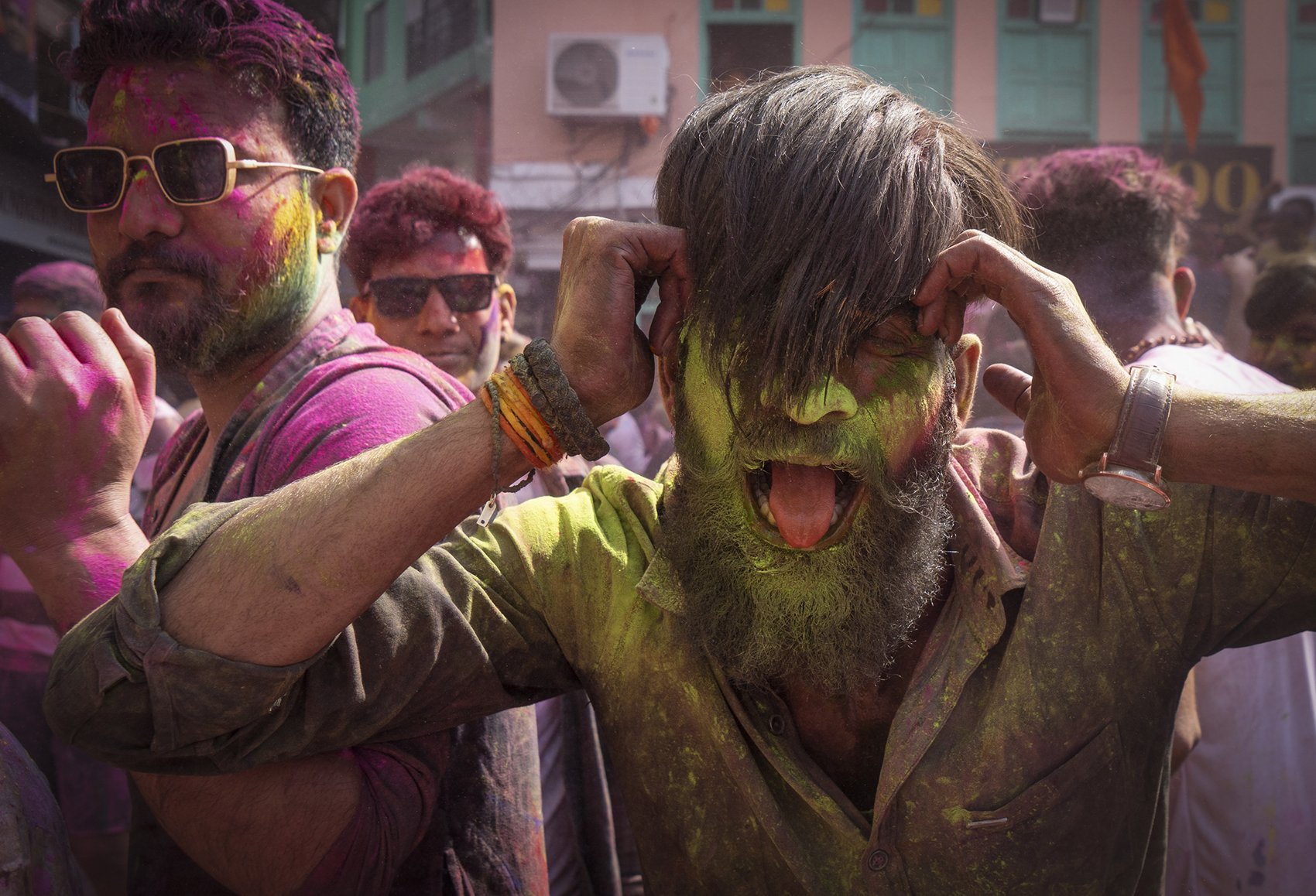
Holi commonly centres on Phalguna purnima, while Diwali traditions centre on the autumn new-moon period with regional variations. Makar Sankranti is linked to a solar transition rather than a particular lunar tithi. Eid dates depend on the relevant lunar-calendar authority and sighting or calculation practice. Christmas is observed on fixed church-calendar dates, with differences between traditions.
The Moon’s role: astronomy and belief
The Moon supplies a visible cycle that people used to organise time. Sun–Moon geometry can be calculated scientifically, and lunar gravity contributes to tides. Those facts do not establish that a particular tithi guarantees prosperity, changes everyone’s personality, or makes a ritual cure illness. Religious auspiciousness is a matter of tradition.
Use the official organiser or temple calendar for the final date of an event. Tourism pages can be useful introductions but may retain an earlier year’s dates. The festival calendar separates reviewed dates from customary seasons; the Panchang is a calculation aid, not a universal festival-date authority.
From an astronomical position to a festival date
- Calculate the sky: find Sun and Moon longitudes for a precise instant.
- Find the interval: locate the tithi’s beginning and end, rather than assigning it a fixed 24 hours.
- Choose the calendar convention: identify the fortnight and month in the relevant regional system.
- Apply the observance rule: check the required ritual period, such as sunrise, evening or moonrise, in the relevant location.
- Check the local calendar: temple, community and organiser decisions settle practical dates and programmes.
Imagine a tithi beginning at 3 pm on one day and ending at 11 am the next. A sunset-based observance and a sunrise-based observance can select different civil dates while referring to the same tithi. This is an illustrative example, not a rule for every festival.
Fairs, harvest gatherings and cultural festivals may instead follow seasonal, community or organiser schedules. See dated celebrations and regional traditions for their sources.
Pitru Paksha in context
Pitru Paksha is the ancestral remembrance period associated with a particular waning fortnight, usually in September–October. Its month name can differ between amanta and purnimanta conventions. Read the detailed guide to Pitru Paksha for practices and regional variation.
Sources & further reading
Read the evidence and traditions behind this guide.