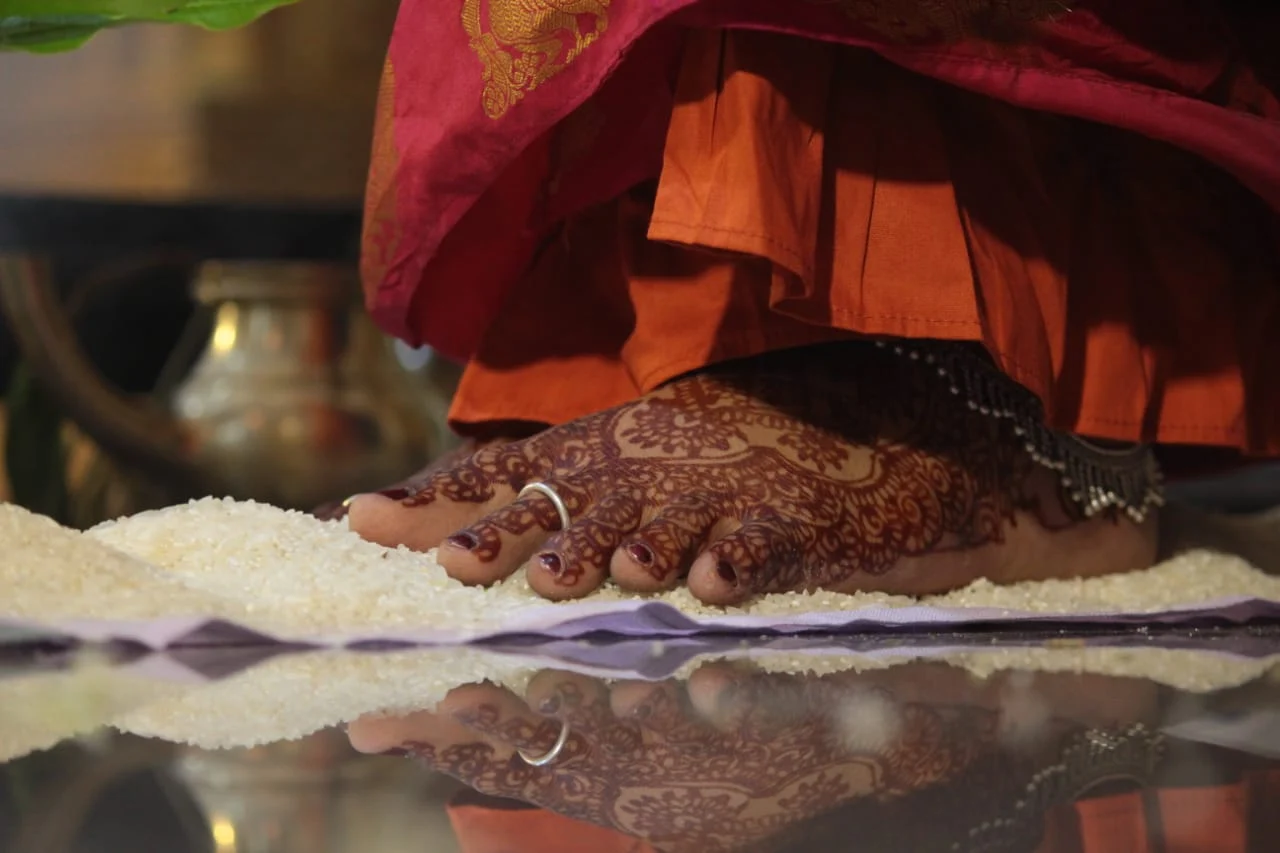
Why one wedding cannot stand for them all
A Hindu wedding is best understood through the couple and their community. A ceremony can draw on inherited religious rites, regional practices and choices made by the families. The Sanskrit term vivaha names marriage as a life-cycle rite, but it does not describe one identical sequence performed everywhere. Hindu traditions also continue outside India, as documented by Harvard's Pluralism Project. Their international presence means that these customs should not be labelled exclusive to modern India's borders.
To read a wedding thoughtfully, separate the ritual action from its local explanation. Who participates? Which words are spoken? What do the couple understand the promises to mean? These questions reveal more than a list of supposedly universal rules.
The examples below deliberately focus on a few well-documented actions. They are starting points for comparison, not a complete catalogue of weddings across India. Regional labels can help orientation, but even neighbouring households may tell different stories about their celebrations.
Fire and the language of commitment
The Pluralism Project's account of Agni explains the longstanding place of the fire altar in Hindu domestic rituals, including marriage. Fire is understood religiously as a carrier of offerings and prayers. It is a sacred presence within the ceremony, rather than merely a decorative centrepiece.
The historical Kolaba gazetteer lists panigrahana, taking the hand, and saptapadi, seven steps, within a local marriage sequence. Seven steps and the popular expression “seven rounds” should not automatically be treated as an identical ritual in every tradition. This article explains cultural forms; it does not determine the legal validity of a marriage.
Maharashtra: the antarpat moment
The Beed district gazetteer describes an antarpat, a curtain placed between the couple while auspicious verses are recited. Its withdrawal marks a carefully staged meeting of their gaze, followed by the exchange of garlands. Sound, timing and the removal of a screen turn a small action into a memorable public moment.
This historical description helps explain a recognisable Maharashtrian custom. It should not be used to insist that every family must reproduce the recorded arrangement, or to assume that local practice has remained unchanged since the gazetteer was written.
Kerala: a pendant with a local identity
Kerala Tourism's jewellery guide describes the thaali, a marriage pendant, and notes variation in its design among communities. A leaf-shaped form is one Hindu example. A wedding ornament can therefore carry several stories at once: a marriage bond, a regional design and the skill of the maker.
Do not read an ornament as a universal test of someone's marital status, or assume that every married woman wears the same symbols. The couple's choices and explanation matter. Respectful participation means following their lead, asking before photographs and recognising the importance of freely chosen participation.
Sources & further reading
Read the evidence and traditions behind this guide.
Sources reviewed in October 2026. Historical accounts describe the settings and communities identified in the text.