Official website and visitor information
Current and upcoming Kumbh editions
Follow our Kumbh, Mahakumbh and Simhastha updates for source-checked edition dates. The calendar distinguishes the Nashik–Trimbakeshwar ceremonial cycle from its main gathering, lists confirmed bathing days, and labels editions whose exact dates still need verification.
Four places, four river settings
| Place | River setting | Tradition |
|---|---|---|
| Prayagraj, Uttar Pradesh | Ganga–Yamuna confluence; Sarasvati is present in sacred tradition | Kumbh and Ardh Kumbh; annual Magh Mela is a distinct gathering |
| Haridwar, Uttarakhand | Ganga | Kumbh and Ardh Kumbh |
| Nashik–Trimbakeshwar, Maharashtra | Godavari | Simhastha Kumbh |
| Ujjain, Madhya Pradesh | Shipra | Simhastha Kumbh |
These are the four principal Kumbh settings. Other regional gatherings also use the name Kumbh, but their histories and calendars need their own explanation.
Kumbh, Ardh Kumbh, Mahakumbh and Simhastha: what is the difference?
Kumbha means a pot or ritual pitcher; mela means a gathering. These names overlap: Simhastha is a regional form of Kumbh, and an organiser may use “Maha Kumbh” for a major edition. They are not four unrelated festivals.
| Name | Meaning and setting | Traditional interval |
|---|---|---|
| Kumbh / Purna Kumbh | The full or main gathering at one of the four principal river settings. | Approximately 12 years at the same host site. |
| Ardh / Ardha Kumbh | “Half Kumbh”, associated with Prayagraj and Haridwar between full gatherings. | Roughly six years after a full Kumbh; follow the announced calendar. |
| Maha Kumbh / Mahakumbh | “Great Kumbh”. Used officially for Prayagraj’s full gathering; also associated in traditional and tourism accounts with a special 144-year cycle. | Read the edition’s context: the name alone does not establish a 144-year interval. |
| Simhastha / Singhasta Kumbh | Kumbh at Nashik–Trimbakeshwar and Ujjain, associated with Jupiter in Simha (Leo). | Approximately 12 years at each site; not an extra festival inserted between every Kumbh. |
These intervals describe recurrence, not how long the festival lasts. Ministry of Tourism: traditional cycles · PIB: official naming at Prayagraj · Maharashtra: Simhastha explained
Why do people mention both 12 and 144 years?
A traditional explanation describes a special Maha Kumbh at Prayagraj after twelve twelve-year cycles: 12 × 12 = 144 years. Official tourism and government accounts repeat this religious description. It is useful to understand it alongside modern naming.
PIB’s 2019 account explicitly explains Uttar Pradesh’s terminology: the event formerly called Ardh Kumbh was named Kumbh, and the full Kumbh was named Maha Kumbh. Thus Prayagraj’s 2025 Maha Kumbh also belongs to the full cycle following 2013, twelve years earlier. “Maha” on a poster does not, by itself, mean visitors must wait 144 years for another major gathering.
We identify the place, edition and official name together. A 144-year religious description is not used here to calculate an unannounced future travel date.
PIB: the naming distinction · Ministry of Tourism: Prayagraj’s 2013–2025 cycle · PIB: the 144-year account
How the four places take their turn
There is no committee moving one identical festival to the next city every three years. Each place has its own traditional combination of Jupiter, the Sun and the lunar calendar. Jupiter’s roughly twelve-year journey helps explain the recurrence. Bathing days also depend on local calendrical rules.
The familiar “one Kumbh every three years” is a broad summary across four venues, not an exact timetable. Nashik–Trimbakeshwar and Ujjain both use Jupiter in Leo, but different seasonal combinations: the former is associated with the monsoon months, the latter with spring. Their gatherings may therefore fall close together rather than three years apart.
For the editions currently covered here: Prayagraj 2025 was the completed Maha Kumbh; Haridwar 2027 is the Ardh-cycle gathering officially named Kumbh; Nashik–Trimbakeshwar 2027 is Simhastha’s main Mela within a longer ceremonial cycle; Ujjain 2028 is the planned Simhastha edition. This sequence demonstrates why adding three years repeatedly is unreliable.
Official explanation of the four sites and calendar · See current editions and their date sources
A six-year cycle is not a six-year festival
Recurrence is the interval between editions. Duration is the actual period of a particular gathering, which may last weeks or months. Opening ceremonies, the busiest Mela period and designated Amrit or Shahi Snan days can have different dates.
Nashik–Trimbakeshwar illustrates this clearly: the announced ceremonial cycle spans 31 October 2026–24 July 2028, while its main Mela is 15 June–30 September 2027. Follow the individual bathing dates for a pilgrimage. Prayagraj’s annual Magh Mela is a separate recurring observance and is not a full Kumbh every year.
Religious calendars express auspiciousness within the tradition; they do not establish a scientific purification effect of the water. Official Simhastha dates and explanation · How tithis, pakshas and lunar months work
What people come to experience
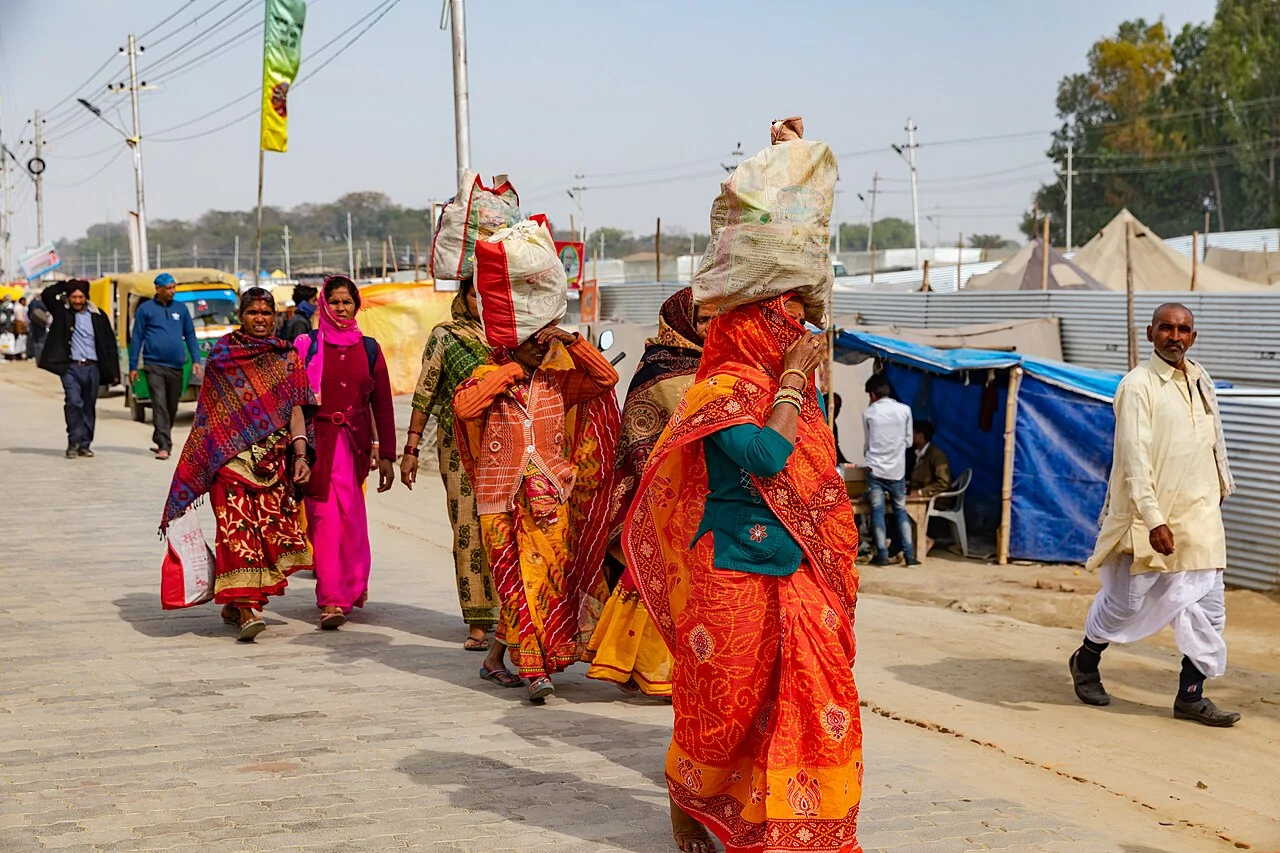
Ritual bathing is central, but the gathering also includes teaching, devotional singing, ascetic communities, processions, hospitality and encounters among pilgrims from many regions. For participants, a dip can signify renewal, humility and release from past wrongdoing. These are religious meanings, not medical claims about the water.
UNESCO inscribed Kumbh Mela on the Representative List of the Intangible Cultural Heritage of Humanity in 2017. Its significance includes knowledge transmitted through religious teachers, communities and repeated participation.
Why Kumbh is special
A temporary gathering becomes a shared social world: people with different languages and local customs arrive at a common riverbank while retaining their distinct identities. The river is the meeting point of mythology, calendar, travel and community. Kumbh offers a vivid example of connection across diversity without making every participant’s experience the same.
Official information and maps
Use the host state and district’s current notices for bathing dates, transport, entry arrangements and accessibility. This article explains the tradition rather than advertising a live booking.
Getting there
Prayagraj Sangam
- Local / nearest rail approach
- Prayagraj Sangam railway station
- Major long-distance railway option
- Prayagraj Junction
- Nearest airport / regional flight gateway
- Prayagraj Airport (IXD)
Prayagraj Sangam is a local approach; compare long-distance trains at Prayagraj Junction. Festival traffic plans can alter the permitted arrival route.
Travel source: Prayagraj district · travel connections · Ministry of Tourism · Prayagraj destination plan and rail approaches · Prayagraj district · Magh Mela
Prayagraj district · travel connections
Follow the administration’s current bathing-day routes, designated river access and boat arrangements.
Prayagraj district · travel connections · Ministry of Tourism · Prayagraj destination plan and rail approaches · Prayagraj district · Magh Mela
Best time to visit
Winter is the principal pilgrimage period for the annual Magh Mela, usually January–February. Outside festival dates, choose the cooler part of the year; summer riverbank visits can be very hot.
Festivals & occasions: The annual Magh Mela follows the Hindu month of Magh. Kumbh editions are separately announced; do not assume a Kumbh takes place every year.
Season & festival references: Prayagraj district · travel connections · Ministry of Tourism · Prayagraj destination plan and rail approaches · Prayagraj district · Magh Mela
Reviewed 21 November 2026. Seasonal windows are guidance; confirm weather, access and the current event programme before booking.
Haridwar ghats
- Local / nearest rail approach
- Haridwar Junction
- Major long-distance railway option
- Haridwar Junction
- Nearest airport / regional flight gateway
- Dehradun Airport, Jolly Grant (DED)
Haridwar Junction serves both local arrival and long-distance journeys; no second, less useful station is suggested. The same station serves both local arrival and longer-distance journeys; a second minor station is not needed.
Travel source: Haridwar district · rail and airport access · Uttarakhand Tourism · Haridwar
Haridwar district · rail and airport access
Best time to visit
Spring and autumn suit general riverfront sightseeing; winter is cooler. Monsoon river conditions require particular care.
Festivals & occasions: Ganga Dussehra and the Kanwar pilgrimage bring large seasonal crowds; Kumbh dates are announced separately.
Season & festival references: Haridwar district · rail and airport access · Uttarakhand Tourism · Haridwar
Reviewed 21 November 2026. Seasonal windows are guidance; confirm weather, access and the current event programme before booking.
Ujjain ghats
- Nearest / local railway station
- Ujjain Junction
- Major long-distance railway option
- Ujjain Junction
- Nearest airport
- Devi Ahilyabai Holkar Airport, Indore (IDR)
Ujjain Junction is both the local station and a major rail gateway; choose a train that stops there. The same station serves both local arrival and longer-distance journeys; a second minor station is not needed.
Travel source: Ujjain district · temple rail and air access · Mahakaleshwar Temple · contact and access
Prayagraj district · travel connections
Best time to visit
October–March (autumn, winter and early spring) offers cooler weather for a Ujjain temple and riverfront visit.
Season & festival references: Madhya Pradesh Tourism · Ujjain seasonal guidance
Reviewed 21 November 2026. Seasonal windows are guidance; confirm weather, access and the current event programme before booking.
Nashik / Trimbakeshwar
- Local / nearest rail approach
- Nashik Road railway station
- Major long-distance railway option
- Nashik Road railway station
- Nearest airport / regional flight gateway
- Nashik Airport, Ozar (ISK)
Nashik Road is both the city rail gateway and an important mainline station; no artificial second station is added. The same station serves both local arrival and longer-distance journeys; a second minor station is not needed.
Travel source: Ministry of Tourism · Nashik rail and Ozar airport · Ministry of Tourism · Nashik visitor guide
Ministry of Tourism · Nashik rail and Ozar airport
Best time to visit
The cooler post-monsoon and winter months are preferable for walking around the city ghats; check river levels during the monsoon.
Festivals & occasions: Nashik–Trimbakeshwar Kumbh is a periodic pilgrimage, not an annual event; use the administration’s announced programme.
Season & festival references: Ministry of Tourism · Nashik rail and Ozar airport · Ministry of Tourism · Nashik visitor guide
Reviewed 21 November 2026. Seasonal windows are guidance; confirm weather, access and the current event programme before booking.
Arrival points apply to the named approach. A gateway is a practical travel option, not a claim that it is the closest stop. Confirm passenger services and the onward transfer before booking.
Sources & further reading
Read the evidence and traditions behind this guide.
- UNESCO · Kumbh Mela
- Government of India · Kumbh background and four locations
- Government of India · Calendar and cultural setting
- Bhagavata Purana 8.8 · Ocean churning and the nectar vessel
- Nashik district · Kumbh tradition and Godavari
- Ministry of Tourism · Kumbh types and traditional intervals
- PIB · Prayagraj naming explained in 2019
- Ministry of Tourism · Prayagraj destination plan and 2013–2025 cycle
- Maharashtra · Simhastha FAQs, 2015 edition and 2027 main gathering
- PIB · Ujjain Simhastha 2016
- Akashvani · Haridwar Ardh Kumbh 2027 officially named Kumbh