Official website and visitor information
Hindu stories: Shiva, Parvati and Brahma’s lake
Sacred narrative and textual tradition
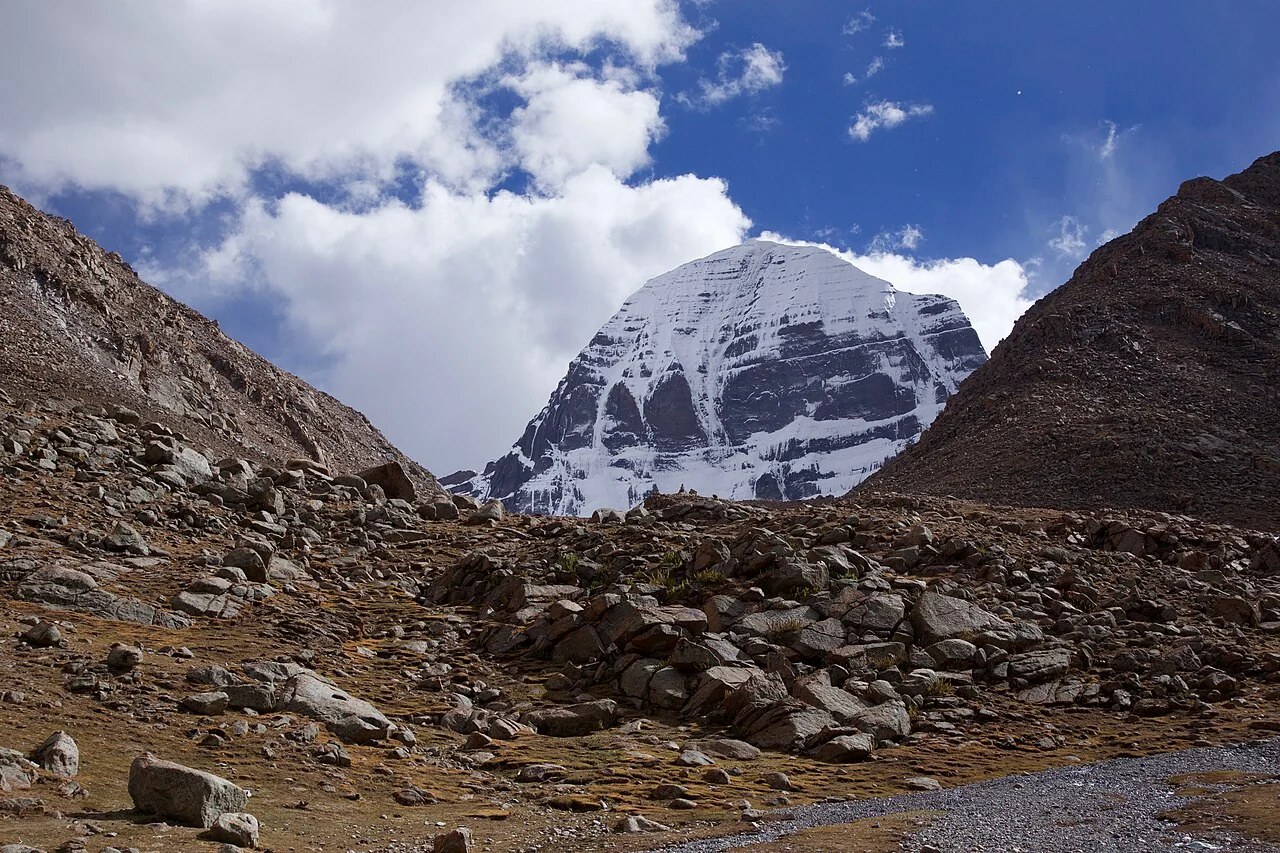
In Hindu sacred tradition, Kailash is the abode of Shiva and Parvati. The mountain brings together images of meditation, renunciation and divine family life. These are religious understandings of the landscape, rather than archaeological findings about a divine residence.
Manasarovar has a particularly clear textual association. In the Valmiki Ramayana, Bala Kanda 1.24.8, Vishvamitra tells Rama that Brahma formed a lake on Kailasa through his mind; this explains the name Manasa within the narrative. The following verse connects the sacred lake with the Sarayu. Read this as the epic’s sacred geography, rather than a modern hydrological account. Read the passage and translation at IIT Kanpur.
For a pilgrim, prayer at the lake and circumambulation of the mountain can express devotion and a wish for inner renewal. Such spiritual meanings should not be converted into promises of physical healing.
Buddhist, Jain and Bön meanings
These traditions do not all tell the same story. ICIMOD’s account of the landscape identifies Tibetan Buddhist associations with Chakrasamvara and memories of the yogi Milarepa. Bön traditions associate the sacred region with Tonpa Shenrab and preserve their own narratives, including those concerning Naro Bonchung. Respect their distinct names, teachings and pilgrimage practices.
In Jain tradition, Rishabhanatha, the first Tirthankara, attained liberation on Ashtapada. Jain accounts associate this lost sacred site with the Kailash–Manasarovar region. JAINA also describes attempts to identify it; therefore, the exact identification should not be presented as geographically settled, nor should a visit to Ashtapada be promised as part of every itinerary. Read JAINA’s account.
Parikrama and the lake visit are different experiences
Kailash parikrama, also called kora in Tibetan contexts, is a journey around the mountain, not a climb to its summit. The government itineraries include walking stages and a crossing of the high Dolma pass. The 2026 Lipulekh schedule lists Zhirepu and Zunzhu Pu among the overnight stages. A bus-supported approach does not remove the demands of the walking section.
The Manasarovar visit is a separate part of the programme. The 2026 Nathu La itinerary lists a lake parikrama by bus. Prayer, shore access and any rituals must follow the organiser’s instructions and local permissions; do not assume swimming or ritual bathing is permitted. Travellers should follow the approved programme rather than add unscheduled detours.
Compare the two official routes from India
Information checked: 17 October 2026. The 2026 tentative schedules both span 22 calendar days from first arrival in Delhi to return there. These are the published 2026 programmes, not a promise about the next season.
| Route | Approach and character | Official itinerary |
|---|---|---|
| Lipulekh, Uttarakhand | Delhi–Tanakpur–Dharchula–Gunji–Nabhidhang, then the border crossing to Purang. The schedule combines road transport, a short trekking component at the crossing, acclimatisation stops and the mountain parikrama. | 2026 Lipulekh programme |
| Nathu La, Sikkim | Delhi–Bagdogra–Gangtok, acclimatisation at 15th Mile and Sherathang, then Nathu La and a long road journey through Tibet towards Kailash. The mountain parikrama still involves trekking. | 2026 Nathu La programme |
Both schedules are tentative and can change with local conditions. Compare the latest dated itinerary, transport, walking stages and medical arrangements before selecting a preference; older generic trekking-distance summaries may no longer describe the current road access.
Official application, eligibility and documents
Season status checked: 13 November 2026. The official portal reports that the 2026 Yatra is complete and the online portal is closed. No next-season opening is announced here. Consult the official MEA portal before making plans.
As checked on 17 October 2026, the portal’s eligibility rules require Indian citizenship, an ordinary Indian passport valid for at least six months as of 1 September of the relevant year, and age 18–70 as of 1 January. It lists BMI of 25 or less and medical fitness requirements. Foreign nationals, including OCI cardholders, are not eligible for this MEA programme. Applicants should read the complete current conditions; a general travel article cannot determine medical eligibility.
Selection uses a computerised draw and subsequent confirmation; submitting a form does not guarantee a place. The document list includes the passport, six passport photographs, an authenticated indemnity bond and the prescribed helicopter-evacuation undertaking and consent form. Use the current downloadable forms and selected-batch instructions, including visa formalities, rather than documents copied from an earlier year.
Costs: use the current components, not an old package total
The portal’s published 2026 fee components, rechecked on 13 November 2026, are recorded below as seasonal examples. The 2026 Yatra is over; these are not prices for a future season:
- Lipulekh: ₹5,000 confirmation, ₹60,000 KMVN balance and US$1,400 for specified services in Tibet.
- Nathu La: ₹5,000 confirmation, ₹39,000 STDC balance, ₹21,000 return Delhi–Bagdogra airfare and US$2,700 for specified services in Tibet.
These are not complete trip prices. Medical tests, visa fees, group expenses, optional porters or ponies, personal purchases and other listed items can add to the budget. Currency conversion also changes the rupee total. Read the official fee breakdown and refund conditions before payment; charges are subject to revision. Older downloadable fee sheets show different amounts and should not be used as current quotations.
Medical screening, accommodation and preparation
The programme requires specified examinations at Delhi Heart and Lung Institute and the ITBP Base Hospital, with further checks on the route. Selection and initial fitness do not guarantee clearance at every later stage. Keep the scheduled acclimatisation days and report illness promptly to the accompanying medical team.
KMVN or STDC arranges the Indian-side logistics for the respective routes; Tibetan authorities arrange accommodation and logistics there. This is an organised group pilgrimage, so confirm room arrangements, meals, baggage allowance and available assistance from the current participant guide instead of expecting a hotel holiday.
A practical packing list starts with well-fitting walking footwear, layered warm clothing, rain and wind protection, gloves, a warm hat, sunglasses, sun protection, a torch, personal hygiene supplies and waterproof document storage. Carry prescribed medicines with their documentation and discuss preparation with your clinician. Follow the organiser’s baggage restrictions and medical advice; this guide supplies no drug regimen or individual fitness clearance.
Kailash–Manasarovar is different from Adi Kailash
Adi Kailash is in Pithoragarh district, Uttarakhand, India. It is a separate mountain and pilgrimage, sometimes called Chhota Kailash, with its own Shiva traditions. It is not Mount Kailash across the international border, and its nearby lake should not be labelled Manasarovar.
The journeys may share some Uttarakhand approach geography, but booking, permits and itineraries are different. A domestic Adi Kailash trip does not automatically include Kailash–Manasarovar, and neither should be described as effortless. Consult the Pithoragarh district’s Adi Kailash information and the relevant current local arrangements.
Maps, official information and respectful travel
Locate Mount Kailash · Locate Lake Manasarovar · Locate Adi Kailash.
These Maps links identify places; they are not border-crossing permissions or approved trekking navigation. Use the official batch itinerary. Keep waste out of the lake and trails, respect local residents and religious customs, and ask before photographing people or ceremonies. Leave the landscape’s stones, plants and sacred objects undisturbed.
MEA Yatra portal · Eligibility · Selection and documents · Official advisory.
Getting there
Lipulekh route — Indian approach in Uttarakhand
- Regional railway gateway
- Tanakpur railway station
- Major long-distance railway option
- Kathgodam railway station
- Regional airport gateway
- Pantnagar Airport (PGH)
These are regional approach options, not instructions to join a Yatra batch independently. The published MEA programme starts with reporting and preparation in Delhi. Follow your selected batch itinerary before booking; Pantnagar is not asserted to be the closest operating airport to every stop.
Travel source: Pithoragarh district · regional transport · Ministry of Tourism · Pithoragarh regional rail approaches · MEA · tentative 2026 Lipulekh itinerary
Best time to visit
Use only the officially announced pilgrimage batches. The 2026 MEA programme ran in the June–August summer period and is now complete; the application portal is closed. Wait for the next official season announcement rather than booking against a generic summer date range.
Festivals & occasions: The Kailash–Manasarovar Yatra itself is the associated religious pilgrimage. This guide does not promise a festival-specific departure: the assigned batch, international permissions and official itinerary determine the actual visit.
Season & festival references: MEA · current Yatra status and applications · Akashvani · MEA’s 2026 programme
Reviewed 14 November 2026. Seasonal windows are guidance; confirm weather, access and the current event programme before booking.
Entry permits & fees
Kailash–Manasarovar international pilgrimage
Season status: the official portal reports the 2026 Yatra complete and the online application portal closed. A future season is not offered for booking by this guide. Wait for an official announcement and selected-batch instructions.
Indian applicants: the MEA scheme requires Indian citizenship, a valid Indian passport and medical eligibility. Its published age range is 18–70 as at 1 January of the relevant Yatra year; read all current conditions. Foreign citizens, including OCI cardholders, are not eligible for this MEA scheme. This is an eligibility restriction, not a higher foreign-tourist ticket price.
Lipulekh and Nathu La are organised international routes. Their road-supported approaches do not eliminate walking around Kailash or medical screening; neither is automatically suitable for every senior citizen or non-trekker. Follow the official itinerary rather than a generic 21-day or 22–24-day package claim.
Budget for Indian-side arrangements, Tibet-side charges in US dollars, medical tests, visa, transport and optional assistance. The detailed Yatra guide records the published 2026 fee components. They are not a future quotation or all-inclusive total. Recheck the official fee schedule before paying.
The itinerary includes reporting and preparation in Delhi. Tanakpur/Kathgodam and New Jalpaiguri/Siliguri are regional approach choices, not permission to bypass the batch assembly. Pantnagar and Bagdogra are regional gateways; Ngari Gunsa is not recommended here as an independent arrival point for the MEA scheme. For any private international pilgrimage, obtain the required Chinese visa and entry permissions before departure; consult the current embassy and organiser instructions.
Official permit & fee sources: MEA · season status and applications · MEA · eligibility and programme · MEA · fee components · MEA · 2026 Lipulekh itinerary · MEA · 2026 Nathu La itinerary · Akashvani · MEA travel-document advisory · Chinese Embassy · current visa instructions
Reviewed 14 November 2026. Recheck the official notice for your nationality, route and travel dates before payment.
Nathu La route — Indian approach through Gangtok, Sikkim
- Major regional railway gateway
- New Jalpaiguri Junction
- Major long-distance railway option
- Siliguri Junction
- Airport used for the published MEA approach
- Bagdogra Airport (IXB)
New Jalpaiguri and Siliguri are regional rail options for Gangtok. The MEA itinerary includes Delhi preparation and the organised Bagdogra transfer; do not substitute independent arrival without approval. Bagdogra is a gateway, not a nearest-airport claim. Ngari Gunsa in Tibet is not presented as a booking alternative for this MEA programme.
Travel source: Gangtok district · rail and airport gateways · Sikkim government · reaching Sikkim · MEA · tentative 2026 Nathu La itinerary
Best time to visit
Use only the officially announced pilgrimage batches. The 2026 MEA programme ran in the June–August summer period and is now complete; the application portal is closed. Wait for the next official season announcement rather than booking against a generic summer date range.
Festivals & occasions: The Kailash–Manasarovar Yatra itself is the associated religious pilgrimage. This guide does not promise a festival-specific departure: the assigned batch, international permissions and official itinerary determine the actual visit.
Season & festival references: MEA · current Yatra status and applications · Akashvani · MEA’s 2026 programme
Reviewed 14 November 2026. Seasonal windows are guidance; confirm weather, access and the current event programme before booking.
Entry permits & fees
Kailash–Manasarovar international pilgrimage
Season status: the official portal reports the 2026 Yatra complete and the online application portal closed. A future season is not offered for booking by this guide. Wait for an official announcement and selected-batch instructions.
Indian applicants: the MEA scheme requires Indian citizenship, a valid Indian passport and medical eligibility. Its published age range is 18–70 as at 1 January of the relevant Yatra year; read all current conditions. Foreign citizens, including OCI cardholders, are not eligible for this MEA scheme. This is an eligibility restriction, not a higher foreign-tourist ticket price.
Lipulekh and Nathu La are organised international routes. Their road-supported approaches do not eliminate walking around Kailash or medical screening; neither is automatically suitable for every senior citizen or non-trekker. Follow the official itinerary rather than a generic 21-day or 22–24-day package claim.
Budget for Indian-side arrangements, Tibet-side charges in US dollars, medical tests, visa, transport and optional assistance. The detailed Yatra guide records the published 2026 fee components. They are not a future quotation or all-inclusive total. Recheck the official fee schedule before paying.
The itinerary includes reporting and preparation in Delhi. Tanakpur/Kathgodam and New Jalpaiguri/Siliguri are regional approach choices, not permission to bypass the batch assembly. Pantnagar and Bagdogra are regional gateways; Ngari Gunsa is not recommended here as an independent arrival point for the MEA scheme. For any private international pilgrimage, obtain the required Chinese visa and entry permissions before departure; consult the current embassy and organiser instructions.
Official permit & fee sources: MEA · season status and applications · MEA · eligibility and programme · MEA · fee components · MEA · 2026 Lipulekh itinerary · MEA · 2026 Nathu La itinerary · Akashvani · MEA travel-document advisory · Chinese Embassy · current visa instructions
Reviewed 14 November 2026. Recheck the official notice for your nationality, route and travel dates before payment.
Arrival points apply to the named approach. A gateway is a practical travel option, not a claim that it is the closest stop. Confirm passenger services and the onward transfer before booking.
Sources & further reading
Read the evidence and traditions behind this guide.
- MEA: Kailash Manasarovar Yatra portal and 2026 application deadline
- MEA: current eligibility conditions
- MEA: selection process and required documents
- MEA: 2026 tentative Lipulekh itinerary
- MEA: 2026 tentative Nathu La itinerary
- MEA: published fees and expenditure, checked 17 October 2026
- MEA: frequently asked questions on medical examinations and logistics
- MEA: official advisory
- Valmiki Ramayana, Bala Kanda 24, especially verse 8: IIT Kanpur text and translation
- ICIMOD: Mount Kailash, sacred routes and distinct religious associations
- JAINA: Ashtapada tradition and the question of its identification
- Pithoragarh district: Adi Kailash
- Uttarakhand Tourism: Kailash–Manasarovar
- ICIMOD: Guidelines for travelling responsibly in the Kailash Sacred Landscape
- Ministry of External Affairs — official Yatra portal