Official website and visitor information
Follow a theme without forcing a chronology
The Buddhist sacred landscape connects events in the Buddha’s life with the later growth of monasteries, universities and international communities of worship. This guide concentrates on Bihar and eastern Uttar Pradesh. Bodh Gaya, Rajgir and Nalanda make one practical group; Sarnath and Kushinagar require further travel and should not be compressed into the same short excursion. The order below is a reading sequence, not a reconstruction of every journey the Buddha made. Government circuit proposals also vary in scope. Some wider pilgrimages include Lumbini, the Buddha’s birthplace in present-day Nepal; it is outside this India-focused selection and requires separate cross-border planning.
Bodh Gaya: the place of awakening
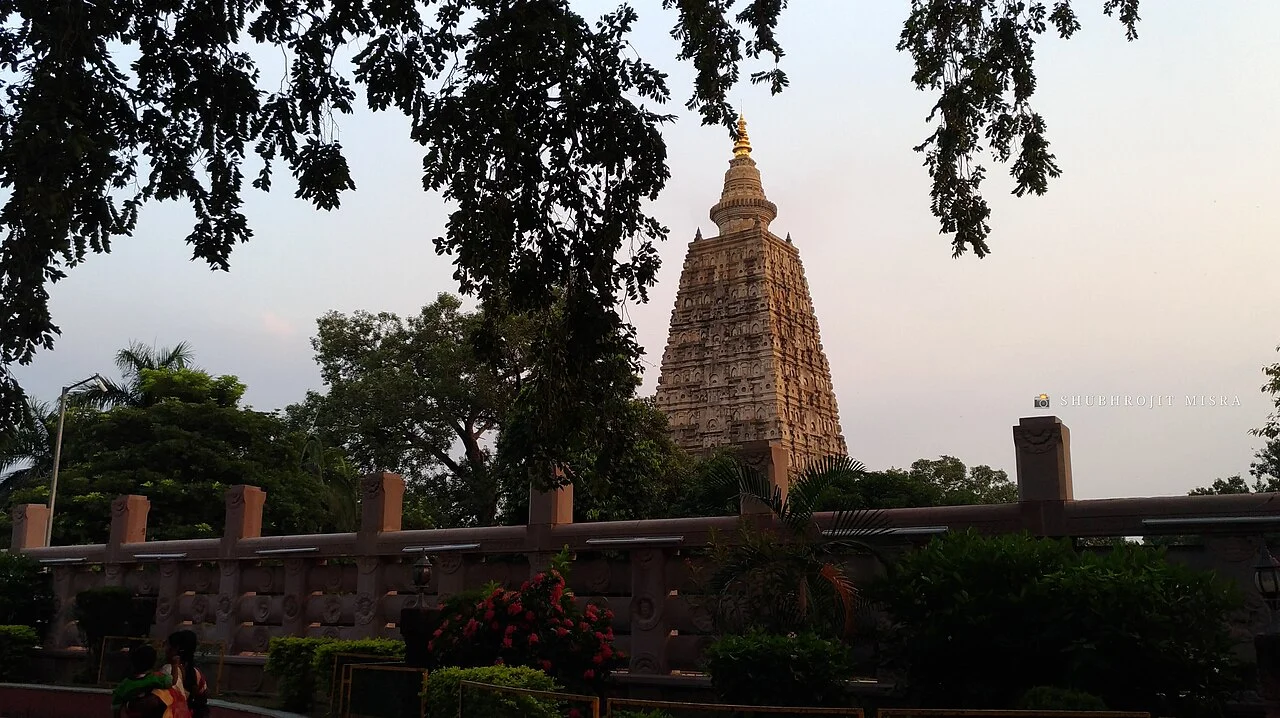
The Mahabodhi Temple Complex is revered as the place where Siddhartha Gautama attained awakening and became the Buddha. The Bodhi Tree, Vajrasana and associated devotional spaces give the site meaning beyond its tall brick temple. UNESCO distinguishes the tradition of an Ashokan foundation from the surviving temple’s later development. Notice how people use the grounds for prayer, circumambulation and meditation: this is an active religious centre as well as a World Heritage property. Different Buddhist communities may practise in different ways, and a respectful visitor can observe without assuming that any single ceremony represents all Buddhism.
Official information / Read more · Google Maps · Read our Bodh Gaya guide
Rajgir: teaching in a hill landscape
At Gridhakut, or Vulture’s Peak, Buddhist tradition recalls the Buddha’s teachings in the landscape around ancient Rajagriha. Bihar Tourism identifies the hill as a significant preaching site. Unlike a museum gallery, its meaning emerges partly from the relationship between paths, rock formations and the surrounding hills. Give the approach its own time and ask locally about the walking route and accessibility. Do not assume that a ropeway serving another nearby attraction delivers you to every sacred location. The hill setting helps readers imagine a community gathering to hear teaching without requiring every present-day structure to date to the Buddha’s lifetime.
Nalanda: the long life of Buddhist learning
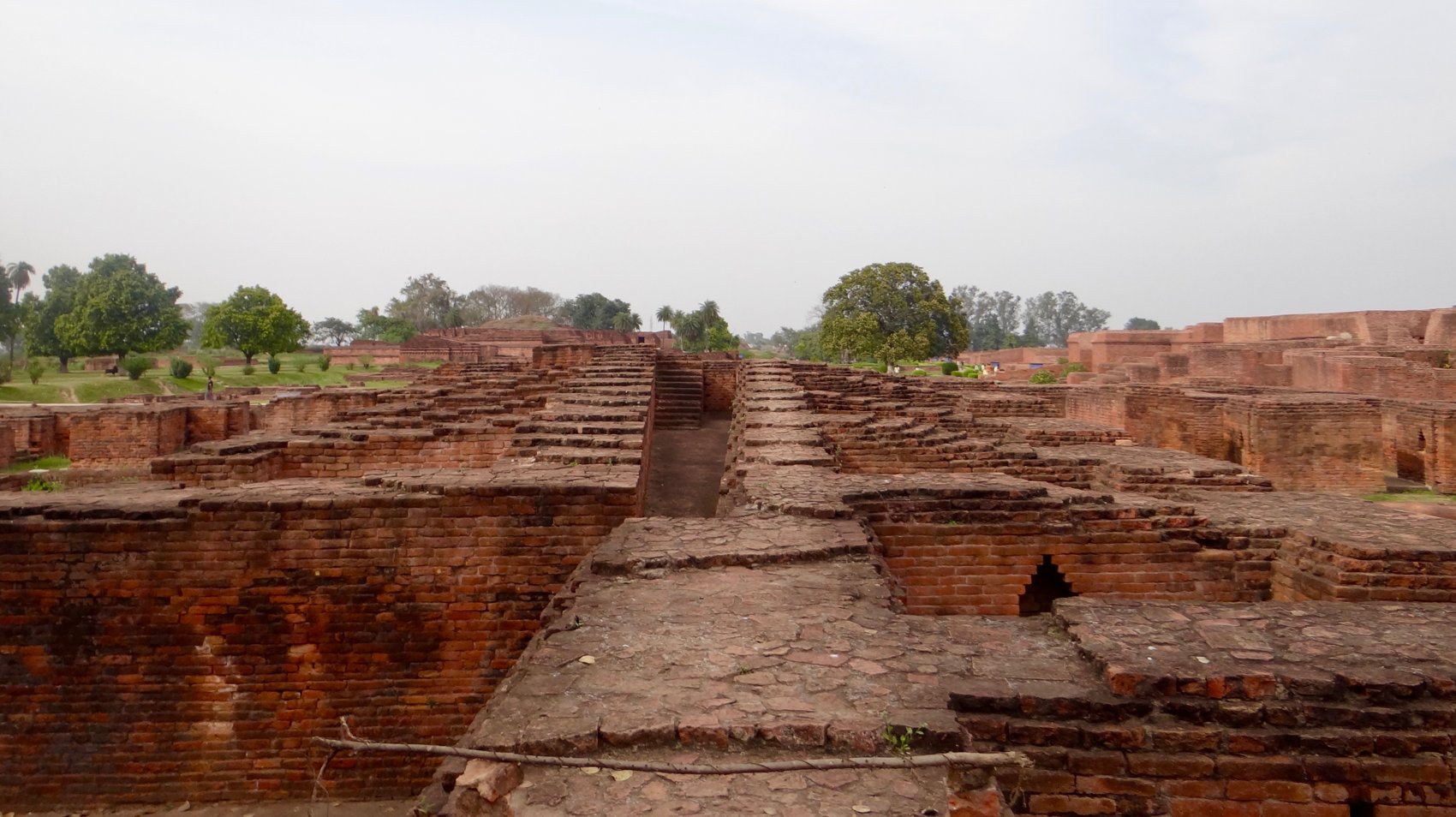
Nalanda adds a different chapter. Its excavated monasteries and temples belong to the development of a major scholarly institution over many centuries, rather than a single episode in the Buddha’s biography. UNESCO’s description emphasises the archaeological remains and the institution’s contribution to learning. Look for the organisation of monastic courtyards, rooms and religious buildings, and use museum objects to connect the ruins with their former intellectual and devotional life. Avoid confusing the archaeological site with the modern university. Together, they are part of a continuing interest in Nalanda, but they are different institutions in different historical settings.
Sarnath: the first teaching and its artistic legacy
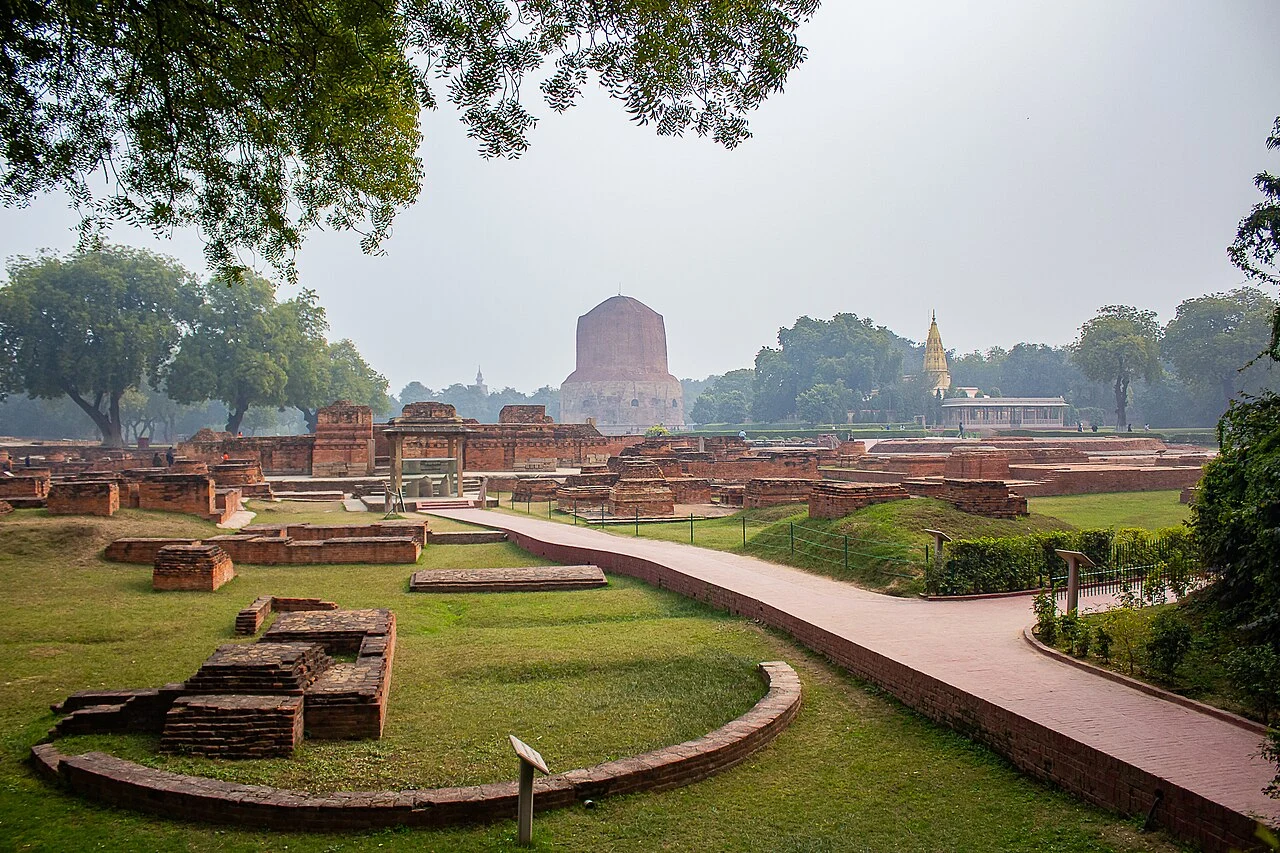
Sarnath, near Varanasi, is associated with the Buddha’s first teaching after awakening, remembered as setting the wheel of the Dharma in motion. The archaeological area and museum complement one another: stupas show the sacred landscape, while sculpture illuminates how Buddhist ideas took visual form. The lion capital from Ashoka’s pillar is particularly important to India’s later national symbolism. Plan the museum as a separate visit with its own opening arrangements. Sarnath’s significance does not depend on an assumption that every ruin is equally old; construction, patronage and artistic styles developed across successive periods.
Official information / Read more · Google Maps · Read our Sarnath guide
Kushinagar: remembering the Buddha’s final passing
Kushinagar is revered as the place of the Buddha’s mahaparinirvana, his final passing beyond rebirth in Buddhist understanding. The reclining image in the Mahaparinirvana Temple makes this theme immediately visible. Its calm posture invites a different response from the activity of a city bazaar or the scale of a monumental ruin. Spend time understanding what the image represents before taking photographs, and follow the shrine’s own instructions. The district’s visitor information provides an introduction to the local sacred sites; individual monuments have different histories, so the place of the final passing and later commemorative buildings should not be collapsed into one date.
Optional heritage extension: Sanchi, Madhya Pradesh
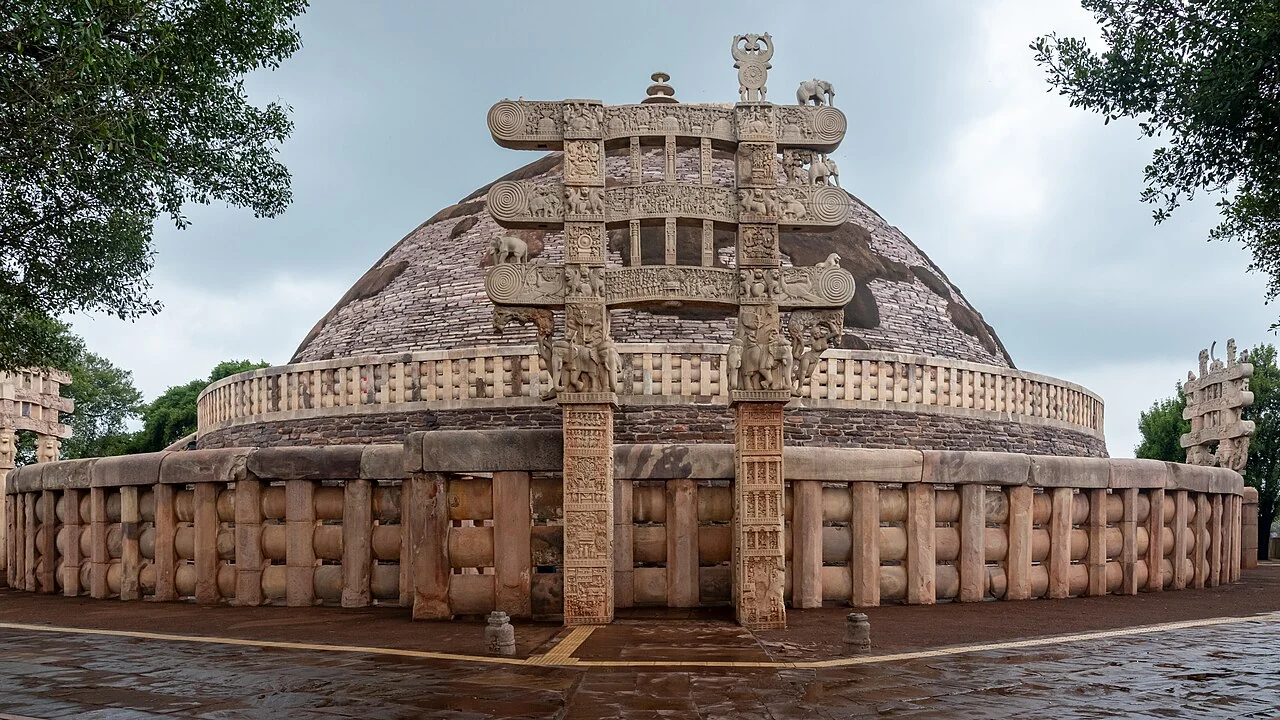
Sanchi belongs to a different region and should be planned as a separate heritage extension. Its stupas, gateways and monastic remains illuminate the growth of Buddhist patronage and art over many centuries. It is not presented here as a stop in the Buddha’s lifetime itinerary. Look closely at the gateway carvings and read their visual stories with the help of a site guide; this adds an artistic perspective to the places associated directly with awakening and teaching.
Plan for reflection as well as movement
Choose fewer bases and protect time for museums, quiet observation and rest. Long road transfers are not spiritual experiences by themselves. Check the official state or district pages for local access information and the managing institution for admission, photography and worship requirements. Wear suitable clothing, remove footwear where instructed and keep clear of people making prostrations or meditating. None of these information links is a guaranteed circuit booking. The route brings together traditional sacred associations and documented archaeological heritage; each deserves its own explanation rather than a single blanket claim of historical proof.
Getting there
Bodh Gaya
- Nearest railhead
- Gaya Junction
- Major long-distance railway option
- Gaya Junction
- Nearest airport
- Gaya Airport (GAY)
Gaya is both the nearest practical railhead and a major long-distance junction; a second smaller station is unnecessary. The same station serves both local arrival and longer-distance journeys; a second minor station is not needed.
Travel source: Incredible India · Bodh Gaya access · Incredible India · season and Buddha Purnima
Incredible India · Bodh Gaya access
Best time to visit
October–March is the comfortable main visiting season. April–May festival visits can be much hotter.
Festivals & occasions: Buddha Purnima falls in Vaisakha, generally April–May.
Season & festival references: Incredible India · Bodh Gaya access · Incredible India · season and Buddha Purnima
Reviewed 21 November 2026. Seasonal windows are guidance; confirm weather, access and the current event programme before booking.
Rajgir
- Local station in Rajgir
- Rajgir railway station
- Major long-distance railway option
- Gaya Junction
- Nearby airport — Gaya
- Gaya Airport (GAY)
Rajgir has direct services; it is not described here as poorly connected. Gaya is a larger rail hub. Gaya airport is geographically closer on the district’s published distances, while Patna is another practical air gateway.
Travel source: Nalanda district · Rajgir rail and airport access · Bihar Tourism · Rajgir season and festivals
Incredible India · Bodh Gaya access
Best time to visit
October–March: the cooler, drier visitor season recommended by Bihar Tourism. Summer afternoons are hot; monsoon paths can be slippery.
Festivals & occasions: Rajgir Mahotsav and the periodic Malmas Mela have separately announced programmes; confirm the organiser’s dates before travelling.
Season & festival references: Nalanda district · Rajgir rail and airport access · Bihar Tourism · Rajgir season and festivals
Reviewed 21 November 2026. Seasonal windows are guidance; confirm weather, access and the current event programme before booking.
Nalanda ruins
- Local line option — confirm stop
- Nalanda railway station
- Major long-distance railway option
- Gaya Junction
- Airport gateway — Patna
- Jay Prakash Narayan International Airport, Patna (PAT)
Nalanda is a local station on the Rajgir line; confirm a stopping passenger train. Older district guidance names Rajgir and recommends Gaya as the convenient major railhead, so the precise nearest usable stop should be checked for your train.
Travel source: Bihar Tourism · Nalanda visitor season and transport · Nalanda district · Gaya and Patna gateways
Incredible India · Bodh Gaya access
Best time to visit
October–March: Bihar Tourism’s recommended season, with cooler conditions for the open archaeological site.
Season & festival references: Bihar Tourism · Nalanda visitor season and transport · Nalanda district · Gaya and Patna gateways
Reviewed 21 November 2026. Seasonal windows are guidance; confirm weather, access and the current event programme before booking.
Sarnath
- Local / nearest rail approach
- Sarnath railway station
- Major long-distance railway option
- Varanasi Junction (Cantt)
- Nearest airport / regional flight gateway
- Lal Bahadur Shastri International Airport, Varanasi (VNS)
Sarnath is the local station; use Varanasi Junction for a wider choice of long-distance trains. Confirm that your train stops at Sarnath.
Travel source: Varanasi district · Sarnath travel information · Ministry of Tourism · regional seasons and Buddha Purnima
Varanasi district · Sarnath travel information
The archaeological site, museum and living monasteries are distinct places with their own visiting arrangements.
Varanasi district · Sarnath travel information · Ministry of Tourism · regional seasons and Buddha Purnima
Best time to visit
October–March follows the official recommended season for the Varanasi region.
Festivals & occasions: Buddha Purnima is a major Buddhist occasion, generally in April–May; confirm the local monastery programme.
Season & festival references: Varanasi district · Sarnath travel information · Ministry of Tourism · regional seasons and Buddha Purnima
Reviewed 21 November 2026. Seasonal windows are guidance; confirm weather, access and the current event programme before booking.
Kushinagar
- Nearby railway station
- Deoria Sadar railway station
- Major long-distance railway option
- Gorakhpur Junction
- Scheduled-flight gateway — check your dates
- Gorakhpur Airport (GOP)
Deoria Sadar and Gorakhpur are railway approaches followed by a road transfer. Gorakhpur Airport is a practical flight gateway; Kushinagar has its own closer airport, so check whether a suitable passenger flight is actually available before booking. Gorakhpur is not labelled the geographically nearest airport.
Travel source: Uttar Pradesh government · Kushinagar rail approaches · Deoria district · Deoria Sadar station · AAI · Kushinagar Airport · Kushinagar district · Gorakhpur approach
Incredible India · Bodh Gaya access
Best time to visit
Autumn through early spring, October–March, is the district planning document’s preferred tourist season. Choose cooler hours for outdoor monuments in summer; check local weather and access during the monsoon.
Festivals & occasions: Buddha Purnima brings Buddhist observances and a fair in Kushinagar. It usually falls in April/May, outside the coolest sightseeing months. Confirm the temple and district programme for the exact date and local arrangements.
Season & festival references: Uttar Pradesh · district plan and tourist season · Kushinagar district · Buddha Purnima fair · Ministry of Tourism · Buddha Purnima timing
Reviewed 14 November 2026. Seasonal windows are guidance; confirm weather, access and the current event programme before booking.
Sanchi
- Local railway station — confirm stop
- Sanchi railway station
- Major long-distance railway option
- Bhopal Junction
- Nearest airport — Bhopal
- Raja Bhoj Airport, Bhopal (BHO)
Sanchi is a local line stop. MP Tourism recommends nearby Vidisha or Bhopal for more convenient rail connections; Bhopal is the major hub.
Travel source: Madhya Pradesh Tourism · railway approaches, season and festival
Incredible India · Bodh Gaya access
Best time to visit
October–March is the cooler main sightseeing period; Madhya Pradesh Tourism also describes monsoon visits from July, when rain protection is needed.
Festivals & occasions: The Chethiyagiri Vihara relic festival is held in November; confirm the announced dates.
Season & festival references: Madhya Pradesh Tourism · railway approaches, season and festival
Reviewed 21 November 2026. Seasonal windows are guidance; confirm weather, access and the current event programme before booking.
Arrival points apply to the named approach. A gateway is a practical travel option, not a claim that it is the closest stop. Confirm passenger services and the onward transfer before booking.
Sources & further reading
Read the evidence and traditions behind this guide.