Official website and visitor information
Why this place matters
Buddhist tradition identifies Bodh Gaya as the place where Siddhartha Gautama attained enlightenment beneath the Bodhi tree and became the Buddha. The Mahabodhi complex consequently centres on an event in a spiritual life, rather than a royal capital or battlefield. Pilgrims come to meditate, chant and make offerings; these practices remain part of the site’s present, alongside its archaeological importance.
The sacred account and the building chronology should be read separately. UNESCO associates the first temple with Ashoka in the third century BCE and dates the principal surviving brick temple to the fifth or sixth century CE. The monument visitors see developed long after the lifetime commemorated here.
What to notice
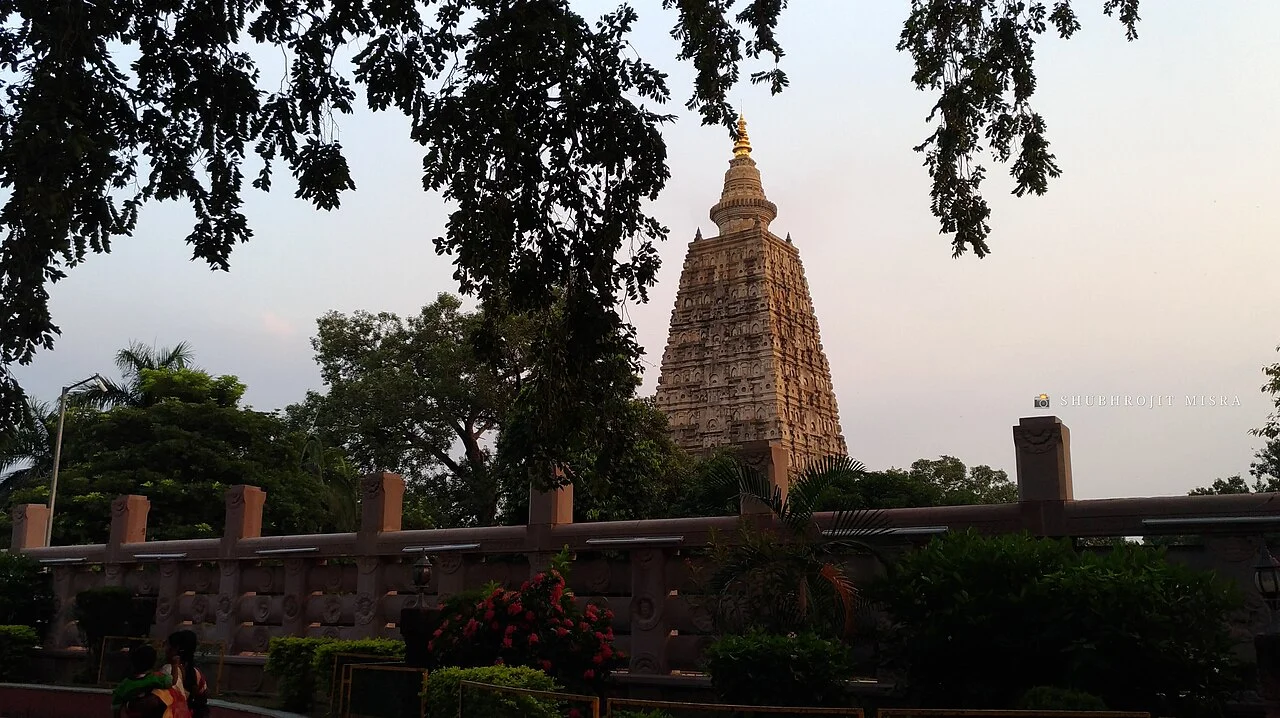
The tall temple, the Bodhi tree and the Vajrasana, or diamond throne, are the central landmarks. Smaller votive stupas and places associated with the weeks following enlightenment make the surroundings more than a backdrop to the tower. Look at the relationship between these features: the complex preserves a sacred geography as well as a major example of early brick construction.
A useful reading of the site asks two questions: what episode does each location commemorate, and what physical evidence belongs to later worship? Keeping those questions together allows religious meaning and architectural history to remain visible without treating every surviving structure as contemporary with the Buddha.
Planning a respectful visit
Allow time to sit quietly as well as walk around. Give people who are praying space, and ask before photographing an individual or ceremony. Confirm security arrangements, permitted belongings and access notices locally before entering; a heritage description is not a same-day entry guarantee. Use the official background below to prepare, and check the map for the Mahabodhi complex rather than assuming that every place labelled Gaya is this Buddhist sanctuary.
Getting there
Bodh Gaya
- Local / nearest rail approach
- Gaya Junction
- Major long-distance railway option
- Gaya Junction
- Nearest airport / regional flight gateway
- Gaya Airport (GAY)
Gaya Junction is the nearest station listed by the district and a major mainline station. Gaya Airport is closer to Bodh Gaya than Patna; compare actual flights. The same station serves both local arrival and longer-distance journeys; a second minor station is not needed.
Travel source: Gaya district · Mahabodhi Temple access · Bodhgaya Temple Management Committee
Mahabodhi Temple · official management committee
Best time to visit
Winter is preferable for extended outdoor visits and meditation; check summer heat and the current pilgrimage programme.
Season & festival references: Gaya district · Mahabodhi Temple access · Bodhgaya Temple Management Committee
Reviewed 21 November 2026. Seasonal windows are guidance; confirm weather, access and the current event programme before booking.
Arrival points apply to the named approach. A gateway is a practical travel option, not a claim that it is the closest stop. Confirm passenger services and the onward transfer before booking.
Sources & further reading
Read the evidence and traditions behind this guide.
Official government information · Google Maps · Explore sacred places