Official website and visitor information
Ganga Maa: the river as mother
For many Hindus, the Ganga is Ganga Maa—Mother Ganga, a goddess whose waters nourish life and carry prayers for purification and liberation. The affectionate word Maa expresses a relationship: the river is approached with gratitude, devotion and hope, not simply measured as a watercourse. The Bhagavata Purana 9.9 presents her as a divine person who hears Bhagiratha’s request.
This sacred relationship has many regional counterparts, including Narmada Maiya and Kaveri Amma. India’s river traditions are diverse: the Brahmaputra, for example, is personified as a son. Reverence for a river also invites care for the water, banks and communities that depend on it.
Origin and course
The Bhagirathi rises at the Gangotri glacier’s Gaumukh outlet in Uttarakhand. At Devprayag it meets the Alaknanda and the river takes the name Ganga. It enters the plains at Haridwar, receives the Yamuna at Prayagraj, and continues east into the vast delta system leading to the Bay of Bengal. These connected headwaters explain why both Gangotri and Devprayag matter to its geography.
Raja Bhagiratha’s penance and Ganga’s descent
In the Valmiki Ramayana, Bala Kanda 42–43, Bhagiratha inherits an unfinished duty: to bring heavenly Ganga to the ashes of King Sagara’s sons so that his ancestors may find release. Earlier generations have been unable to complete it. Leaving royal comfort behind, he undertakes severe tapas, or disciplined austerity. Brahma grants his request, but explains that the earth cannot withstand the river’s descent; Shiva must receive her.
Bhagiratha therefore turns his penance towards Shiva. When Ganga descends with overwhelming force, Shiva holds her in his matted hair. Bhagiratha perseveres, and Shiva releases the waters. The king leads the river onwards until she reaches his ancestors’ ashes. The narrative makes patient effort and responsibility to one’s ancestors central to the river’s sacred meaning.
The same chapter tells how Ganga floods the sage Jahnu’s sacrificial ground. He drinks up her waters and later releases them after an appeal, explaining her name Jahnavi. Bhagavata Purana 9.9 offers another telling of Bhagiratha’s austerities, Ganga’s concerns and Shiva’s help. These are scriptural traditions with differences in detail, rather than a geological explanation of the Himalayan river.
The five prayags, from upstream to downstream
A sangam is a meeting of rivers; prayag names a sacred confluence in this pilgrimage landscape. The Panch Prayag follow the Alaknanda downstream. They are not five stops along the Bhagirathi from Gaumukh.
- Vishnuprayag: Alaknanda and Dhauliganga. Uttarakhand Tourism records the tradition of Narada worshipping Vishnu here.
- Nandaprayag: Alaknanda and Nandakini.
- Karnaprayag: Alaknanda and Pindar.
- Rudraprayag: Alaknanda and Mandakini; the town’s sacred identity is associated with Shiva as Rudra.
- Devprayag: Alaknanda and Bhagirathi. From this meeting, the combined river is called Ganga.
The confluence sequence is geographical; the stories and acts of worship explain why these meetings also became places of pilgrimage.
Devprayag: two rivers and a tradition of penance
At Devprayag, the Bhagirathi and Alaknanda meet beneath a town whose sacred stories centre on devotion. Tehri district’s account attributes the name to the sage Dev Sharma, who is believed to have performed penance here and received a vision of God. Local tradition also associates the place with the penances of Rama and Dasharatha; the Raghunathji shrine reflects its strong connection with Rama.
These local associations add another layer to the wider story of Ganga’s descent. Devprayag marks the beginning of the river’s shared name, while the waters themselves have already travelled through their Himalayan headwater valleys. It is one of the five prayags, not one of the four principal Kumbh Mela venues.
Prayagraj, formerly Allahabad: the Triveni Sangam
Far downstream, at Prayagraj—formerly Allahabad—the Yamuna meets the Ganga. Hindu tradition recognises a third, invisible Saraswati at this Triveni Sangam. The visible confluence is of the Ganga and Yamuna; the Saraswati’s presence here is a religious belief, not an established third surface channel.
The district’s cultural account tells of Brahma choosing Prayag for a primordial yajna, a sacrificial rite, and honours it as Tirtharaj, king of pilgrimage places. A further popular Kumbh tradition connects the site with drops of amrita, the nectar obtained during the churning of the cosmic ocean. These stories explain the Sangam’s sacred status; the account of nectar falling at four Kumbh sites should not be treated as a quotation from an unspecified Purana.
For pilgrims, the meeting of rivers becomes a setting for prayer, ritual bathing and remembrance of ancestors. The riverbanks also host temporary settlements where religious teaching and collective worship form part of the pilgrimage.
Festivals from the mountains to the sea
- Ganga Dussehra: commemorates Ganga’s descent to earth on Jyeshtha Shukla Dashami, the tenth tithi of the waxing fortnight, usually in May–June. Devprayag’s Sangam is among the places where devotees observe it.
- Magh Mela at Prayagraj: an annual gathering in the Magh season, generally January–February, with bathing and devotional life on the riverbanks. It is distinct from the larger Kumbh cycle.
- Kumbh Mela: Prayagraj and Haridwar are the two principal Ganga settings. The other main venues are on the Godavari at Nashik–Trimbakeshwar and the Shipra at Ujjain. Read the Kumbh guide for the traditions and calendar.
- Dev Deepawali: Kartik Purnima brings lamp-lit riverbank celebrations in Varanasi and Prayagraj.
- Gangasagar Mela: at Sagar Island in West Bengal, pilgrims observe Makar Sankranti where the Ganga’s lower delta landscape meets the Bay of Bengal, also honouring Kapil Muni.
Lunar tithis, solar transitions and the Kumbh’s traditional astronomical rules follow different calendars. Explore how festival dates are decided; consult current official announcements for travel dates.
What makes this river special
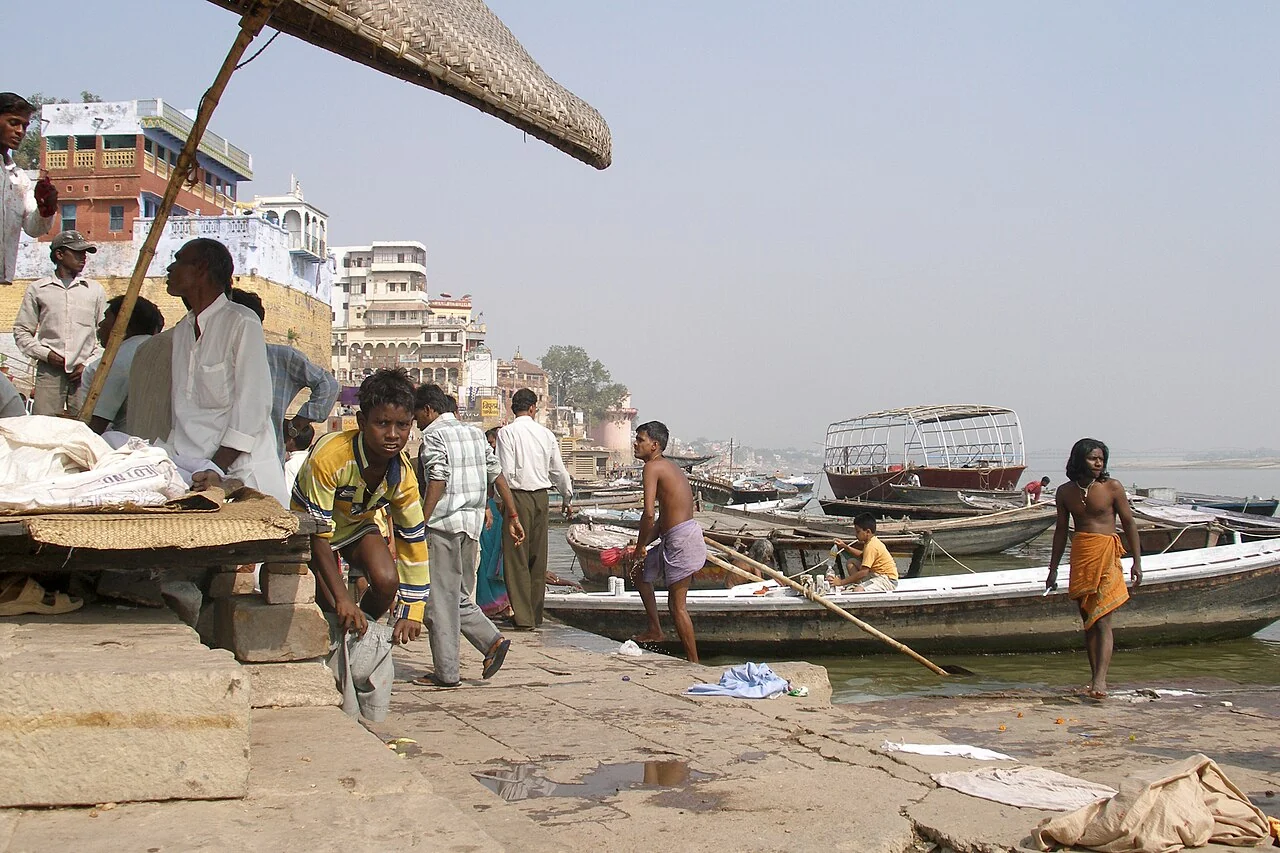
Haridwar, Prayagraj and Varanasi reveal different river traditions: entry into the plains, the meeting of rivers, and an ancient city’s daily relationship with water. The Ganga is also a working river supporting farming, fishing and settlements. Reverence has practical meaning when it includes clean banks, responsible offerings and care for the river’s living environment.
Explore with care
Read the linked geographical and cultural sources together: a sacred origin story explains religious meaning, while a drainage account explains the physical river. River levels, bathing arrangements and access can change.
View this river setting on Google Maps
Explore all river guides · Read about Kumbh Mela
Confluence maps: Vishnuprayag · Nandaprayag · Karnaprayag · Rudraprayag · Devprayag · Prayagraj Sangam.
Getting there
Devprayag
- Nearest railhead listed by Uttarakhand Tourism
- Rishikesh railway station
- Major long-distance railway option
- Haridwar Junction
- Nearest regional airport: Jolly Grant, Dehradun
- Dehradun Airport, Jolly Grant (DED)
Other rail option: Yog Nagari Rishikesh railway station
Rishikesh is the railhead named by Uttarakhand Tourism. Haridwar is a major long-distance alternative; Yog Nagari Rishikesh is another mainline terminal in Rishikesh. Confirm the exact station on the ticket and continue by road.
Travel source: Uttarakhand Tourism · Panch Prayag transport · Haridwar district · major rail connections
Prayagraj district · travel connections
Best time to visit
Spring to early summer (March–May) and post-monsoon autumn (mid-September–November) are practical windows for the Alaknanda valley road journey. This is regional seasonal guidance; check local road conditions, particularly for the higher Vishnuprayag approach. Monsoon landslides and winter cold can affect travel.
Festivals & occasions: The Char Dham pilgrimage season brings more pilgrims through the valley. No fixed annual festival date is asserted for this particular confluence.
Season & festival references: Uttarakhand Tourism · Devprayag seasonal window
Reviewed 21 November 2026. Seasonal windows are guidance; confirm weather, access and the current event programme before booking.
Vishnuprayag
- Nearest railhead listed by Uttarakhand Tourism
- Rishikesh railway station
- Major long-distance railway option
- Haridwar Junction
- Nearest regional airport: Jolly Grant, Dehradun
- Dehradun Airport, Jolly Grant (DED)
Other rail option: Yog Nagari Rishikesh railway station
Rishikesh is the railhead named by Uttarakhand Tourism. Haridwar is a major long-distance alternative; Yog Nagari Rishikesh is another mainline terminal in Rishikesh. Confirm the exact station on the ticket and continue by road.
Travel source: Uttarakhand Tourism · Panch Prayag transport · Haridwar district · major rail connections
Prayagraj district · travel connections
Best time to visit
Spring to early summer (March–May) and post-monsoon autumn (mid-September–November) are practical windows for the Alaknanda valley road journey. This is regional seasonal guidance; check local road conditions, particularly for the higher Vishnuprayag approach. Monsoon landslides and winter cold can affect travel.
Festivals & occasions: The Char Dham pilgrimage season brings more pilgrims through the valley. No fixed annual festival date is asserted for this particular confluence.
Season & festival references: Uttarakhand Tourism · Devprayag seasonal window
Reviewed 21 November 2026. Seasonal windows are guidance; confirm weather, access and the current event programme before booking.
Nandaprayag
- Nearest railhead listed by Uttarakhand Tourism
- Rishikesh railway station
- Major long-distance railway option
- Haridwar Junction
- Nearest regional airport: Jolly Grant, Dehradun
- Dehradun Airport, Jolly Grant (DED)
Other rail option: Yog Nagari Rishikesh railway station
Rishikesh is the railhead named by Uttarakhand Tourism. Haridwar is a major long-distance alternative; Yog Nagari Rishikesh is another mainline terminal in Rishikesh. Confirm the exact station on the ticket and continue by road.
Travel source: Uttarakhand Tourism · Panch Prayag transport · Haridwar district · major rail connections
Prayagraj district · travel connections
Best time to visit
Spring to early summer (March–May) and post-monsoon autumn (mid-September–November) are practical windows for the Alaknanda valley road journey. This is regional seasonal guidance; check local road conditions, particularly for the higher Vishnuprayag approach. Monsoon landslides and winter cold can affect travel.
Festivals & occasions: The Char Dham pilgrimage season brings more pilgrims through the valley. No fixed annual festival date is asserted for this particular confluence.
Season & festival references: Uttarakhand Tourism · Devprayag seasonal window
Reviewed 21 November 2026. Seasonal windows are guidance; confirm weather, access and the current event programme before booking.
Karnaprayag
- Nearest railhead listed by Uttarakhand Tourism
- Rishikesh railway station
- Major long-distance railway option
- Haridwar Junction
- Nearest regional airport: Jolly Grant, Dehradun
- Dehradun Airport, Jolly Grant (DED)
Other rail option: Yog Nagari Rishikesh railway station
Rishikesh is the railhead named by Uttarakhand Tourism. Haridwar is a major long-distance alternative; Yog Nagari Rishikesh is another mainline terminal in Rishikesh. Confirm the exact station on the ticket and continue by road.
Travel source: Uttarakhand Tourism · Panch Prayag transport · Haridwar district · major rail connections
Prayagraj district · travel connections
Best time to visit
Spring to early summer (March–May) and post-monsoon autumn (mid-September–November) are practical windows for the Alaknanda valley road journey. This is regional seasonal guidance; check local road conditions, particularly for the higher Vishnuprayag approach. Monsoon landslides and winter cold can affect travel.
Festivals & occasions: The Char Dham pilgrimage season brings more pilgrims through the valley. No fixed annual festival date is asserted for this particular confluence.
Season & festival references: Uttarakhand Tourism · Devprayag seasonal window
Reviewed 21 November 2026. Seasonal windows are guidance; confirm weather, access and the current event programme before booking.
Rudraprayag
- Nearest railhead listed by Uttarakhand Tourism
- Rishikesh railway station
- Major long-distance railway option
- Haridwar Junction
- Nearest regional airport: Jolly Grant, Dehradun
- Dehradun Airport, Jolly Grant (DED)
Other rail option: Yog Nagari Rishikesh railway station
Rishikesh is the railhead named by Uttarakhand Tourism. Haridwar is a major long-distance alternative; Yog Nagari Rishikesh is another mainline terminal in Rishikesh. Confirm the exact station on the ticket and continue by road.
Travel source: Uttarakhand Tourism · Panch Prayag transport · Haridwar district · major rail connections
Prayagraj district · travel connections
Best time to visit
Spring to early summer (March–May) and post-monsoon autumn (mid-September–November) are practical windows for the Alaknanda valley road journey. This is regional seasonal guidance; check local road conditions, particularly for the higher Vishnuprayag approach. Monsoon landslides and winter cold can affect travel.
Festivals & occasions: The Char Dham pilgrimage season brings more pilgrims through the valley. No fixed annual festival date is asserted for this particular confluence.
Season & festival references: Uttarakhand Tourism · Devprayag seasonal window
Reviewed 21 November 2026. Seasonal windows are guidance; confirm weather, access and the current event programme before booking.
Prayagraj Sangam
- Local / nearest rail approach
- Prayagraj Sangam railway station
- Major long-distance railway option
- Prayagraj Junction
- Nearest airport / regional flight gateway
- Prayagraj Airport (IXD)
Prayagraj Sangam is a local approach; compare long-distance trains at Prayagraj Junction. Festival traffic plans can alter the permitted arrival route.
Travel source: Prayagraj district · travel connections · Ministry of Tourism · Prayagraj destination plan and rail approaches · Prayagraj district · Magh Mela
Prayagraj district · travel connections
Follow the administration’s current bathing-day routes, designated river access and boat arrangements.
Prayagraj district · travel connections · Ministry of Tourism · Prayagraj destination plan and rail approaches · Prayagraj district · Magh Mela
Best time to visit
Winter is the principal pilgrimage period for the annual Magh Mela, usually January–February. Outside festival dates, choose the cooler part of the year; summer riverbank visits can be very hot.
Festivals & occasions: The annual Magh Mela follows the Hindu month of Magh. Kumbh editions are separately announced; do not assume a Kumbh takes place every year.
Season & festival references: Prayagraj district · travel connections · Ministry of Tourism · Prayagraj destination plan and rail approaches · Prayagraj district · Magh Mela
Reviewed 21 November 2026. Seasonal windows are guidance; confirm weather, access and the current event programme before booking.
Varanasi ghats
- Local station for northern ghats (ghat-dependent)
- Kashi railway station
- Major long-distance railway option
- Varanasi Junction (Cantt)
- Nearest airport / regional flight gateway
- Lal Bahadur Shastri International Airport, Varanasi (VNS)
Choose the station for the particular ghat: Kashi is a local option towards the northern ghats, not the closest stop to every ghat. Varanasi Junction offers major long-distance connections.
Travel source: Varanasi district · city stations and airport · Ministry of Tourism · Varanasi seasons and festivals
Varanasi district · city stations and airport
The old-city lanes have vehicle restrictions; allow a walk or local transfer to the selected ghat.
Varanasi district · city stations and airport · Ministry of Tourism · Varanasi seasons and festivals
Best time to visit
October–March is the comfortable sightseeing season; winter mornings may be foggy.
Festivals & occasions: Dev Deepawali falls on Kartik Purnima. Ganga Mahotsav and Mahashivaratri are also major city occasions.
Season & festival references: Varanasi district · city stations and airport · Ministry of Tourism · Varanasi seasons and festivals
Reviewed 21 November 2026. Seasonal windows are guidance; confirm weather, access and the current event programme before booking.
Haridwar ghats
- Local / nearest rail approach
- Haridwar Junction
- Major long-distance railway option
- Haridwar Junction
- Nearest airport / regional flight gateway
- Dehradun Airport, Jolly Grant (DED)
Haridwar Junction serves both local arrival and long-distance journeys; no second, less useful station is suggested. The same station serves both local arrival and longer-distance journeys; a second minor station is not needed.
Travel source: Haridwar district · rail and airport access · Uttarakhand Tourism · Haridwar
Haridwar district · rail and airport access
Best time to visit
Spring and autumn suit general riverfront sightseeing; winter is cooler. Monsoon river conditions require particular care.
Festivals & occasions: Ganga Dussehra and the Kanwar pilgrimage bring large seasonal crowds; Kumbh dates are announced separately.
Season & festival references: Haridwar district · rail and airport access · Uttarakhand Tourism · Haridwar
Reviewed 21 November 2026. Seasonal windows are guidance; confirm weather, access and the current event programme before booking.
Gangasagar via Kakdwip and Kachuberia
- Local mainland railhead (not on Sagar Island)
- Kakdwip railway station
- Major long-distance railway option
- Sealdah railway station
- Nearest airport / regional flight gateway
- Netaji Subhas Chandra Bose International Airport, Kolkata (CCU)
Kakdwip is the mainland local rail approach via the Lot 8–Kachuberia crossing. Sealdah is the Kolkata rail hub; onward road, ferry and island road transfers are still required.
Travel source: Gangasagar administration · train, road and ferry approach · Gangasagar administration · current mela information
Gangasagar administration · train, road and ferry approach
Check the current ferry and crowd-management arrangements before choosing arrival and return times.
Gangasagar administration · train, road and ferry approach · Gangasagar administration · current mela information
Best time to visit
Winter is the main pilgrimage season, centred on the January Makar Sankranti gathering. Check ferry conditions and tide-related operations throughout the year.
Festivals & occasions: Gangasagar Mela is held around Makar Sankranti in January.
Season & festival references: Gangasagar administration · train, road and ferry approach · Gangasagar administration · current mela information
Reviewed 21 November 2026. Seasonal windows are guidance; confirm weather, access and the current event programme before booking.
Arrival points apply to the named approach. A gateway is a practical travel option, not a claim that it is the closest stop. Confirm passenger services and the onward transfer before booking.
Sources & further reading
Read the evidence and traditions behind this guide.
- Bhagavata Purana 9.9 · Bhagiratha and the descent of Ganga
- Central Water Commission · Upper Ganga water-quality bulletin, February 2025
- Valmiki Ramayana · Bala Kanda 42: Bhagiratha’s austerities
- Valmiki Ramayana · Bala Kanda 43: Shiva, Ganga and Jahnu
- Uttarakhand Tourism · Panch Prayag
- Government of Uttarakhand · Traditions of Uttarakhand: Panch Prayag
- Tehri district · Devprayag and Dev Sharma tradition
- Uttarakhand Tourism · Rudraprayag
- Prayagraj district · History and Brahma’s yajna tradition
- Prayagraj district · Sangam and Kumbh traditions
- Prayagraj district · Culture and the annual Magh Mela
- Central Bureau of Communication · Ganga Dussehra and its tithi
- Amar Ujala · Ganga Dussehra observed at Devprayag, 5 June 2025
- Incredible India · Dev Deepawali, Varanasi
- Incredible India · Dev Deepawali, Prayagraj
- Ministry of Tourism · Gangasagar Mela