Official website and visitor information
The journey and its meaning
- Sacred setting
- Baidyanath Deoghar
- Region
- Jharkhand
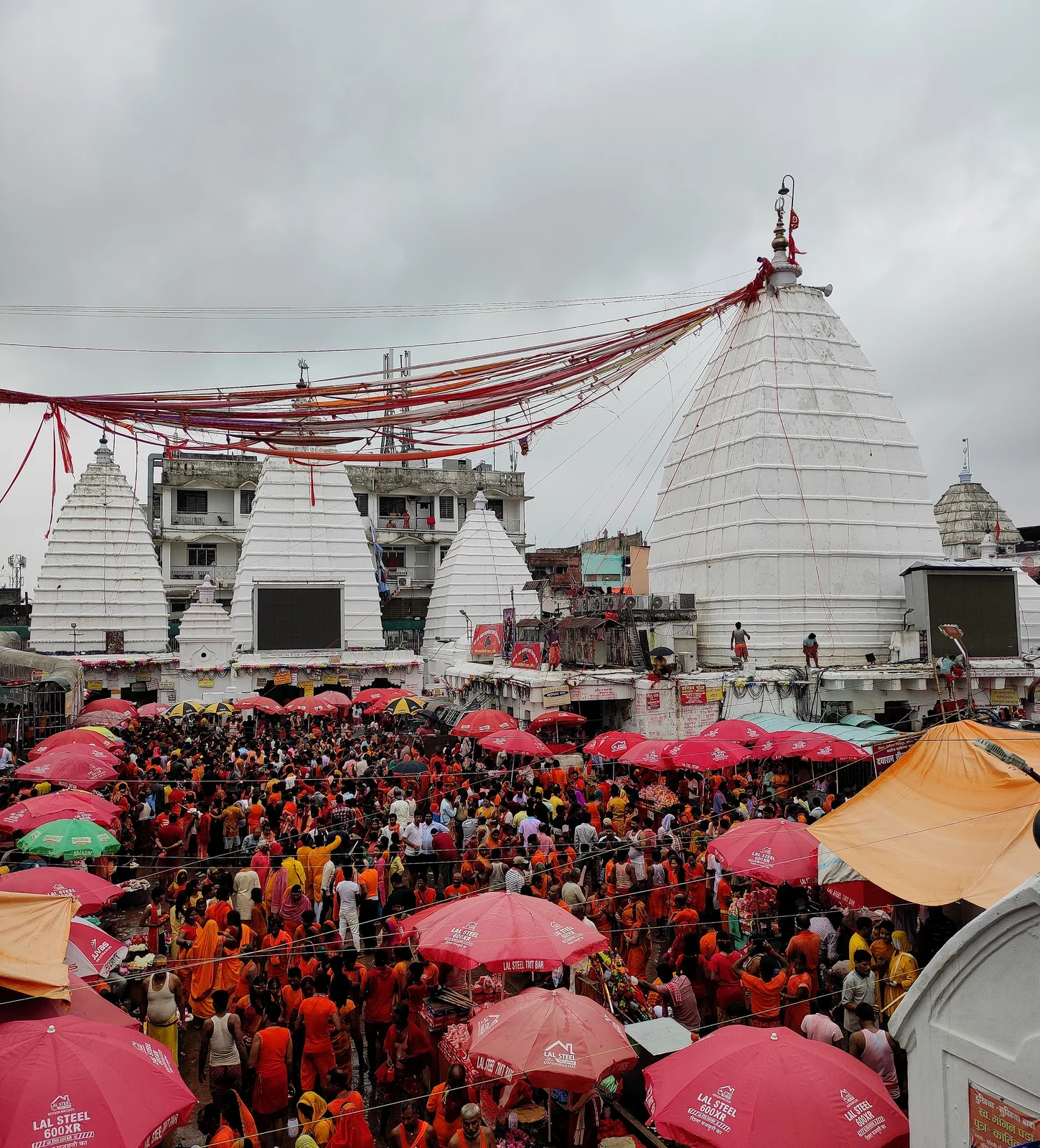
Devotees carry Ganga water from Sultanganj in Bihar towards Baidyanath at Deoghar. The journey crosses state boundaries. Current arrangements for walking, queues and crowd management should be confirmed locally.
Mythological story & sacred tradition
Puranic background and living pilgrimage
Water offered to Baidyanath
The journey remembers Shiva as Baidyanath, whose sacred cycle includes Ravana’s intense devotion and the linga that becomes fixed in place. Carrying water from Sultanganj gives the vow a physical form: the pilgrim’s offering travels between two sacred locations. The Purana’s Ravana episode and the present walking route should be distinguished.
Story sources: 2
What makes it special
The Sultanganj–Deoghar route crosses state borders and creates a temporary devotional community along the road.
More than a procession
A public journey can bring worship into streets, villages or a wider landscape. Images, music, offerings, volunteers and community meals may have different roles in different traditions. Look at the sequence of events and the people who sustain it, rather than treating every gathering as the same kind of festival.
Follow the official programme
Use the linked temple or government authority for current dates, route changes, registration and public access. The annual programme can distinguish preparatory rites, the principal event and return processions.
Getting there
Baidyanath, Deoghar
- Nearest / local railway station
- Baidyanath Dham railway station
- Major long-distance railway option
- Jasidih Junction
- Nearest airport
- Deoghar Airport (DGH)
The local Baidyanath Dham station and Deoghar Junction are different stations. Jasidih is the main-line option; check your train’s stopping pattern.
Travel source: Deoghar district · temple access · Deoghar district · rail and airport connections
Official guide · tourism.jharkhand.gov.in
Best time to visit
October–February (autumn and winter) is the Ministry of Tourism’s recommended period for comfortable temple visits.
Festivals & occasions: The Shravani pilgrimage takes place during Shravan, generally July–August; expect monsoon rain and heavy crowds. Confirm the annual programme.
Season & festival references: Ministry of Tourism · temple season · Ministry of Tourism · Shravan pilgrimage
Reviewed 21 November 2026. Seasonal windows are guidance; confirm weather, access and the current event programme before booking.
Arrival points apply to the named approach. A gateway is a practical travel option, not a claim that it is the closest stop. Confirm passenger services and the onward transfer before booking.
References & further reading
- Official information · tourism.jharkhand.gov.in
Temple or government information for the tradition. Recheck the current programme, registration and access notices. - Shiva Purana · Kotirudra Samhita, chapter 28
Documents the tradition and its cultural setting; it does not establish the story as a historical event.