Official website and visitor information
Yoga classes, residential stays and public evening ceremonies are different offerings. Confirm accommodation and course registration directly with the selected ashram; a town visit does not include a course place.
Yoga is a tradition of practice and inquiry
Yoga brings together disciplines of attention, conduct, bodily practice and spiritual inquiry. Its meanings vary with the text, teacher and community. UNESCO’s account of yoga includes postures, breathing, meditation and chanting, and recognises the importance of learning through teachers and institutions. In 2016, yoga was inscribed on UNESCO’s Representative List of the Intangible Cultural Heritage of Humanity.
That recognition concerns a living cultural tradition. It is not a scientific certification of every claim made by a yoga school. To understand a practice, ask what its teachers mean by liberation, concentration, devotion or well-being, and which texts inform their approach.
A long history, rather than one moment of invention
Yoga-related disciplines appear across the Upanishads, the Bhagavad Gita and other Indian philosophical and religious literature. Hindu, Buddhist and Jain communities developed related practices of meditation while explaining their goals in different ways. Patañjali’s Yoga Sutras systematise an influential approach; Patañjali should not simply be described as the inventor of all yoga.
The dating and development of these texts remain subjects of scholarship. Edwin Bryant’s account in the Internet Encyclopedia of Philosophy emphasises the variety of traditions preceding Patañjali and the importance of commentary for understanding the terse sutras. A precise founding year for yoga would obscure that history. Likewise, a seated figure on an ancient object cannot by itself establish a continuous history of today’s classes.
Read the Bhagavad Gita guide alongside India’s philosophical traditions to see how action, knowledge and devotion enter the wider discussion.
Patañjali’s eight limbs
The eightfold framework shows why yoga involves more than physical poses. The following short glosses introduce terms that require fuller study in context:
- Yama: ethical restraints in conduct.
- Niyama: personal observances and discipline.
- Asana: posture.
- Pranayama: regulation of breath.
- Pratyahara: withdrawal of the senses.
- Dharana: concentration.
- Dhyana: meditation.
- Samadhi: meditative absorption.
This is a philosophical outline, not an exercise prescription. Compare the Yoga Sutra text and commentaries at IIT Kanpur rather than treating each term as interchangeable with a modern fitness activity.
Why Rishikesh became so closely associated with yoga
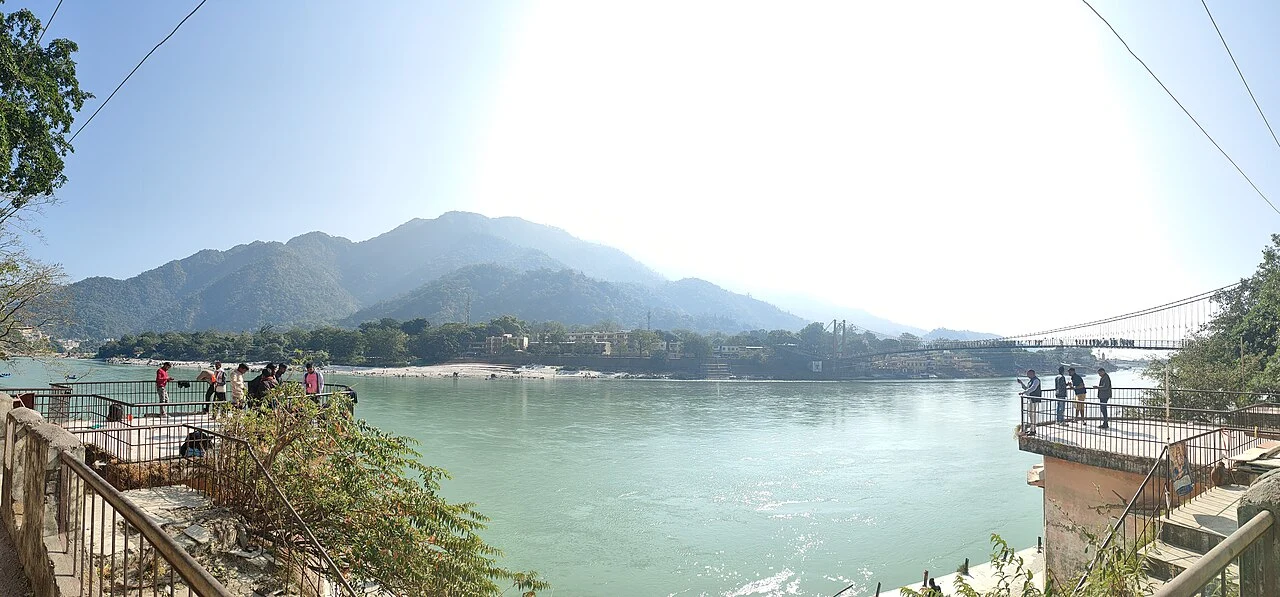
Rishikesh lies beside the Ganga at the Himalayan foothills. Its ashrams, pilgrimage setting and communities of teachers make it a meeting place for sustained study and visiting practitioners. Uttarakhand Tourism describes the city as an international yoga and meditation destination. The familiar expression “yoga capital of the world” conveys its reputation; it is not an exclusive designation or evidence that yoga began only here.
Modern institutions help explain that reputation. Swami Sivananda’s Divine Life Society, registered in 1936, developed teaching, publishing and service at its Rishikesh headquarters. Its Yoga-Vedanta Forest Academy illustrates the role of structured study alongside daily practice. Parmarth Niketan, founded in 1942, is another important institution on the Ganga, with yoga and spiritual programmes.
International attention also grew through visits such as the Beatles’ stay with Maharishi Mahesh Yogi in 1968. Their interest was in Transcendental Meditation; that episode is one strand of Rishikesh’s global story, not the beginning of the city’s spiritual life. Annual yoga gatherings and visiting students continue the exchange.
Teachers, books and living institutions
Swami Sivananda — works to explore
Practice of Yoga and Hatha Yoga are listed by the Divine Life Society. They offer a way to encounter a teacher’s own explanations, beyond a short biographical description.
Practice of Yoga — publisher’s listing · Hatha Yoga — publisher’s text
Read older practice manuals with their historical and religious context in view. An institution’s teaching describes its own approach; it should not be assumed to represent every school of yoga.
A thoughtful visit to Rishikesh
Decide whether you want a short introduction, a retreat, textual study or a longer course. Ask the institution about the teacher, syllabus, language, daily routine, prerequisites, accommodation and cancellation terms. A course title alone does not explain what you will learn.
Sivananda Ashram’s visitor guidance asks guests planning a stay to obtain written permission in advance. Consult Parmarth Niketan directly for its programmes. Festival names and organisers can differ, so confirm the particular event before arranging travel. Allow time to understand riverside worship and local life as well as attend a class; ask permission before photographing a ceremony.
Keep the city’s spiritual heritage and the commercial promises of individual operators distinct. This guide links institutions for context and current information; it does not certify or recommend every course sold in Rishikesh.
Official information and places to explore
- Uttarakhand Tourism — Rishikesh · Rishikesh on Google Maps
- Divine Life Society — history and visitor arrangements · Sivananda Ashram locator
- Parmarth Niketan — institution website · Parmarth Niketan locator
Continue with the Ganga’s geography and sacred traditions or return to Living traditions.
Getting there
Rishikesh
- Local railway option
- Rishikesh railway station
- Major long-distance railway option
- Haridwar Junction
- Airport gateway
- Dehradun Airport, Jolly Grant (DED)
Rishikesh is the local rail arrival; Haridwar is a major long-distance alternative. Check whether your train uses Rishikesh or Yog Nagari Rishikesh.
Travel source: Official destination and visitor guide
Official destination and visitor guide
Best time to visit
Spring and autumn are useful windows for a town and ashram stay. Activity seasons differ: check rafting or forest-entry rules separately from yoga programmes.
Festivals & occasions: Rishikesh hosts international yoga festivals. Use the named organiser’s current programme for dates and registration.
Season & festival references: Official destination and visitor guide
Reviewed 21 November 2026. Seasonal windows are guidance; confirm weather, access and the current event programme before booking.
Arrival points apply to the named approach. A gateway is a practical travel option, not a claim that it is the closest stop. Confirm passenger services and the onward transfer before booking.
Sources & further reading
Read the evidence and traditions behind this guide.
- UNESCO — Yoga, inscription in 2016
- Edwin Bryant — The Yoga Sutras of Patanjali, Internet Encyclopedia of Philosophy
- Ministry of Ayush — Annual Report 2024–25, yoga and its eight practices
- Uttarakhand Tourism — Rishikesh
- Divine Life Society — institutional history and visitor arrangements
- Parmarth Niketan — In the Lap of Maa Ganga, institutional publication
- Incredible India — Rishikesh and its international meditation connections