Official website and visitor information
The temple and separate monolithic Nandi are distinct stops in the same village. Allow time to walk between them; do not touch or test the carved pillars or painted surfaces.
Sri Sathya Sai district · Lepakshi visitor guide · Incredible India · local rail and airport · Incredible India · district seasonal guidance · Sri Sathya Sai district · temple festival · Incredible India · Bengaluru major rail gateway
The temple and its story
- Location
- Lepakshi
- State
- Andhra Pradesh
- Deity / tradition
- Veerabhadra / Shiva
- Pilgrimage group
- Heritage temples
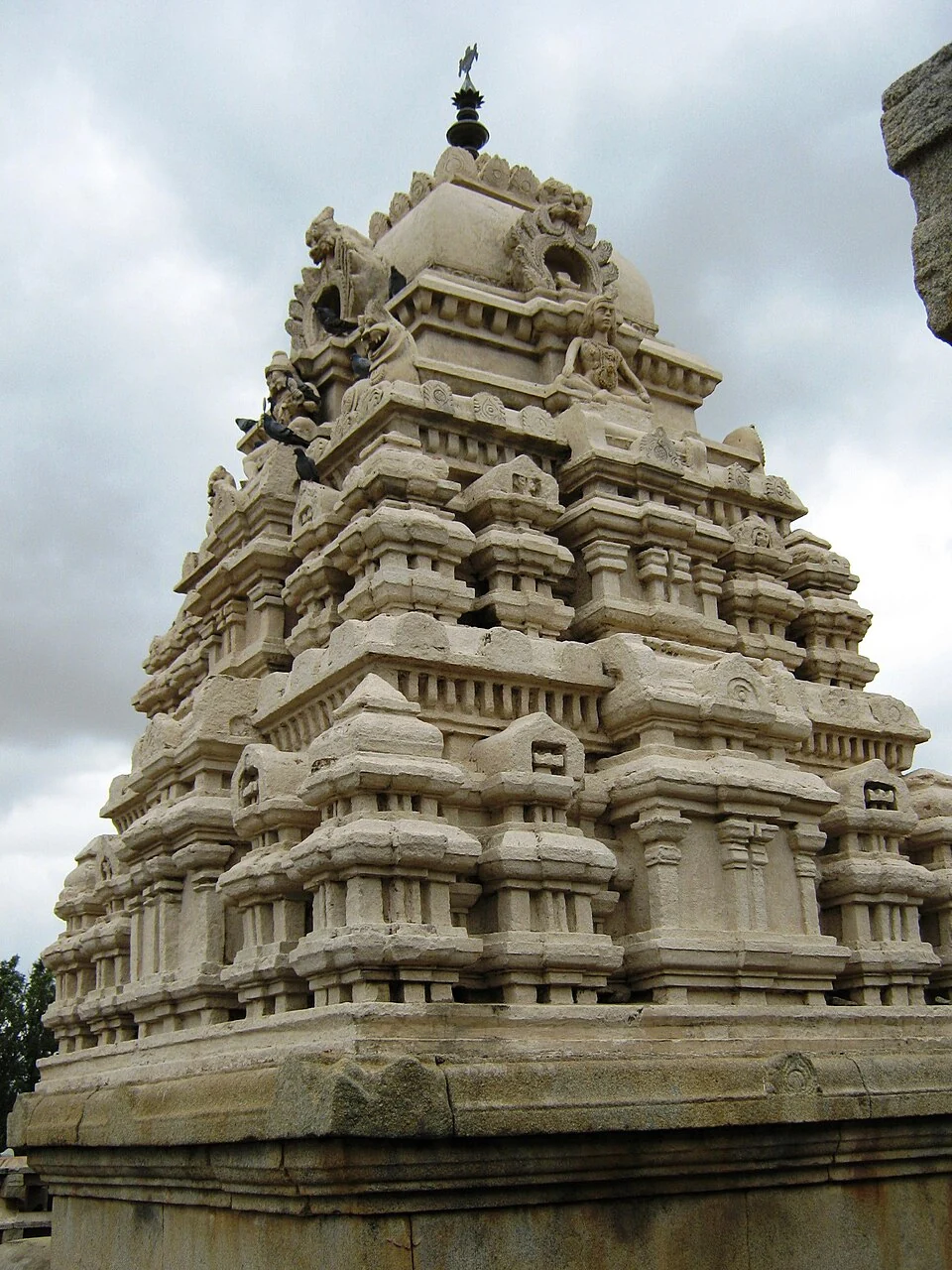
Lepakshi preserves Vijayanagara-period architecture, murals and carved pillars, with a large monolithic Nandi nearby. Local traditions connect its name with the Ramayana’s Jatayu. The much-discussed pillar is an architectural feature to observe without touching or disturbing the structure; it does not justify claims of unknown supernatural engineering.
Mythological story & sacred tradition
Local Ramayana tradition
Jatayu and the compassionate call
A local retelling places the wounded Jatayu at Lepakshi after he tries to rescue Sita from Ravana. Rama finds the bird and calls to him to rise, linking the Telugu expression “Le, pakshi” with the place-name. This is a regional association with the Ramayana story, rather than proof that the epic identifies this modern location.
Story sources: 2
What makes it special
Vijayanagara paintings, carved halls and the nearby monolithic Nandi give the site an artistic identity alongside its sacred story.
Reading temple architecture
Look at the relationship between the sanctum, halls, surrounding structures and the landscape. Reliefs and images may convey sacred narratives, while inscriptions, materials and construction techniques help historians study patronage and change. A monument may preserve several building phases rather than one moment in time.
Visiting and learning more
Begin with the linked authority for the shrine’s history, worship and visitor services. Check entry conditions, dress, photography and any reservation requirements before your visit. Opening times and special arrangements can change during major festivals.
Getting there
Lepakshi
- Local / nearby railway option
- Hindupur railway station
- Major long-distance railway option
- KSR Bengaluru City Junction
- Nearest airport / practical flight gateway
- Kempegowda International Airport, Bengaluru (BLR)
Hindupur is the nearby railhead; Bengaluru is a farther major hub with a substantial onward road or rail transfer.
Travel source: Sri Sathya Sai district · Lepakshi visitor guide · Incredible India · local rail and airport · Incredible India · district seasonal guidance · Sri Sathya Sai district · temple festival · Incredible India · Bengaluru major rail gateway
Sri Sathya Sai district · Lepakshi visitor guide
Best time to visit
November–February is a sensible cooler-season window for this district’s outdoor heritage visits; this is regional seasonal guidance rather than a closure schedule.
Festivals & occasions: Mahashivaratri is a major temple occasion. Lepakshi Utsavam is a cultural event; confirm whether an edition and programme have been announced.
Season & festival references: Sri Sathya Sai district · Lepakshi visitor guide · Incredible India · local rail and airport · Incredible India · district seasonal guidance · Sri Sathya Sai district · temple festival · Incredible India · Bengaluru major rail gateway
Reviewed 21 November 2026. Seasonal windows are guidance; confirm weather, access and the current event programme before booking.
Arrival points apply to the named approach. A gateway is a practical travel option, not a claim that it is the closest stop. Confirm passenger services and the onward transfer before booking.
References & further reading
- Official government guide · srisathyasai.ap.gov.in
Temple administration, government or heritage information for the shrine and current visitor arrangements. - Incredible India · Lepakshi’s Jatayu legend
Documents the tradition and its cultural setting; it does not establish the story as a historical event.