Official website and visitor information
The Sun Temple is an archaeological monument. Its admission ticket and festival admission are separate arrangements; use ASI’s official booking service for monument entry.
Puri district · Konark access · Odisha Tourism · Konark Festival and access
This monument appears in the Ministry of Culture’s list of ASI ticketed monuments. Visitor categories and any additional admission are determined by the booking portal.
Ministry of Culture · ticketed monuments
Use the ASI portal to select this monument, the date and the applicable visitor category. Check the current admission price and any separate museum or special-access ticket before paying.
The temple and its story
- Location
- Konark
- State
- Odisha
- Deity / tradition
- Surya
- Pilgrimage group
- Heritage temples
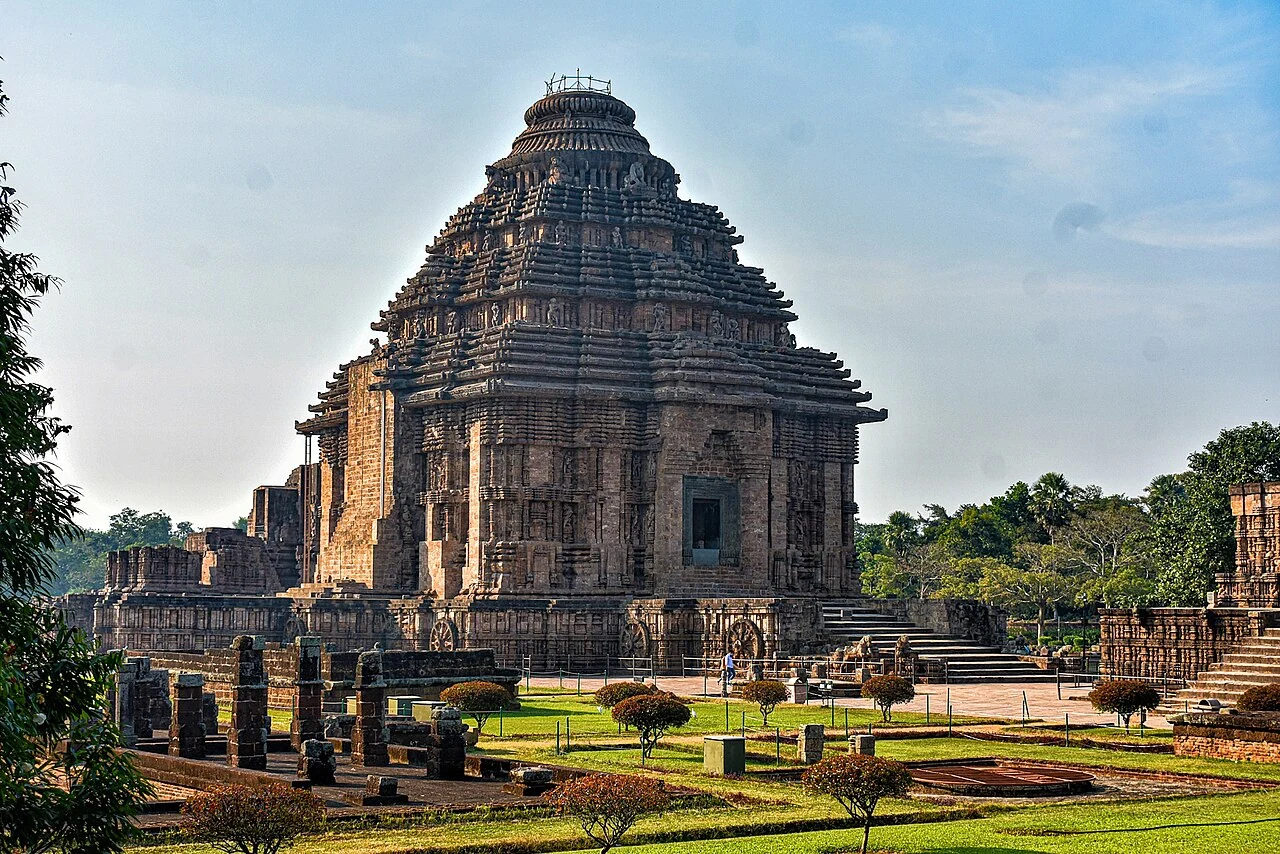
The thirteenth-century monument associated with Narasimhadeva I presents the Sun’s chariot in stone, with richly carved wheels, horses and sculptural imagery. It is an important example of Kalinga architecture and a UNESCO World Heritage Site. Stories about Samba belong to the wider religious tradition of Sun worship; they are distinct from the evidence for this building’s construction.
Mythological story & sacred tradition
Regional sacred tradition
Samba and the Sun’s grace
A regional sacred tradition tells of Samba, Krishna’s son, suffering a severe affliction and undertaking prolonged worship of Surya. The Sun’s grace restores him, connecting the coast with healing and solar devotion. This is the mythological background of the sacred landscape; it is not the construction history of the surviving medieval temple.
Story sources: 2
What makes it special
The monument turns the image of Surya’s chariot into architecture, with carved stone wheels and horses.
Architecture as a sacred image
Konark’s architectural form evokes Surya’s chariot, making the building itself part of the religious imagery. Its sculptural programme also records many aspects of artistic and social life. The UNESCO record provides a useful starting point for distinguishing the surviving monument, its history and later conservation.
Reading temple architecture
Look at the relationship between the sanctum, halls, surrounding structures and the landscape. Reliefs and images may convey sacred narratives, while inscriptions, materials and construction techniques help historians study patronage and change. A monument may preserve several building phases rather than one moment in time.
Visiting and learning more
Begin with the linked authority for the shrine’s history, worship and visitor services. Check entry conditions, dress, photography and any reservation requirements before your visit. Opening times and special arrangements can change during major festivals.
Getting there
Konark
- Local / nearest railhead
- Puri railway station
- Major long-distance railway option
- Bhubaneswar railway station
- Nearest airport
- Biju Patnaik International Airport, Bhubaneswar (BBI)
Travel source: Puri district · Konark access · Odisha Tourism · Konark Festival and access
Best time to visit
Winter (November–February) is the most comfortable season for the exposed monument and coast.
Festivals & occasions: The Konark Festival is held in December; use the current official programme for dates and tickets.
Season & festival references: Odisha Tourism · seasonal guidance
Reviewed 21 November 2026. Seasonal windows are guidance; confirm weather, access and the current event programme before booking.
Arrival points apply to the named approach. A gateway is a practical travel option, not a claim that it is the closest stop. Confirm passenger services and the onward transfer before booking.
References & further reading
- UNESCO heritage guide · whc.unesco.org
Temple administration, government or heritage information for the shrine and current visitor arrangements. - Incredible India · Konark and the Samba legend
Documents the tradition and its cultural setting; it does not establish the story as a historical event.