Official website and visitor information
Use TTD’s authorised booking channels and avoid touts. TTD prescribes traditional attire for specified darshan categories and sevas; read the dress requirements for your booking. Tirumala has no railway station, so continue uphill from Tirupati.
The temple and its story
- Location
- Tirumala, Tirupati
- State
- Andhra Pradesh
- Deity / tradition
- Venkateswara / Vishnu
- Pilgrimage group
- Major temples
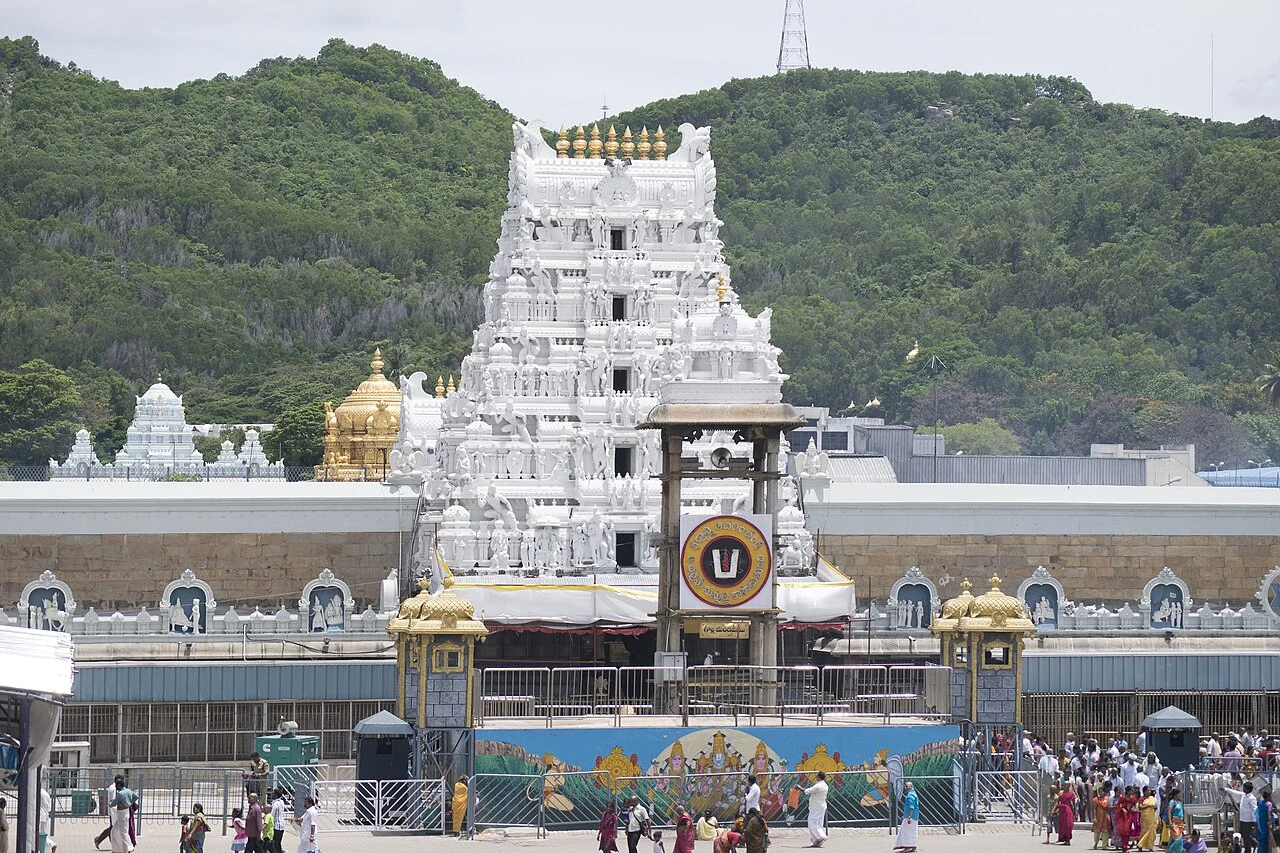
The hill shrine of Venkateswara is a major centre of Vaishnava devotion, with a long history of royal patronage. Temple traditions connect the deity with Padmavati and the sacred Seven Hills. Worship, prasadam and service to pilgrims shape daily life here. Follow Tirumala Tirupati Devasthanams for current darshan arrangements; donations are not a scientific measure of religious importance.
Mythological story & sacred tradition
Temple tradition
Srinivasa, Lakshmi and Padmavati
In the temple’s traditional account, Bhrigu tests the gods and strikes Vishnu’s chest. Lakshmi, whose dwelling is associated with his chest, leaves Vaikuntha. Vishnu descends to the hills as Srinivasa, where a cow sustains him at an anthill. He later marries Princess Padmavati and becomes the divine presence worshipped at Tirumala.
TTD brings together several scriptural traditions in its account, including the Venkatachala Mahatmya and Varaha Purana. The story gives the surrounding hills, sacred tank and neighbouring shrines a place in the pilgrimage, beyond the main sanctum.
Story sources: 3
What makes it special
The seven-hill setting and worship of Venkateswara, Padmavati and Varaha connect several sacred places into one pilgrimage.
Darshan and processional worship
Daily worship in the temple and public processional celebrations are related but different experiences. During Brahmotsavam, the processional deity is carried on a series of ceremonial vehicles or vahanas. TTD’s own publications explain the festival’s symbolism and publish the arrangements for each edition.
Understanding worship and sacred space
Darshan, offerings, processional images, music and seasonal festivals can give a temple different rhythms through the day and year. Practices are specific to the shrine and its community. Learning the deity’s local names and stories makes a visit more meaningful than viewing the building alone.
Visiting and learning more
Begin with the linked authority for the shrine’s history, worship and visitor services. Check entry conditions, dress, photography and any reservation requirements before your visit. Opening times and special arrangements can change during major festivals.
Getting there
Tirumala
- Local / nearest railhead
- Tirupati railway station
- Major long-distance railway option
- Renigunta Junction
- Nearest airport
- Tirupati Airport (TIR)
Tirupati is itself a major station; Renigunta is another main-line option. Check the station printed on your ticket.
Travel source: TTD · reaching Tirumala · Ministry of Tourism · Tirupati and Renigunta rail access
Tirumala Tirupati Devasthanams · official temple website · TTD · official booking portal
Best time to visit
October–February (autumn and winter) is the regional railway tourism guidance for more comfortable weather. Festival crowds can be large outside this window.
Season & festival references: South Coast Railway · regional seasons
Reviewed 21 November 2026. Seasonal windows are guidance; confirm weather, access and the current event programme before booking.
Arrival points apply to the named approach. A gateway is a practical travel option, not a claim that it is the closest stop. Confirm passenger services and the onward transfer before booking.
References & further reading
- Official temple website · tirumala.org
Temple administration, government or heritage information for the shrine and current visitor arrangements. - TTD · The Brahmotsavam tradition
The temple administration’s explanation of its processional festival. - TTD · Temple Legend and its stated Puranic sources
Documents the tradition and its cultural setting; it does not establish the story as a historical event.