Official website and visitor information
The Shore Temple forms part of the ASI-managed Group of Monuments at Mamallapuram. Check the monument ticket coverage before buying separately for nearby monuments.
Chengalpattu district · rail and air access · Ministry of Tourism · season and dance festival
This monument appears in the Ministry of Culture’s list of ASI ticketed monuments. Visitor categories and any additional admission are determined by the booking portal.
Ministry of Culture · ticketed monuments
Use the ASI portal to select this monument, the date and the applicable visitor category. Check the current admission price and any separate museum or special-access ticket before paying.
The temple and its story
- Location
- Mamallapuram
- State
- Tamil Nadu
- Deity / tradition
- Shiva and Vishnu
- Pilgrimage group
- Heritage temples
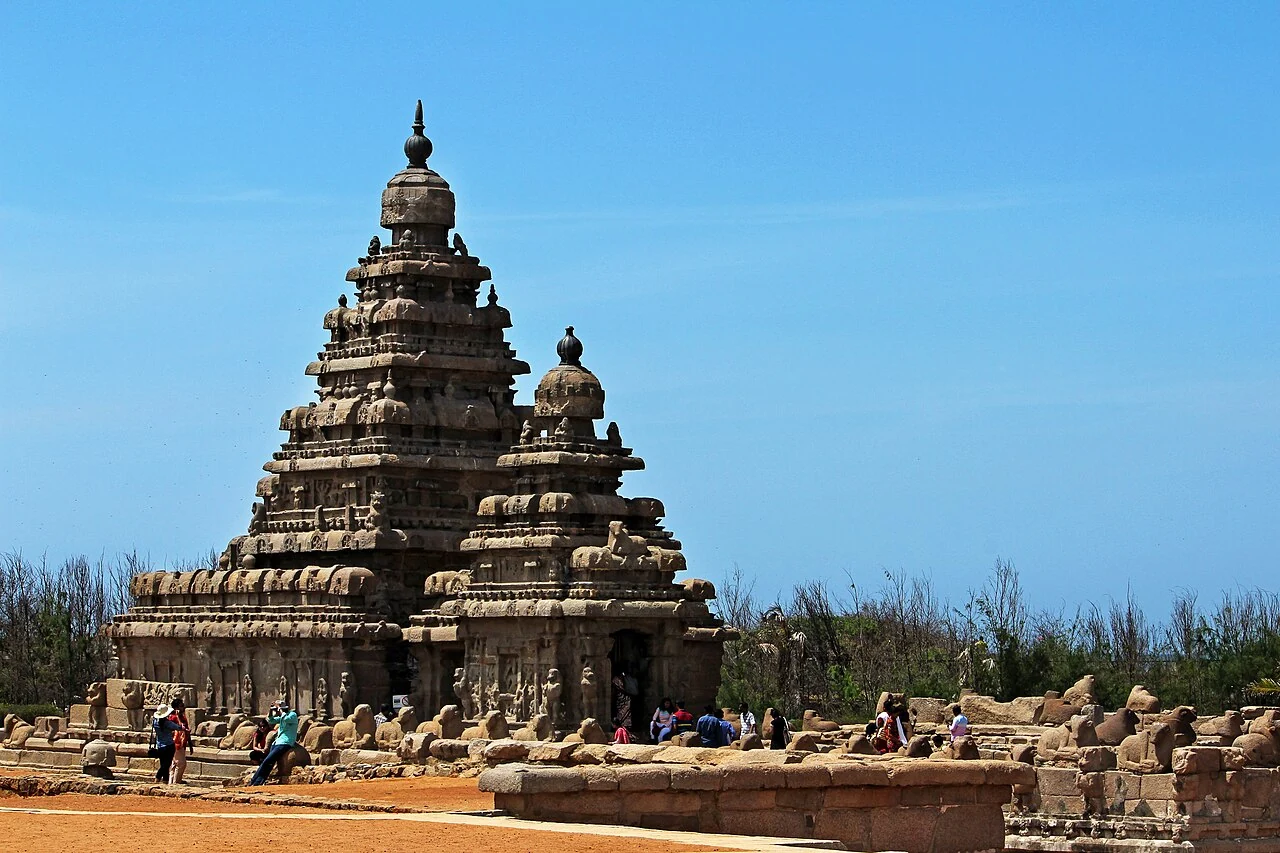
The early eighth-century coastal temple belongs to the Pallava architectural landscape at Mamallapuram. Its structural stone shrines mark a different building method from the nearby rock-cut caves and monolithic rathas. The “Seven Pagodas” story forms part of the coast’s remembered landscape; archaeological finds do not by themselves prove every detail of the legend.
Mythological story & sacred tradition
Sacred imagery
Vishnu’s cosmic rest beside Shiva’s shrines
The Shore Temple brings Shiva shrines together with a reclining image of Vishnu. The reclining form evokes Narayana’s cosmic rest: creation is understood within cycles of emergence, preservation and dissolution. This sacred imagery offers a way to read the monument without turning the separate coastal legend of the “Seven Pagodas” into a proven account of submerged temples.
Story sources: 1
What makes it special
The combination of Shaiva and Vaishnava imagery in a coastal Pallava complex is a defining feature.
The sea and the monument
The Shore Temple belongs to Mahabalipuram’s wider group of monuments, where structural and rock-cut works can be studied together. Its coastal setting is part of its visual identity and its conservation history. The UNESCO description explains why the group is significant beyond any one photograph.
Reading temple architecture
Look at the relationship between the sanctum, halls, surrounding structures and the landscape. Reliefs and images may convey sacred narratives, while inscriptions, materials and construction techniques help historians study patronage and change. A monument may preserve several building phases rather than one moment in time.
Visiting and learning more
Begin with the linked authority for the shrine’s history, worship and visitor services. Check entry conditions, dress, photography and any reservation requirements before your visit. Opening times and special arrangements can change during major festivals.
Getting there
Mamallapuram
- Local / nearest railhead
- Chengalpattu Junction
- Major long-distance railway option
- MGR Chennai Central
- Nearest airport
- Chennai International Airport (MAA)
Travel source: Chengalpattu district · rail and air access · Ministry of Tourism · season and dance festival
Chengalpattu district · rail and air access
Best time to visit
December–January (winter) is the official destination guide’s suggested period, also coinciding with the dance-festival season. Check northeast-monsoon and coastal weather alerts.
Festivals & occasions: The Mamallapuram Dance Festival generally runs during December–January; use the current Tamil Nadu Tourism programme.
Season & festival references: Chengalpattu district · rail and air access · Ministry of Tourism · season and dance festival
Reviewed 21 November 2026. Seasonal windows are guidance; confirm weather, access and the current event programme before booking.
Arrival points apply to the named approach. A gateway is a practical travel option, not a claim that it is the closest stop. Confirm passenger services and the onward transfer before booking.
References & further reading
- UNESCO heritage guide · whc.unesco.org
Temple administration, government or heritage information for the shrine and current visitor arrangements.