Official website and visitor information
The Devalaya warns that it has not authorised third-party online platforms to conduct pujas on its behalf. Check the official notice before paying anyone offering online puja services.
The temple and its story
- Location
- Nilachal Hill, Guwahati
- State
- Assam
- Deity / tradition
- Kamakhya / Devi
- Pilgrimage group
- Major temples
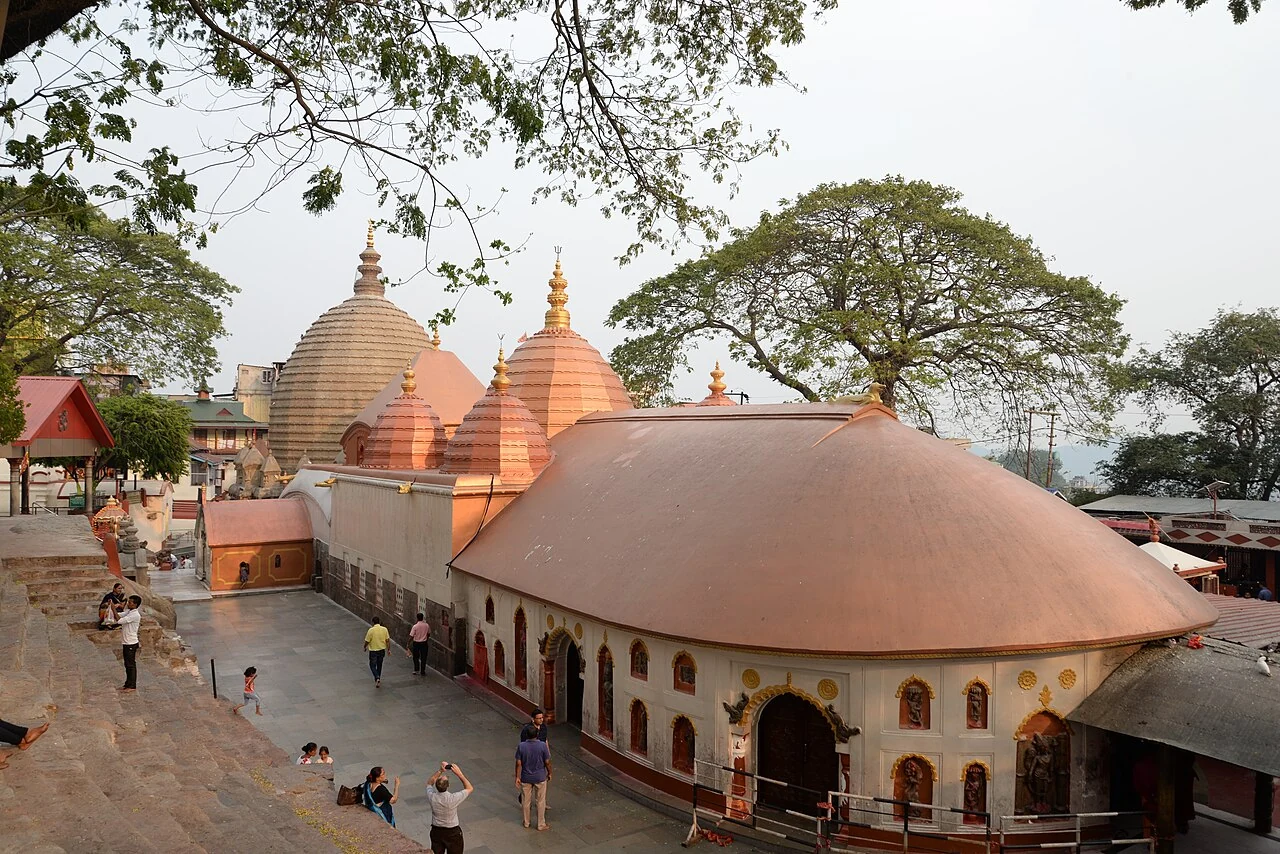
Kamakhya is a major Shakta centre with strong Tantric associations. Worship focuses on a natural rock formation in the sanctum. Ambubachi is associated with the goddess’s menstruation and the fertility of the earth in temple tradition. The hill has several related shrines. Use the temple’s own noticeboard and linked booking portal for current services.
Mythological story & sacred tradition
Shakta and local temple tradition
Sati, the sacred earth and the goddess
The Shakti Pitha tradition associates Kamakhya with the place where Sati’s yoni fell after her death and Shiva’s grief-stricken wandering. The goddess is approached through a natural cleft in the sanctum, rather than a conventional standing image.
Ambubachi centres on the goddess’s annual menstruation in local religious understanding. The temporary closure and reopening express the earth’s fertility and generative power. This ritual tradition is connected with Kamakhya’s sacred identity; it is not a biological claim about the landscape.
Story sources: 2
What makes it special
The natural sanctum and the Ambubachi observance make fertility and the living earth central to worship here.
Goddess worship and Ambubachi
Kamakhya’s sacred identity is closely connected with the generative power of the goddess. Ambubachi gives this theme a prominent place in the annual temple calendar. Religious interpretations of the celebration should be understood alongside the temple administration’s practical notices about closure, reopening and access.
Understanding worship and sacred space
Darshan, offerings, processional images, music and seasonal festivals can give a temple different rhythms through the day and year. Practices are specific to the shrine and its community. Learning the deity’s local names and stories makes a visit more meaningful than viewing the building alone.
Visiting and learning more
Begin with the linked authority for the shrine’s history, worship and visitor services. Check entry conditions, dress, photography and any reservation requirements before your visit. Opening times and special arrangements can change during major festivals.
Getting there
Nilachal Hill
- Local / nearest railhead
- Kamakhya Junction
- Major long-distance railway option
- Guwahati railway station
Travel source: Maa Kamakhya Devalaya · official access guidance
Maa Kamakhya Devalaya · official website
Best time to visit
October–March (autumn to early spring) is the Ministry of Tourism’s suggested Guwahati season.
Festivals & occasions: Ambubachi takes place in June and includes a temporary temple closure before reopening. Use the Devalaya’s current notice for precise dates and access restrictions.
Season & festival references: Ministry of Tourism · Guwahati seasons · Maa Kamakhya Devalaya · Ambubachi notices
Reviewed 21 November 2026. Seasonal windows are guidance; confirm weather, access and the current event programme before booking.
Arrival points apply to the named approach. A gateway is a practical travel option, not a claim that it is the closest stop. Confirm passenger services and the onward transfer before booking.
References & further reading
- Official temple website · maakamakhya.org
Temple administration, government or heritage information for the shrine and current visitor arrangements. - Incredible India · Kamakhya’s Shakti Pitha traditions
Documents the tradition and its cultural setting; it does not establish the story as a historical event.