Official website and visitor information
This monument appears in the Ministry of Culture’s list of ASI ticketed monuments. Visitor categories and any additional admission are determined by the booking portal.
Ministry of Culture · ticketed monuments
Use the ASI portal to select this monument, the date and the applicable visitor category. Check the current admission price and any separate museum or special-access ticket before paying.
The temple and its story
- Location
- Ellora, Chhatrapati Sambhajinagar
- State
- Maharashtra
- Deity / tradition
- Shiva
- Pilgrimage group
- Heritage temples
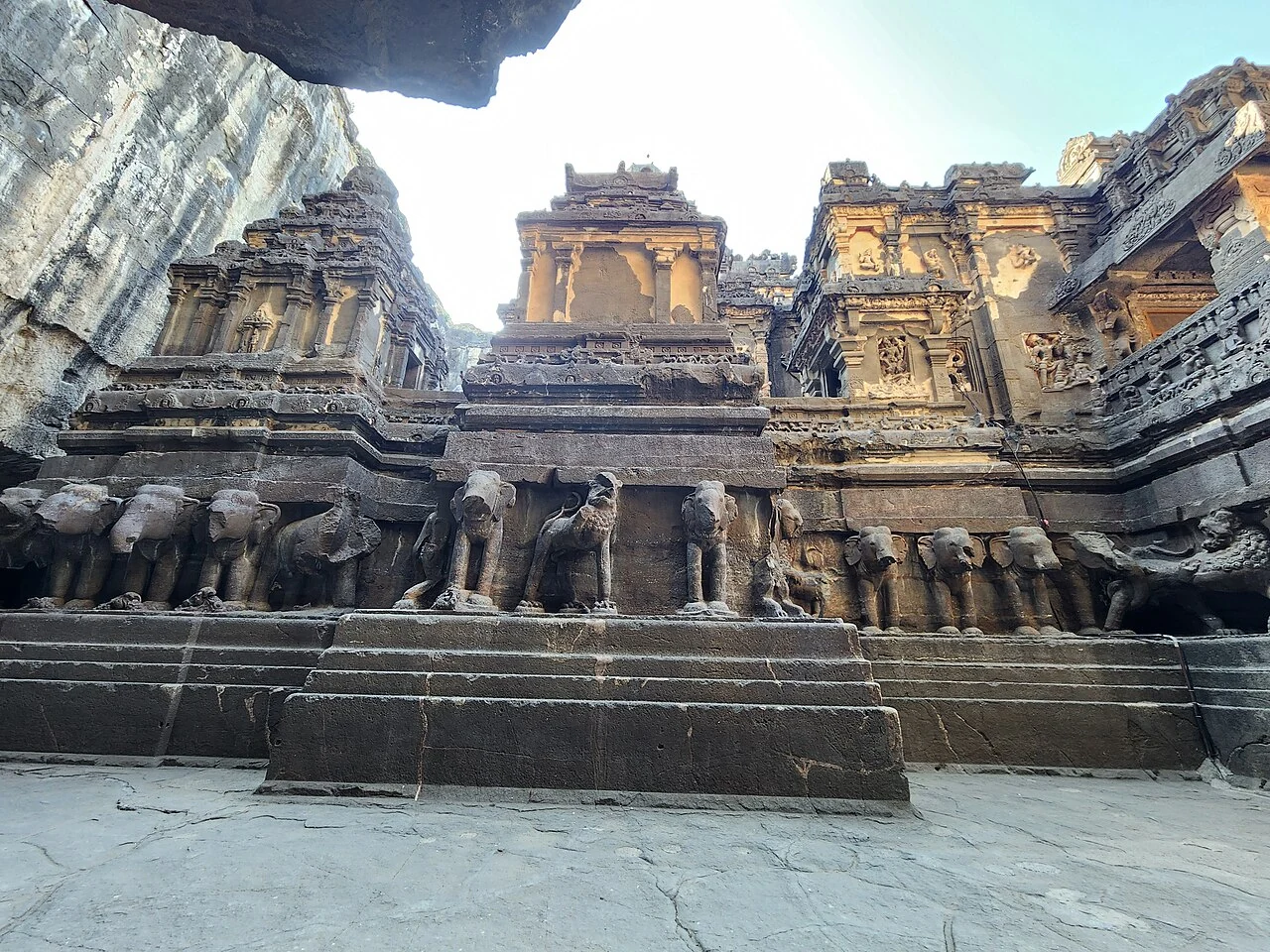
Cave 16 at Ellora is a monumental rock-cut temple associated with Rashtrakuta patronage in the eighth century. Craftspeople removed rock to create an apparently freestanding complex with courtyards, pillars and narrative sculpture. Its scale demonstrates sophisticated planning and skilled labour. Legends about its construction are meaningful traditions, not evidence that the work was impossible using human technology.
Mythological story & sacred tradition
Sacred story represented in sculpture
Ravana tries to lift Kailasa
One of the monument’s celebrated sculptural themes is Ravana shaking Mount Kailasa, the abode of Shiva and Parvati. In the sacred story, Ravana’s display of strength is overcome by Shiva, who presses the mountain down. Ravana’s pride gives way to devotion. The dramatic contrast between the distressed figures below and the divine couple above helps a viewer read the carved scene.
Story sources: 1
What makes it special
The temple is carved from the rock as an architectural evocation of Shiva’s mountain abode. Narrative sculpture is part of the experience of moving around it.
A monument carved from living rock
Kailasa belongs to Ellora’s wider landscape of Buddhist, Hindu and Jain caves. Its rock-cut construction changes how a visitor should read the monument: spaces and sculptural surfaces were created through the removal of stone. The surrounding caves reveal different periods, patrons and religious settings.
Reading temple architecture
Look at the relationship between the sanctum, halls, surrounding structures and the landscape. Reliefs and images may convey sacred narratives, while inscriptions, materials and construction techniques help historians study patronage and change. A monument may preserve several building phases rather than one moment in time.
Visiting and learning more
Begin with the linked authority for the shrine’s history, worship and visitor services. Check entry conditions, dress, photography and any reservation requirements before your visit. Opening times and special arrangements can change during major festivals.
Getting there
Verul (Ellora)
- Nearest / local railway station
- Chhatrapati Sambhajinagar (Aurangabad) railway station
- Major long-distance railway option
- Manmad Junction
- Nearest airport
- Chhatrapati Sambhajinagar (Aurangabad) Airport (IXU)
Aurangabad is the principal local rail arrival for Verul and already has long-distance trains. Manmad is a farther main-line interchange to compare if your origin has no convenient Aurangabad service.
Travel source: Maharashtra Tourism · Verul access and season
Best time to visit
October–March (autumn, winter and early spring) is the comfortable visiting season; summer afternoons can be hot.
Festivals & occasions: Mahashivratri, generally February–March, is a major occasion at Grishneshwar. Confirm the temple’s programme; this is separate from the Ellora monument visit.
Season & festival references: Maharashtra Tourism · Verul access and season
Reviewed 21 November 2026. Seasonal windows are guidance; confirm weather, access and the current event programme before booking.
Arrival points apply to the named approach. A gateway is a practical travel option, not a claim that it is the closest stop. Confirm passenger services and the onward transfer before booking.
References & further reading
- UNESCO heritage guide · whc.unesco.org
Temple administration, government or heritage information for the shrine and current visitor arrangements.