Official website and visitor information
An epic remembered across many landscapes
The Mahabharata brings together a dynastic struggle, journeys, debates about duty and the consequences of war. Places across India preserve particular episodes through shrines, festivals, names and storytelling. This guide gathers a selection into regional journeys, rather than claiming to reconstruct one continuous route followed by the Pandavas.
Government tourism sources use different circuit groupings. Kurukshetra’s sacred landscape includes the 48 Kos tirthas; Uttarakhand Tourism presents its own Mahabharata Circuit. Our wider guide connects these with Hastinapur and Delhi. A tourism circuit, a community’s sacred identification and an archaeological discovery answer different questions.
Begin with the Mahabharata reading guide. Keep the text beside the places: which episode is remembered here, who tells it, and what does the surviving monument show?
The story behind the journey
In the epic, the Pandavas and Kauravas belong to the Kuru dynasty. The dice-game episode leads to the Pandavas’ exile, including a final period in concealment. After their return, efforts to settle the dispute fail and the conflict culminates in the Kurukshetra war. These are episodes in the Mahabharata narrative, not a dated itinerary established by modern excavation.
The Bhagavad Gita occurs within the war narrative: Arjuna’s distress on facing relatives and teachers becomes the setting for Krishna’s teaching. Much later in the epic, the Mahaprasthanika Parva describes the Pandavas and Draupadi relinquishing royal life and undertaking their final journey. It should not be confused with their earlier exile. Regional Himalayan traditions attach particular landmarks to that final departure.
Read the epic in K. M. Ganguli’s translation · Book 17: the Great Journey
Hastinapur: the Kuru kingdom in living memory
Hastinapur in Uttar Pradesh is traditionally identified with the Kuru capital. Meerut district’s guide lists Vidur Tila, Pandaveshwar Temple, Karna Temple and Draupadi Ghat among its Mahabharata-associated places. These names make the town a useful starting point for understanding how characters and episodes become attached to a landscape.
Read the sacred associations alongside the history of settlement. Archaeological remains can reveal habitation, pottery and building phases; they do not by themselves establish that a named epic character occupied a particular modern shrine. Hastinapur also has important Jain and Sikh associations, so its religious life extends beyond this circuit.
Meerut district: Hastinapur and its sacred places · Hastinapur on Google Maps
Delhi: Indraprastha tradition and Purana Qila
The mound beneath Purana Qila is traditionally associated with Indraprastha, the Pandavas’ city. The visible fort belongs to a much later historical setting. This contrast is precisely what makes the stop valuable: a visitor can learn to distinguish a remembered epic city, excavated settlement layers and standing architecture.
The Archaeological Survey’s record describes the traditional association; government excavation reports discuss material remains from successive periods. Visit the fort for the monument and its interpretation, rather than labelling the surviving walls as the Pandavas’ palace.
Delhi Tourism: Purana Qila and visitor information · ASI monument record · Google Maps locator
Kurukshetra: Jyotisar and the Gita
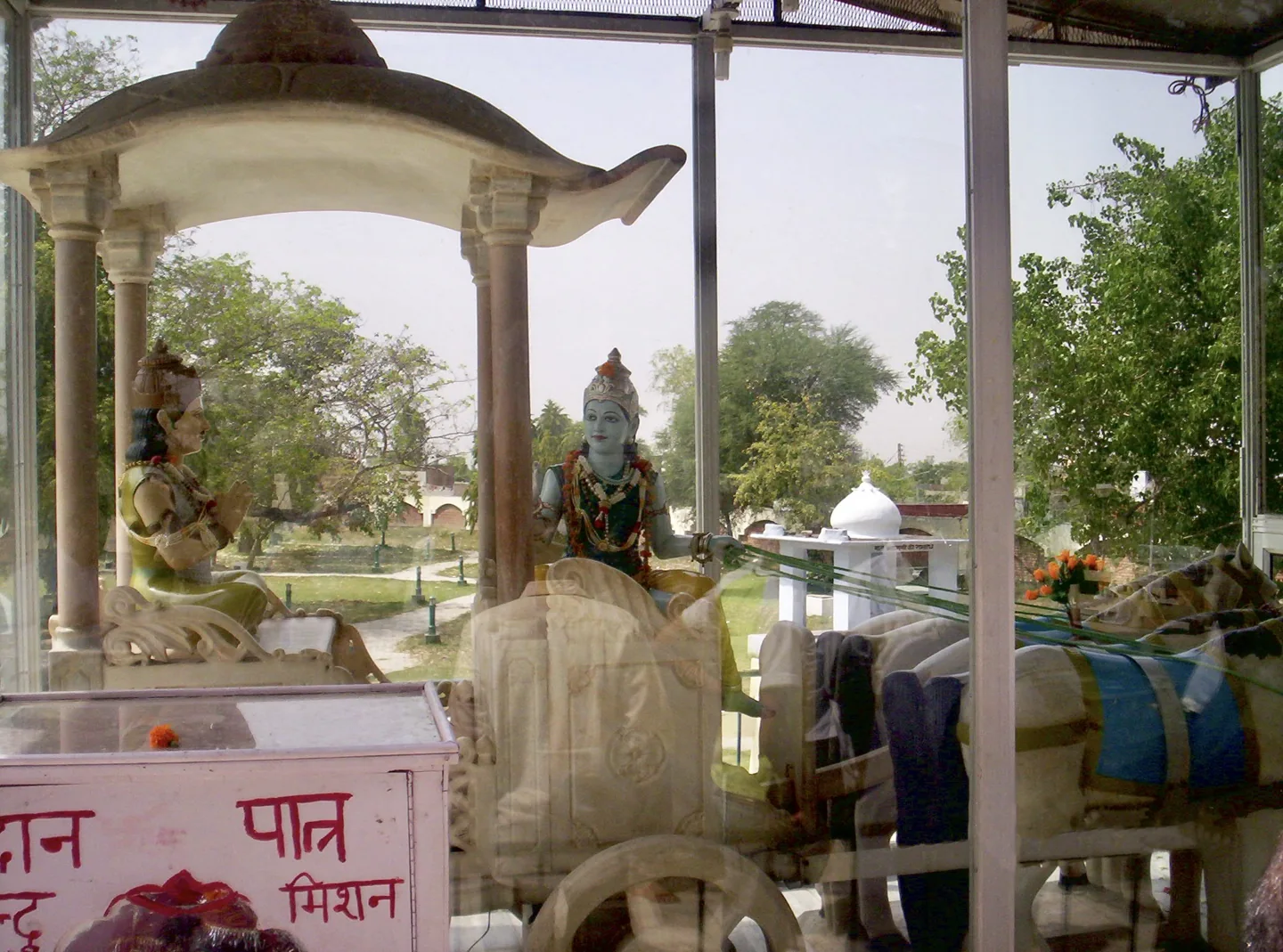
Jyotisar is revered as the place where Krishna taught the Bhagavad Gita to Arjuna. The shrine’s tree, imagery and devotional setting express this memory. Reading even a short passage before visiting gives the place a different depth from simply identifying a photograph.
The nearby Mahabharat Anubhav Kendra presents the epic through contemporary interpretation. Treat its displays as a modern way of telling and explaining the story. The Gita guide introduces action, knowledge and devotion, with links for further reading.
Kurukshetra district: Jyotisar · Haryana Tourism: Mahabharat Anubhav Kendra · Jyotisar map · Experience centre map
Sacred water and the memory of Bhishma
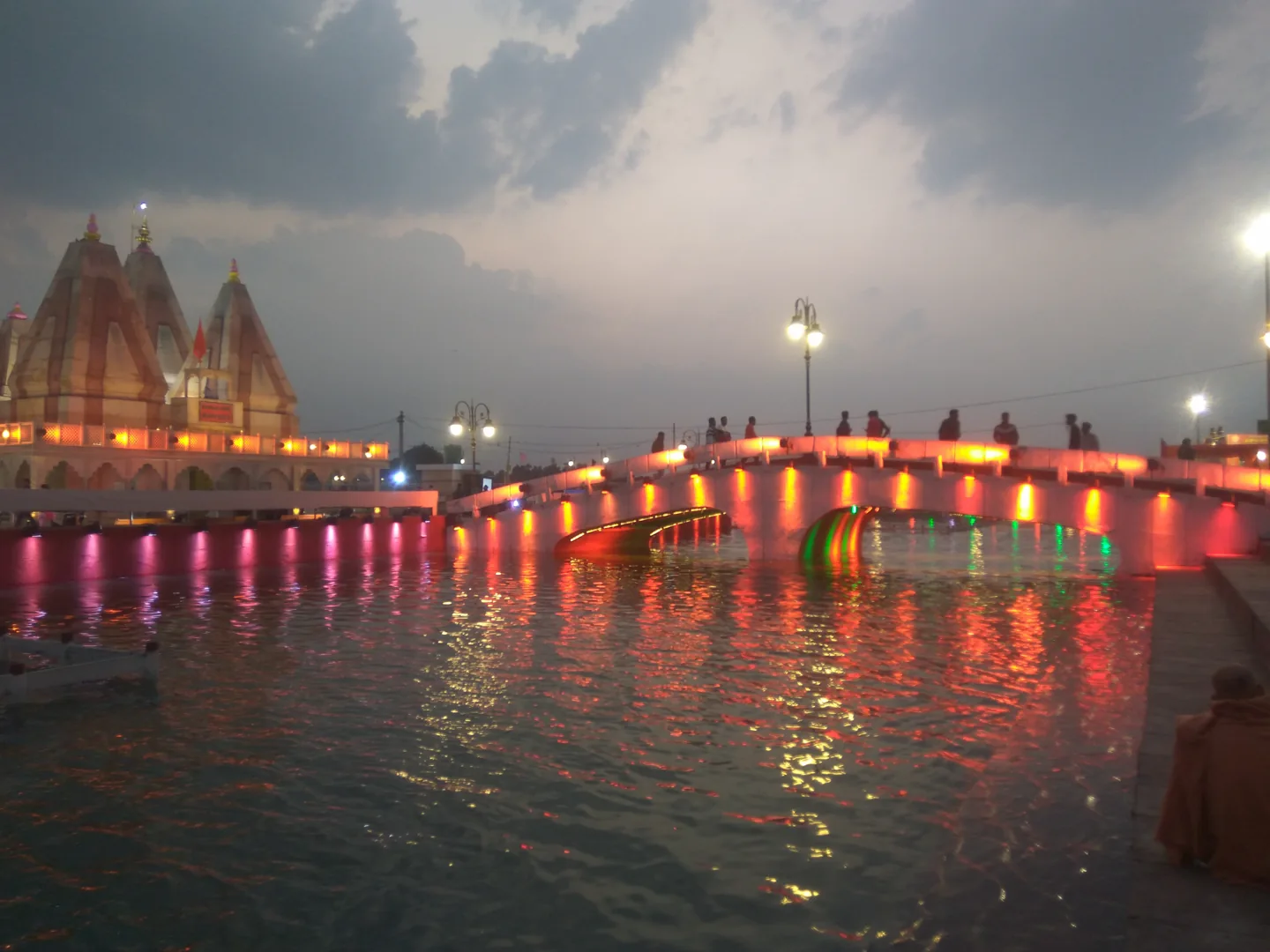
Brahma Sarovar belongs to Kurukshetra’s wider sacred landscape. Its traditional association with Brahma and its place in pilgrimage gatherings explain why the circuit includes more than battle-related sites. Watch how pathways, shrines and the water organise the space; follow current local guidance for ceremonies and access.
Official Brahma Sarovar information · Google Maps locator
Bhishma Kund at Narkatari is associated in pilgrimage tradition with Bhishma resting on his bed of arrows. The remembered episode makes a small sacred site part of the epic’s larger reflection on loyalty, suffering and duty. The site’s modern form should not be treated as the physical remains of that scene.
Incredible India: Bhishma Kund tradition · District reference · Google Maps locator
Museums: how later generations picture the epic
The Shri Krishna Museum and the Kurukshetra Panorama and Science Centre offer another way into the landscape. Look at how artists and exhibition designers select episodes, represent Krishna and communicate the scale of the war. Compare what the display says with the text or institution’s explanation.
A dramatic panorama is an interpretation, not archaeological footage. Allow time for the museum labels and ask which exhibits are historical objects and which are modern reconstructions. The district guide supplies practical starting points; check museum opening and ticket arrangements before travel.
Shri Krishna Museum: district guide · Museum map · Panorama and Science Centre: official description · Centre map
Mana and the Himalayan traditions
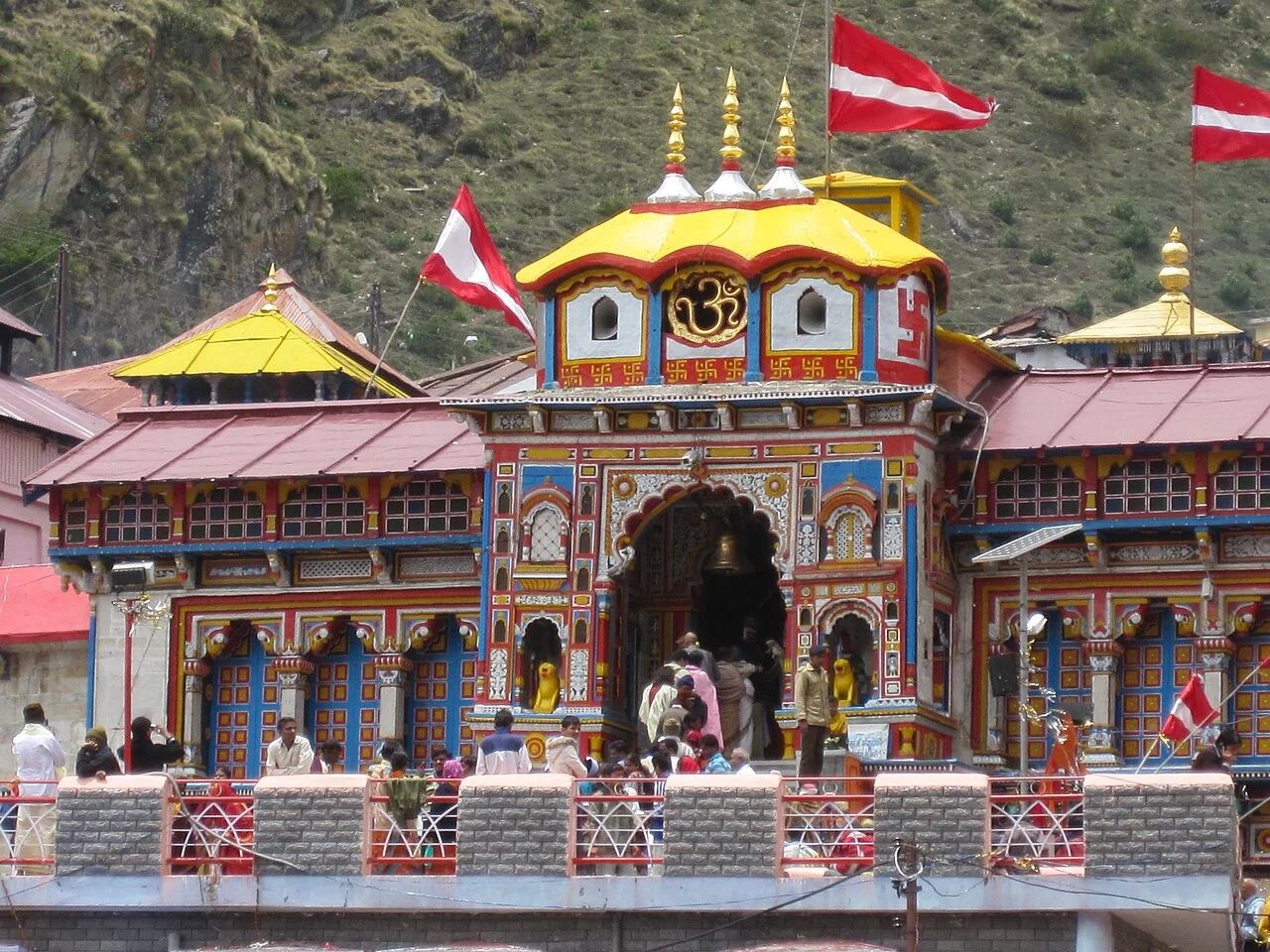
Near Badrinath, Mana’s landscape is associated with Vyasa, Bhima and the Pandavas. Bhim Pul is remembered through the story of Bhima placing a rock across the Saraswati. Accounts differ in the journey to which they attach it. The local identification and the epic’s Great Journey should be explained together, without presenting a modern mountain itinerary as a verbatim map from the Sanskrit text.
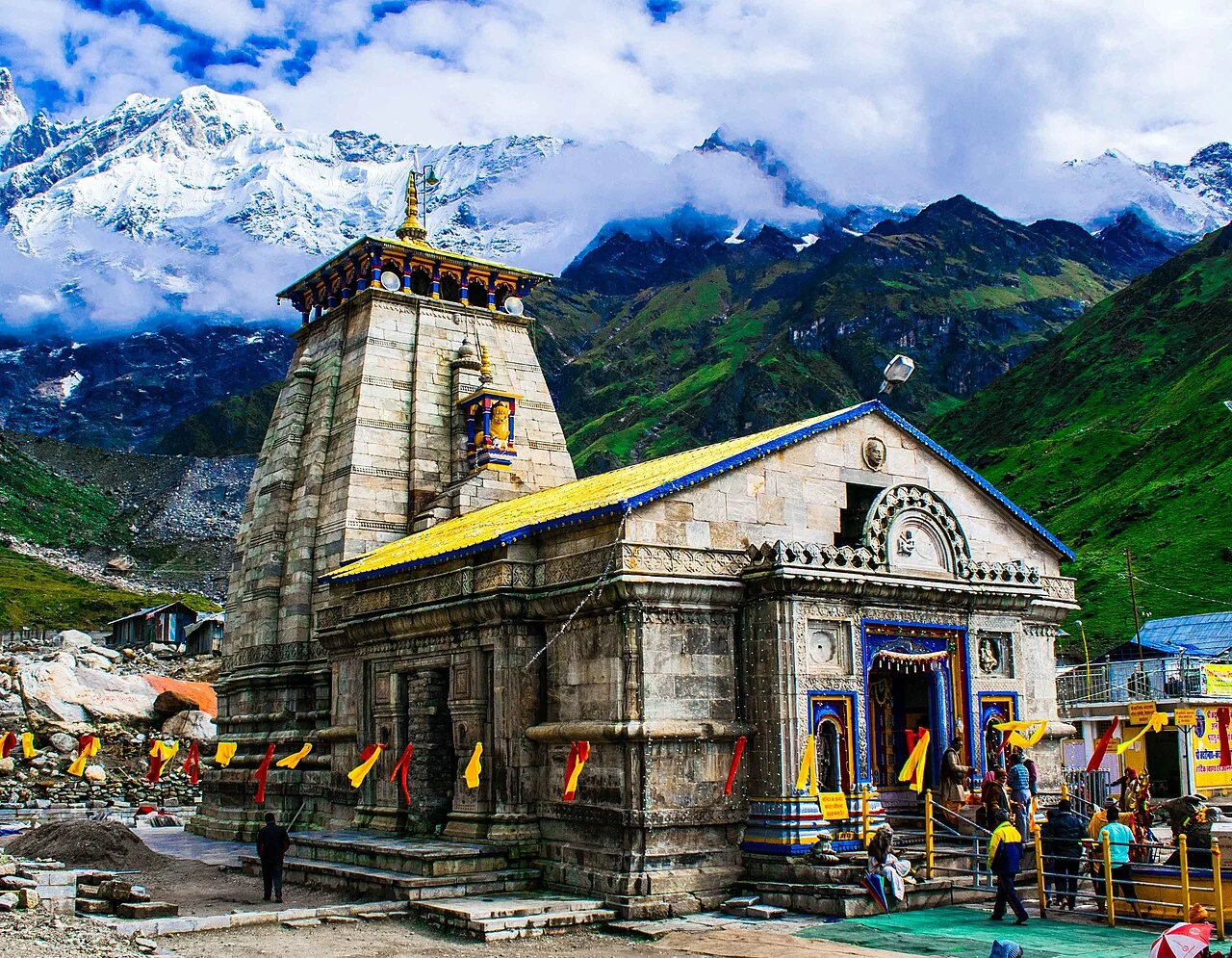
The Panch Kedar guide covers the distinct tradition of the Pandavas seeking Shiva after the war. It already explains the five shrines and their approaches; use that guide rather than treating them as quick roadside additions to Mana.
Uttarakhand Tourism: its Mahabharata Circuit · Incredible India: Bhim Pul and its tradition · Mana map · Bhim Pul map
Plan three regional journeys
- Delhi–Hastinapur: combine a fort and archaeology visit with the sacred places of the Kuru tradition. Allow separate travel time rather than compressing everything into one sightseeing day.
- Kurukshetra: group Jyotisar, the sarovars and Bhishma Kund with a separate period for museums. The district offers one- and two-day suggestions; choose fewer stops if you want time for reading or worship.
- Garhwal: plan Mana and any Kedar journey around seasonal mountain access, local permissions and the demands of the chosen route. A village map pin does not establish a safe trail to a remote lake or pass.
No single government booking service is identified for this combined itinerary. Use the official destination and institution links for each region. Confirm current hours, tickets, road access and accommodation directly. Maps here locate places; they are not an authenticated reconstruction of the epic’s route.
Kurukshetra’s official planning guide · Uttarakhand registration information where applicable · Explore more pilgrimage circuits
Getting there
Hastinapur
- Local / regional railway option
- Meerut City railway station
- Major long-distance railway option
- Meerut City railway station
- Practical airport gateway
- Indira Gandhi International Airport, Delhi (DEL)
Check train stops, available flights and the onward road transfer for your travel dates. These are practical gateways, not a surveyed ranking of every nearby station. The same station serves both local arrival and longer-distance journeys; a second minor station is not needed.
Travel source: Meerut district · Hastinapur visitor guide · Government tourism · regional winter guidance
Meerut district · Hastinapur visitor guide
Hastinapur has Jain, Hindu and Sikh sacred associations. Its Mahabharata associations are traditions; individual archaeological sites and living shrines need separate interpretation.
Meerut district · Hastinapur visitor guide · Government tourism · regional winter guidance
Best time to visit
For outdoor heritage visits, favour cooler winter weather; this is practical planning advice rather than a verified destination-specific opening window.
Festivals & occasions: Check the individual Jain temple and pilgrimage calendars; this circuit has no single shared festival date.
Season & festival references: Meerut district · Hastinapur visitor guide · Government tourism · regional winter guidance
Reviewed 21 November 2026. Seasonal windows are guidance; confirm weather, access and the current event programme before booking.
Purana Qila, Delhi
- Local railway option
- Hazrat Nizamuddin railway station
- Major long-distance railway option
- New Delhi railway station
- Airport gateway
- Indira Gandhi International Airport, Delhi (DEL)
These are city railway gateways, not Metro stations or a measured closest-stop ranking. Use local transport for the final approach.
Travel source: Official destination and visitor guide · Incredible India · Delhi travel information
Purana Qila is an archaeological monument. Its association with epic Indraprastha is a tradition; an entry ticket is not evidence identifying the excavated site with a specific epic event.
Best time to visit
October–March: the cooler Delhi season is generally better for outdoor sightseeing; check local weather and air-quality advisories.
Season & festival references: Official destination and visitor guide · Incredible India · Delhi travel information
Reviewed 21 November 2026. Seasonal windows are guidance; confirm weather, access and the current event programme before booking.
Kurukshetra: Jyotisar, Brahma Sarovar, Bhishma Kund and the museum area
- Local / regional railway option
- Kurukshetra Junction
- Major long-distance railway option
- Kurukshetra Junction
- Practical airport gateway
- Shaheed Bhagat Singh International Airport, Chandigarh (IXC)
Check train stops, available flights and the onward road transfer for your travel dates. These are practical gateways, not a surveyed ranking of every nearby station. The same station serves both local arrival and longer-distance journeys; a second minor station is not needed.
Travel source: Kurukshetra district · travel and visiting season
Kurukshetra district · travel and visiting season
Brahma Sarovar, Jyotisar and the museums are separate stops. Budget for local transfers and check admission arrangements individually.
Kurukshetra district · travel and visiting season
Best time to visit
October–February is the district’s recommended winter sightseeing season.
Festivals & occasions: International Gita Mahotsav, Somvati Amavasya and eclipse-related gatherings are important occasions; check the district programme.
Season & festival references: Kurukshetra district · travel and visiting season
Reviewed 21 November 2026. Seasonal windows are guidance; confirm weather, access and the current event programme before booking.
Mana via Badrinath
- Local railhead for the Garhwal approach
- Rishikesh railway station
- Major long-distance railway option
- Haridwar Junction
- Nearest airport
- Dehradun Airport, Jolly Grant (DED)
Rishikesh is the local railhead used in the pilgrimage guidance; Haridwar is a major long-distance gateway. Yog Nagari Rishikesh is a separate station: check the station named on your ticket. Continue by road to the named approach; rail does not reach the shrine. Continue beyond Badrinath to Mana only when the road is open.
Travel source: Badarinath–Kedarnath Temple Committee · access and seasonal advice · Ministry of Tourism · Badrinath seasons and access
Best time to visit
May–June (late spring/early summer) and September–October (autumn) are useful planning windows. High-altitude shrines have winter closures; travel only within the current announced opening dates and check road or trail conditions during monsoon.
Festivals & occasions: Nearby Badrinath follows its annual opening and closing ceremonies; the village itself has no fixed festival date asserted here.
Season & festival references: Badarinath–Kedarnath Temple Committee · access and seasonal advice · Ministry of Tourism · Badrinath seasons and access · Uttarakhand Tourism · shrine opening and route context
Reviewed 21 November 2026. Seasonal windows are guidance; confirm weather, access and the current event programme before booking.
Arrival points apply to the named approach. A gateway is a practical travel option, not a claim that it is the closest stop. Confirm passenger services and the onward transfer before booking.
Sources & further reading
Read the evidence and traditions behind this guide.
- K. M. Ganguli translation — Mahabharata
- Mahaprasthanika Parva — Book 17
- Meerut district — Hastinapur
- ASI monument record — Purana Qila
- Kurukshetra district — city and pilgrimage guide
- Haryana Tourism — Kurukshetra and the 48 Kos landscape
- Uttarakhand Tourism — Mahabharata Circuit
- Incredible India — Bhim Pul