Official website and visitor information
The geological story
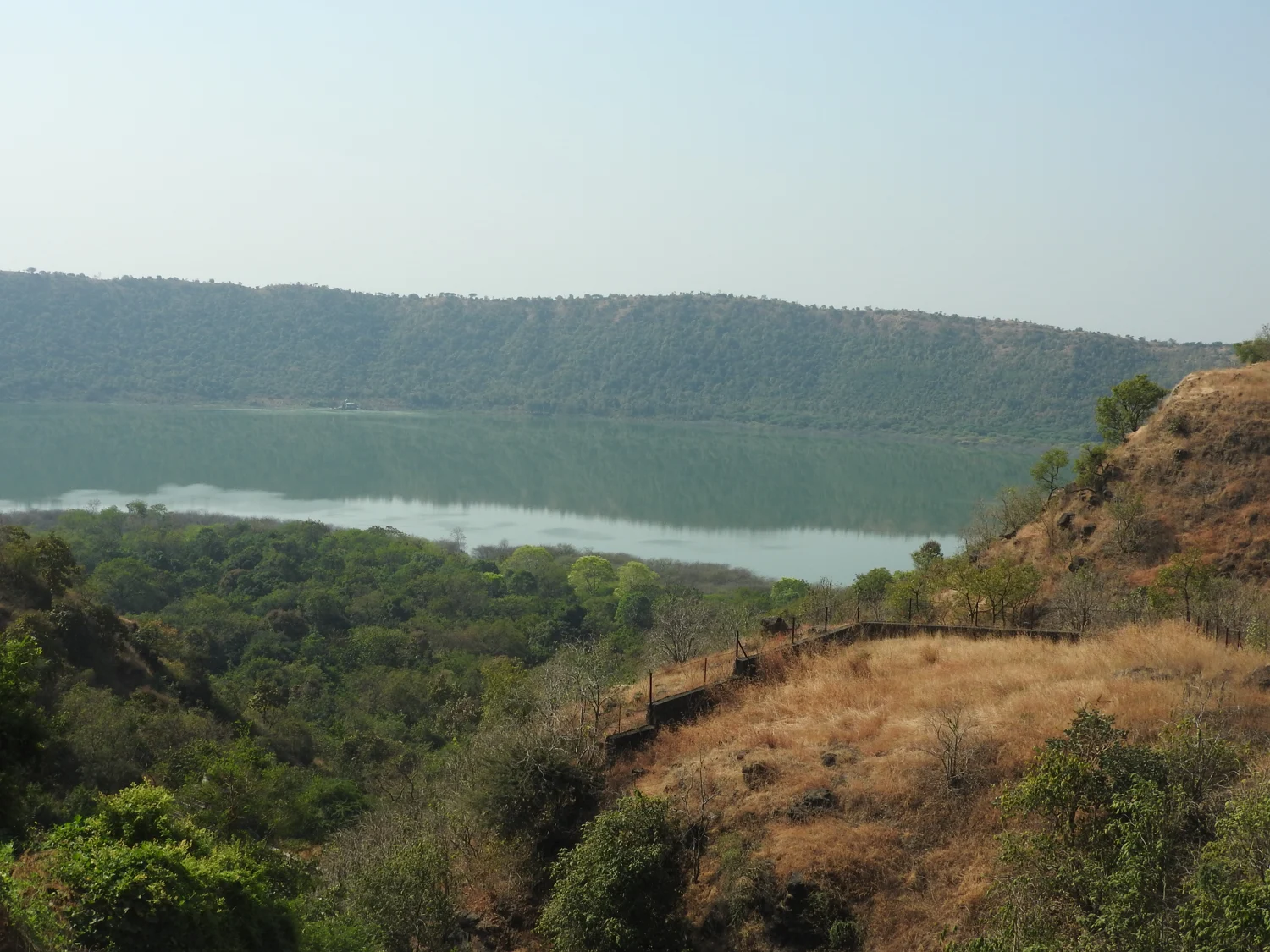
Maharashtra Tourism identifies Lonar as a meteorite-impact crater in the basaltic Deccan Plateau. A visitor sees a lake today, but its setting records a much more violent event: an impact excavated a depression in the rock, which later became a lake. The saline and alkaline water adds another distinctive feature to the basin.
Its scientific interest does not require calling it the only crater lake in the world. Crater ages and geological interpretations should be read through specialist research rather than treated as settled by a short travel description; this guide avoids presenting a disputed precise age.
A place with more than one kind of meaning
The state tourism account also describes historic temples around the lake, including Daitya Sudhan. These show that Lonar is both a geological landscape and a place of religious significance. Scientific explanations of the crater’s formation and sacred interpretations answer different kinds of questions; a temple tradition should not be used as geological evidence.
For a thoughtful visit, compare the shape of the basin with the buildings and paths around it. Ask which features belong to the impact landscape and which reflect later human settlement. Keeping those stories distinct makes both easier to appreciate.
Visit with care
Plan for uneven ground if you intend to explore beyond a viewpoint. Confirm the permitted routes and current conditions with local authorities or a knowledgeable guide. Do not collect rocks, disturb wildlife or enter the lake simply because a path reaches the shore.
Think of the rim view as an introduction, not a checklist completed: the landscape is an opportunity to learn how geology, water chemistry, ecology and local worship can occupy the same place. The official source below offers a starting point for visitor planning.
Getting there
Lonar
- Officially recommended railhead (nearest ranking not independently established)
- Jalna railway station
- Major long-distance railway option
- Jalna railway station
- Aurangabad regional flight gateway
- Chhatrapati Sambhajinagar (Aurangabad) Airport (IXU)
Maharashtra Tourism names Jalna as its recommended rail approach, with Aurangabad airport for flights. The earlier Partur suggestion was not independently confirmed as the best passenger option, so it is not labelled nearest. The same station serves both local arrival and longer-distance journeys; a second minor station is not needed.
Travel source: Maharashtra Tourism · Lonar access and seasons
Maharashtra Tourism · Lonar access and seasons
Best time to visit
October–March is the official recommended season. Heavy monsoon rain can make crater exploration difficult; summer can be extremely hot.
Season & festival references: Maharashtra Tourism · Lonar access and seasons
Reviewed 21 November 2026. Seasonal windows are guidance; confirm weather, access and the current event programme before booking.
Arrival points apply to the named approach. A gateway is a practical travel option, not a claim that it is the closest stop. Confirm passenger services and the onward transfer before booking.
Sources & further reading
Read the evidence and traditions behind this guide.
Official information & map
Read more · Official visitor information · Google Maps locator
Sources reviewed on 21 October 2026. Check local access and travel notices before visiting.