Official website and visitor information
Allow for thousands of steps down and back up. Meghalaya Tourism recommends a local guide or a companion familiar with the route.
Meghalaya Tourism · Nongriat route, airports and seasons · Meghalaya Tourism · planning your trip
A bridge that continues to grow
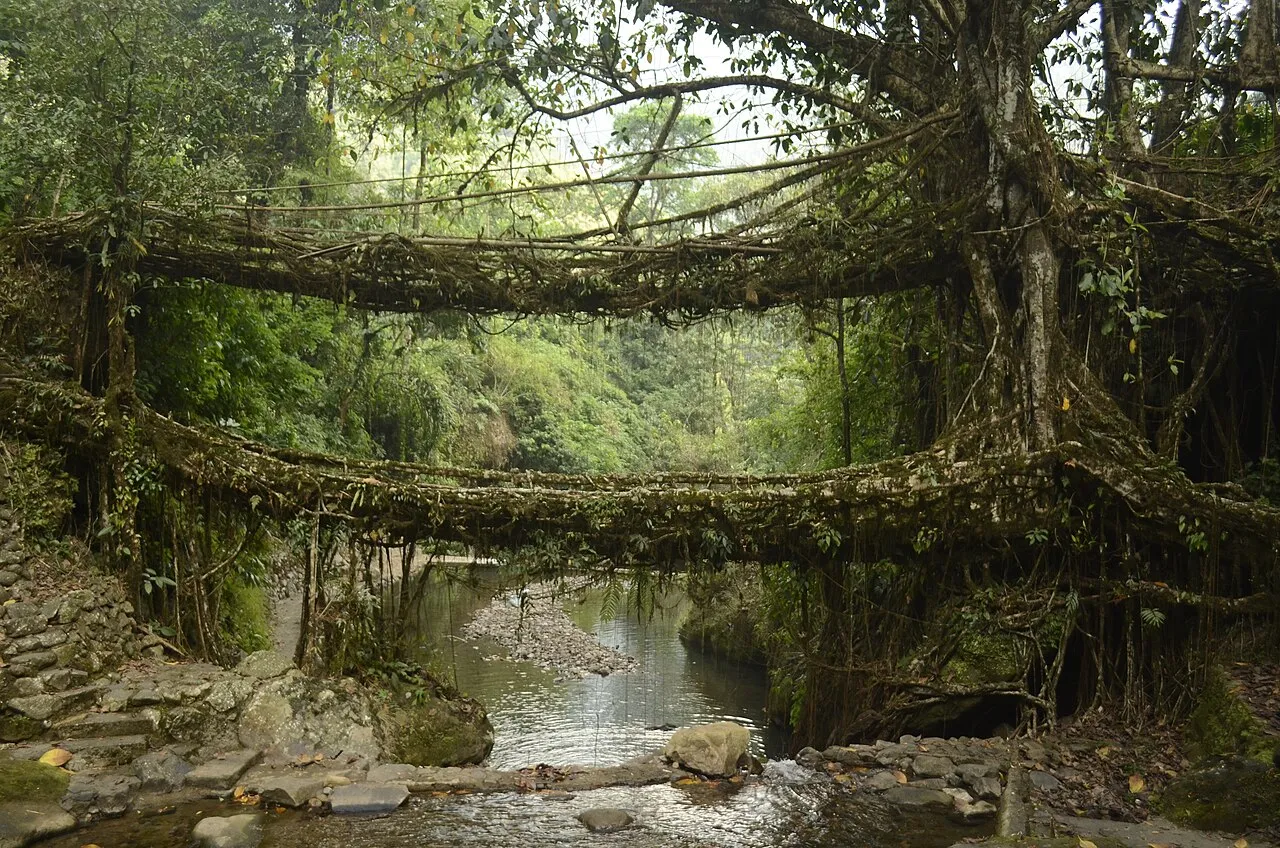
Living root bridges, or jingkieng jri, are made by guiding the roots of living rubber fig trees across streams and other obstacles. The Indian submission on UNESCO’s Tentative List describes a system of planting, nurturing and shaping living structures, especially associated with Khasi communities. It is intergenerational knowledge: the people who begin a bridge may be working for neighbours and descendants who will use it much later.
What makes this landscape distinctive is the relationship between living material, heavy rainfall, village connections and collective care. A photograph of the bridge alone can miss the people whose continued work makes it useful.
Where to look more closely
Meghalaya Tourism lists several places where visitors can encounter root bridges, including Nongriat, Rangthylliang–Mawkyrnot, Kudengrim and Nongbareh. Nongriat’s double-decker bridge is well known, but it is one expression of a wider regional practice. The approach involves substantial walking and steps; choose a visit suited to your mobility and check the route locally.
Ask a local guide how the structure is maintained, which paths residents use and how visitors can avoid obstructing them. That conversation often reveals more than simply comparing the age or length of bridges.
Heritage status and respectful visiting
The cultural landscape was submitted to India’s UNESCO Tentative List in 2022. A tentative listing is a step towards possible nomination, not inscription as a World Heritage Site. The linked record makes that status clear.
Use designated paths, follow local guidance and do not climb on or cut roots for photographs. The bridge is working infrastructure as well as a visitor attraction. Check weather and access before starting a walk, and take litter back with you. For the existing route introduction, see our Nongriat trek guide.
Getting there
Tyrna trailhead for Nongriat
- Regional railhead (no railway at Tyrna)
- Guwahati railway station
- Major long-distance railway option
- Guwahati railway station
- Nearest airport / regional flight gateway
- Shillong Airport, Umroi (SHL)
The Nongriat trail begins at Tyrna after the road journey through Sohra. Guwahati is the major regional rail gateway rather than a station beside the trail. Shillong airport is closer; compare Guwahati flights as an alternative. The same station serves both local arrival and longer-distance journeys; a second minor station is not needed.
Travel source: Meghalaya Tourism · Nongriat route, airports and seasons · Meghalaya Tourism · planning your trip
Meghalaya Tourism · Nongriat route, airports and seasons
Best time to visit
October–March is Meghalaya Tourism’s recommended dry-season window for the Nongriat walk.
Season & festival references: Meghalaya Tourism · Nongriat route, airports and seasons · Meghalaya Tourism · planning your trip
Reviewed 21 November 2026. Seasonal windows are guidance; confirm weather, access and the current event programme before booking.
Arrival points apply to the named approach. A gateway is a practical travel option, not a claim that it is the closest stop. Confirm passenger services and the onward transfer before booking.
Sources & further reading
Read the evidence and traditions behind this guide.
Official information & map
Read more · Official visitor information · Google Maps locator
Sources reviewed on 21 October 2026. Check local access and travel notices before visiting.