Official website and visitor information
Winter worship and seasonal closure
During Badrinath’s winter closure, the Uddhava image associated with Lord Badri is worshipped at Yogadhyan Badri in Pandukeshwar. This should not be described as the principal Badrinath image simply moving to another town. The winter seat concerns seasonal worship and processional images; the main mountain temple building does not move. Check the annual opening and closing announcement before planning darshan.
The temple and its story
- Location
- Badrinath, Chamoli
- State
- Uttarakhand
- Deity / tradition
- Vishnu / Badri Narayan
- Pilgrimage group
- Panch Badri
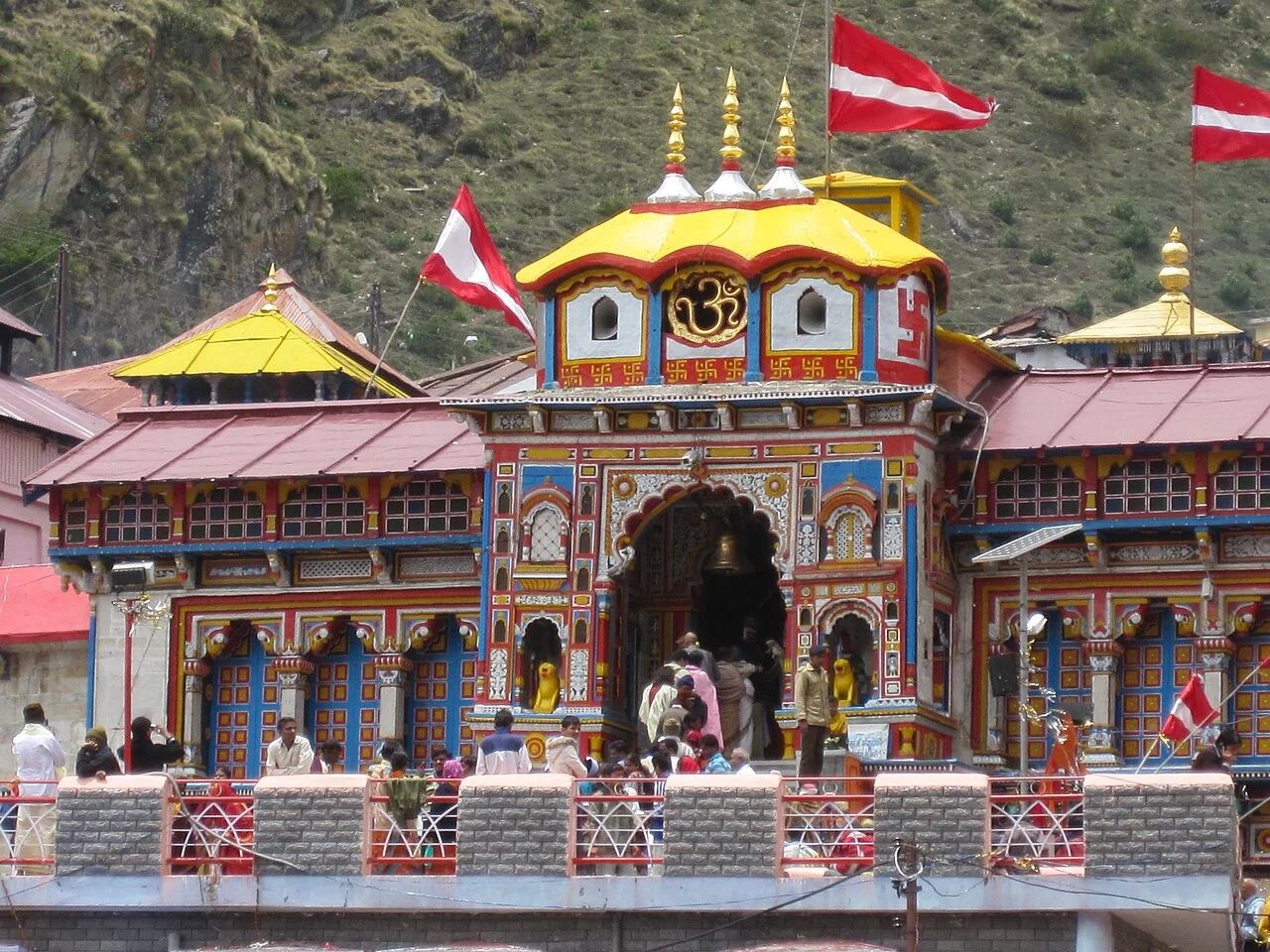
Badrinath belongs to both the national Char Dham and Uttarakhand Char Dham circuits, as well as Panch Badri. Tradition associates it with Nara–Narayana, Vishnu’s meditation and Lakshmi’s sheltering Badri tree. The shrine has a seasonal calendar, and winter worship follows its own arrangements. Nearby walking routes remain in the pilgrimage guide.
Mythological story & sacred tradition
Regional sacred tradition
Lakshmi becomes the sheltering Badri tree
One Badrinath legend tells of Vishnu absorbed in meditation while Lakshmi becomes a Badri tree to shelter him from the mountain weather. The image joins austerity with care: even divine meditation is surrounded by an act of protection. Other narratives honour Nara and Narayana’s penance in Badarikashrama.
Story sources: 2
What makes it special
The seated, meditative form of Vishnu and the high Alaknanda valley distinguish Badrinath from many royal or reclining Vishnu images.
Part of the Badri sacred landscape
The Badri shrines are connected with forms of Vishnu and ideas about sacred time. Their names, locations and worship traditions offer different ways of understanding the wider Badrinath region. Panch Badri and the larger Sapta Badri grouping are related but not identical lists.
Visiting and learning more
Begin with the linked authority for the shrine’s history, worship and visitor services. Check entry conditions, dress, photography and any reservation requirements before your visit. Opening times and special arrangements can change during major festivals.
Getting there
Badrinath
- Local railhead for the Garhwal approach
- Rishikesh railway station
- Major long-distance railway option
- Haridwar Junction
- Nearest airport
- Dehradun Airport, Jolly Grant (DED)
Other rail option: Yog Nagari Rishikesh railway station
Rishikesh is the local railhead used in the pilgrimage guidance; Haridwar is a major long-distance gateway. Yog Nagari Rishikesh is a separate station: check the station named on your ticket. Continue by road to the named approach; rail does not reach the shrine.
Travel source: Badarinath–Kedarnath Temple Committee · access and seasonal advice · Ministry of Tourism · Badrinath seasons and access
Official guide · badrinath-kedarnath.gov.in
Best time to visit
May–June (late spring/early summer) and September–October (autumn) are useful planning windows. High-altitude shrines have winter closures; travel only within the current announced opening dates and check road or trail conditions during monsoon.
Season & festival references: Badarinath–Kedarnath Temple Committee · access and seasonal advice · Ministry of Tourism · Badrinath seasons and access · Uttarakhand Tourism · shrine opening and route context
Reviewed 21 November 2026. Seasonal windows are guidance; confirm weather, access and the current event programme before booking.
Travel references: Temple committee: how to reach Badrinath
Arrival points apply to the named approach. A gateway is a practical travel option, not a claim that it is the closest stop. Confirm passenger services and the onward transfer before booking.
References & further reading
- Official temple website · badrinath-kedarnath.gov.in
Temple administration, government or heritage information for the shrine and current visitor arrangements. - Incredible India · Badrinath’s sacred legends
Documents the tradition and its cultural setting; it does not establish the story as a historical event.