Official website and visitor information
This is a place of worship as well as a heritage site. Confirm visiting access around the Sabbath and Jewish holy days; a festival listing does not guarantee tourist admission.
Kerala Tourism · Fort Kochi and Mattancherry access · Kerala Tourism · Paradesi Synagogue
A community beside the palace
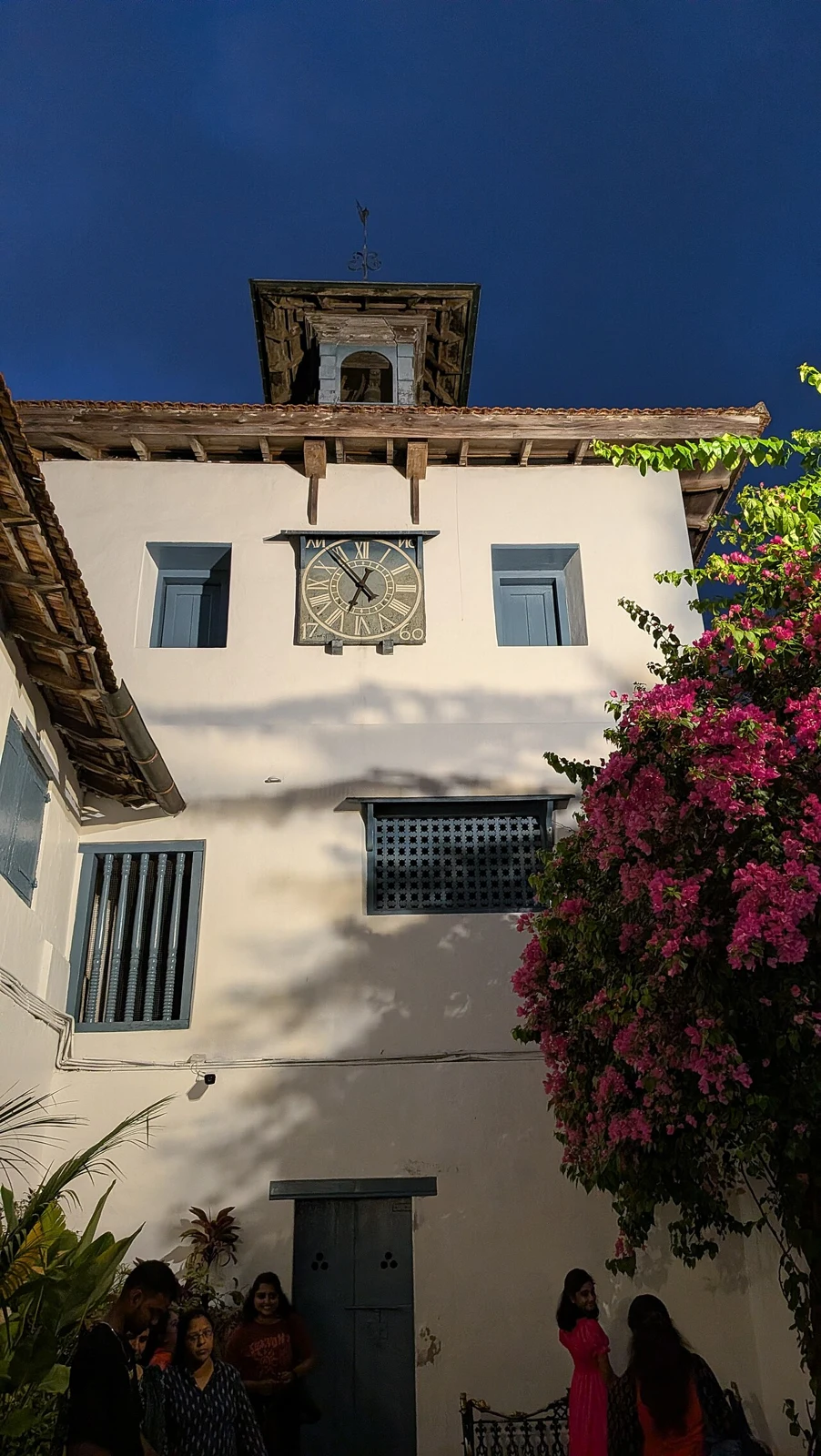
The Paradesi Synagogue in Mattancherry dates to 1568. Kerala Tourism connects its establishment with Jews arriving from overseas and land granted by the ruler of Cochin near his residence. The name Paradesi refers to foreigners; it describes this community’s particular history, not the whole history of Jews in Kerala.
The building experienced destruction and restoration during the seventeenth-century struggle between Portuguese and Dutch powers. Its story therefore brings together religious life, royal relationships and the wider Indian Ocean world. Nearby places of worship and the palace help place the synagogue within the fabric of Mattancherry rather than apart from it.
Heritage includes difficult histories
A serious account of the community also includes internal inequality. Kerala Tourism describes restrictions once imposed on the Meshuchrarim, freed former slaves and their descendants, and the campaign of Abraham Barak Salem against discriminatory practices. Remembering reform alongside coexistence makes the history more complete.
The synagogue is consequently more than an architectural curiosity. It offers a way to ask how migration, belonging, religious continuity and social change intersect. Read the history before visiting: it can prevent unfamiliar objects and spaces from becoming merely decorative details in a photograph.
Respect the religious calendar
Kerala Tourism’s visitor guidance lists closures on Fridays, Saturdays and Jewish holidays, and asks visitors to enter barefoot. Check current opening arrangements before making a special journey; the calendar and the needs of the congregation take precedence over a general sightseeing itinerary. Ask attendants about photography and any separate museum access. A synagogue is a place of Jewish prayer and community life, so avoid treating the presence or absence of a service as part of a promised tourism programme.
Getting there
Mattancherry, Kochi
- Local / nearest rail approach
- Ernakulam Junction
- Major long-distance railway option
- Ernakulam Junction
- Nearest airport / regional flight gateway
- Cochin International Airport, Kochi (COK)
Ernakulam Junction (Ernakulam South) is the local arrival point recommended by Kerala Tourism and a major long-distance station. The same station serves both local arrival and longer-distance journeys; a second minor station is not needed.
Travel source: Kerala Tourism · Fort Kochi and Mattancherry access · Kerala Tourism · Paradesi Synagogue
Kerala Tourism · Fort Kochi and Mattancherry access
Best time to visit
The cooler dry-season months are preferable for walking around Mattancherry; check worship-day access before travelling.
Season & festival references: Kerala Tourism · Fort Kochi and Mattancherry access · Kerala Tourism · Paradesi Synagogue
Reviewed 21 November 2026. Seasonal windows are guidance; confirm weather, access and the current event programme before booking.
Arrival points apply to the named approach. A gateway is a practical travel option, not a claim that it is the closest stop. Confirm passenger services and the onward transfer before booking.
Sources & further reading
Read the evidence and traditions behind this guide.
Official state tourism information · Google Maps · Explore sacred places