Official website and visitor information
This is an active mosque: respect prayer-time access, modest dress and instructions about footwear and photography. Confirm current visitor charges on site rather than relying on an old tariff.
Delhi Tourism · Jama Masjid · Ministry of Tourism · Delhi gateways
The mosque in its city
Jama Masjid belongs to the monumental world of the Mughal emperor Shah Jahan, whose Delhi building projects also included the Red Fort. Delhi Tourism dates the beginning of work to 1644. The mosque stands west of the fort, connecting the story of imperial architecture with a continuing religious life.
Its significance is not based on an epic episode or a relic narrative. The essential context is congregational prayer and the relationship between a mosque and its urban community. Looking from the surrounding streets towards the raised building helps explain why its gateways and minarets have such a strong presence in the Old Delhi skyline.
Look at scale and materials
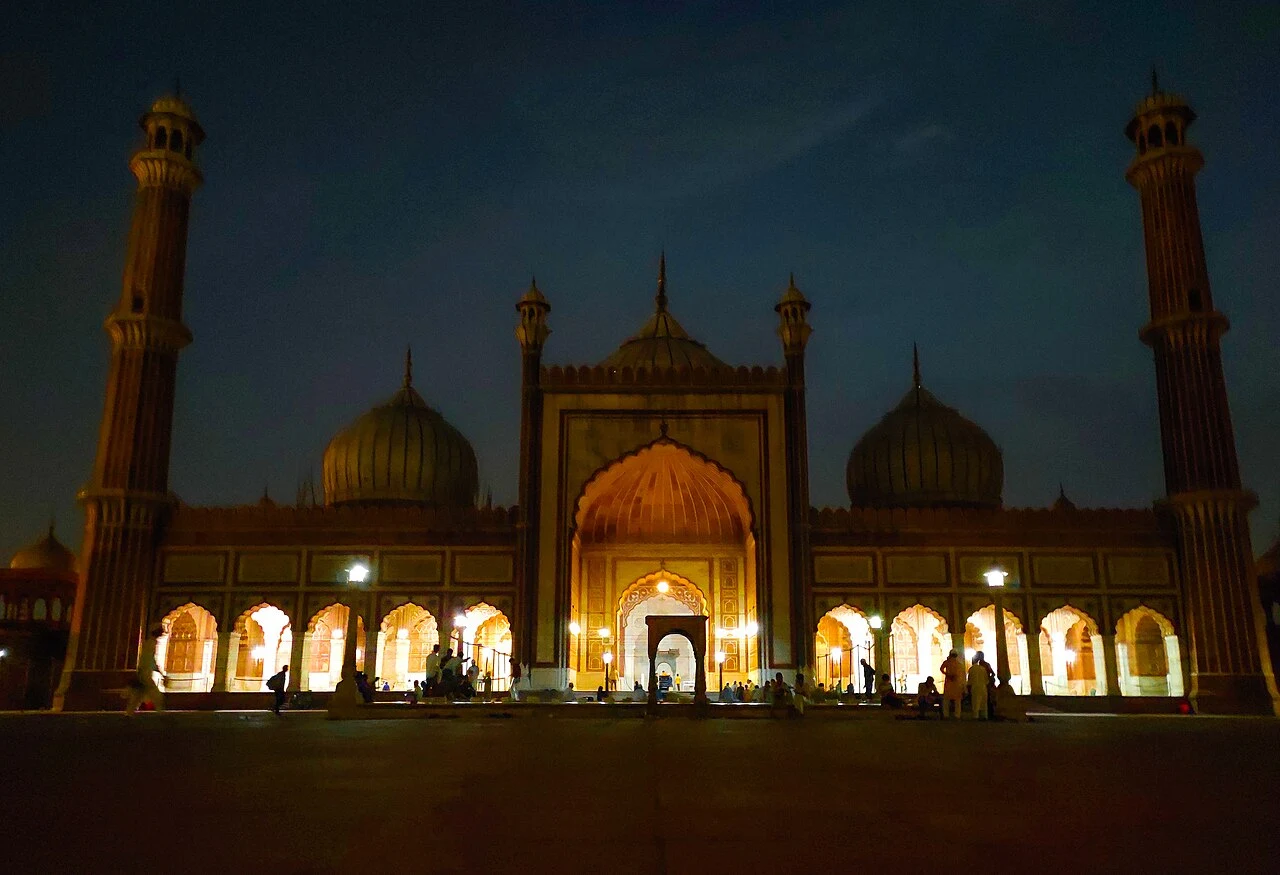
Delhi Tourism highlights three great gates and two tall minarets formed with red sandstone and white marble. The broad courtyard creates a striking change of pace after the close streets outside. Compare the overall symmetry with the repeated arches and alternating colours: the building communicates through rhythm and proportion as well as ornament.
For a rewarding visit, pause at a permitted viewpoint and trace how the gateways, open court and prayer building relate to one another. This is an architectural reading of the space, not an invitation to cross barriers or enter areas reserved for worship. A photograph of the façade records only one part of the experience.
Prayer access and sightseeing are different
The official Delhi Tourism page distinguishes visitor hours from prayer access, including restrictions after sunset. Check its current notice and instructions at the entrance instead of assuming that an open gate means sightseeing is permitted. Ask about dress, footwear, cameras and any fee before proceeding. Avoid moving through worshippers or treating a prayer as a performance. Leave enough flexibility in your itinerary for services and local crowd arrangements.
Getting there
Jama Masjid, Old Delhi
- Local / regional railway option
- Delhi Junction (Old Delhi)
- Major long-distance railway option
- New Delhi railway station
- Practical airport gateway
- Indira Gandhi International Airport, Delhi (DEL)
Confirm the train stop and onward road transfer before booking; railway options are practical approaches, not a surveyed ranking of every nearby station.
Travel source: Delhi Tourism · Jama Masjid · Ministry of Tourism · Delhi gateways
Best time to visit
The cooler winter season is more comfortable for Old Delhi walking; allow for winter fog and air-quality conditions. Summer afternoons can be very hot.
Festivals & occasions: Ramadan and the Eid observances bring major worship crowds. Dates follow the religious calendar and local announcements.
Season & festival references: Delhi Tourism · Jama Masjid · Ministry of Tourism · Delhi gateways
Reviewed 21 November 2026. Seasonal windows are guidance; confirm weather, access and the current event programme before booking.
Arrival points apply to the named approach. A gateway is a practical travel option, not a claim that it is the closest stop. Confirm passenger services and the onward transfer before booking.
Sources & further reading
Read the evidence and traditions behind this guide.
Official Delhi Tourism information · Google Maps · Explore sacred places