Official website and visitor information
The park is not a year-round walk. Follow Forest Department access decisions and do not confuse a Hemkund Sahib pilgrimage arrangement with permission to enter the national park.
Official destination and visitor guide · Uttarakhand Tourism · flowering season
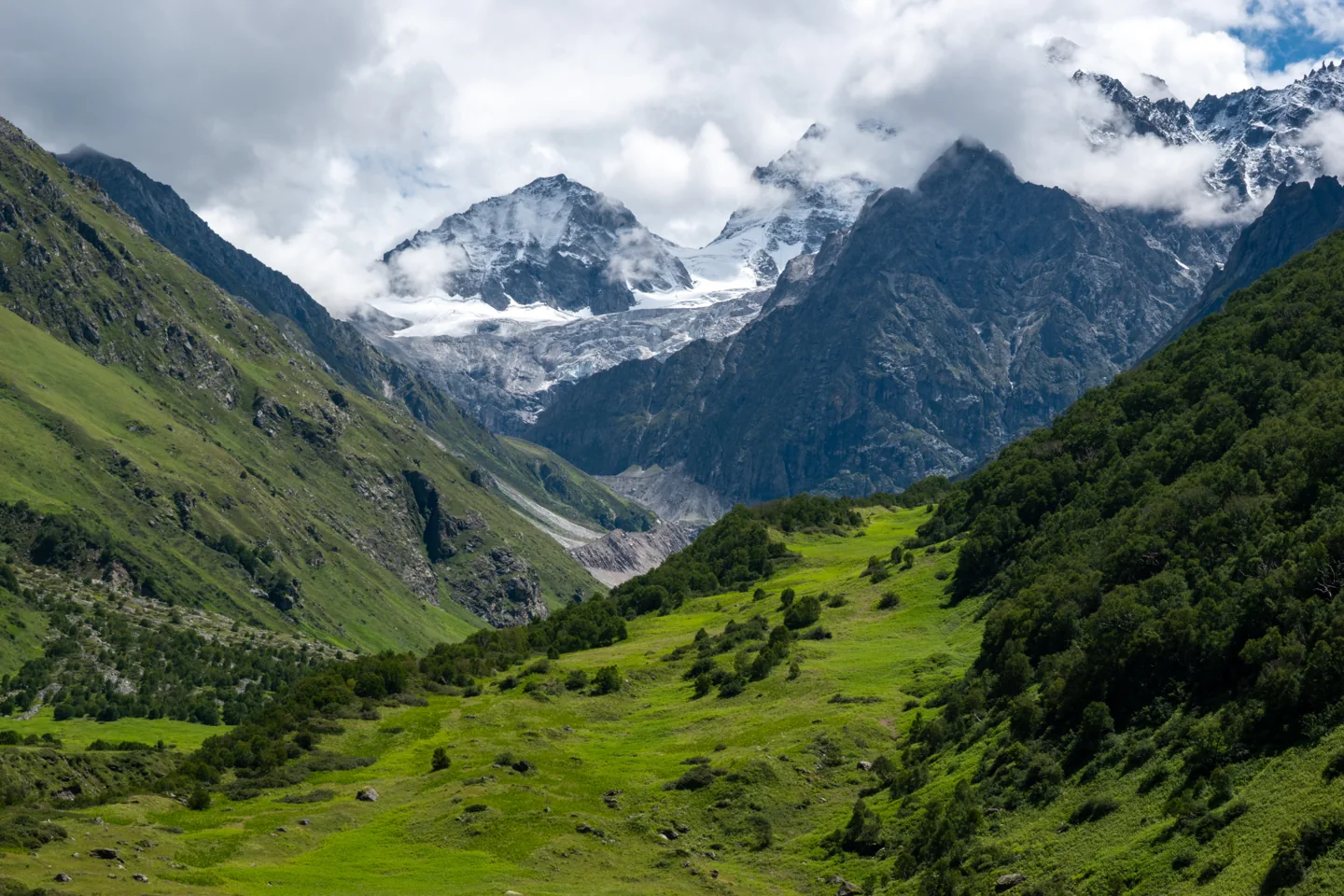
A living Himalayan landscape
The Valley of Flowers National Park in Chamoli district is part of the UNESCO World Heritage property called Nanda Devi and Valley of Flowers National Parks. Its alpine meadows contrast with the more rugged mountain wilderness of Nanda Devi. The flowers grow within an ecosystem shaped by altitude and seasonal conditions; they are not a planted display arranged to remain at its peak for visitors. Looking closely at leaves, small flowers and streams can be as rewarding as a broad view of the valley.
Why the biodiversity matters
UNESCO recognises the valley’s diverse alpine flora and the wider property’s importance for Himalayan wildlife. Its setting connects different mountain habitats and plant communities. Flowering changes through the season, so there is no single guaranteed view or colour palette. A photograph from another year is a record of that moment. Keep to permitted paths and leave plants where they grow: picking a flower or leaving the trail for a photograph diminishes the very habitat that makes the place special.
An approach through Ghangaria
Uttarakhand Tourism identifies Ghangaria as the walking base for the Valley of Flowers and nearby Hemkund Sahib. These are separate destinations with different purposes and access arrangements. Travelling to the valley should be planned as a mountain walk, not a roadside sightseeing stop. Check the state tourism route description and current park notices before committing to dates. This guide links to official route information rather than treating a commercial trekking package as the government booking authority.
Let conditions shape the visit
Allow time for a gradual approach and for changes in mountain weather. Confirm the current opening period, entry arrangements and permitted walking hours locally; a season mentioned in an older guide is not confirmation that the route is open today. Return within the park’s rules, carry out litter and avoid disturbing wildlife. Do not promise yourself rare-animal sightings: protected habitat is valuable even when its inhabitants stay out of view. The map identifies the national park, not a navigation track or a substitute for local route guidance.
Getting there
Govindghat approach
- Local railway option
- Rishikesh railway station
- Major long-distance railway option
- Haridwar Junction
- Airport gateway
- Dehradun Airport, Jolly Grant (DED)
Rail and airport arrivals are in the foothills; allow the long road journey to the trek approach and the walk through Ghangaria.
Travel source: Official destination and visitor guide · Uttarakhand Tourism · flowering season
Official destination and visitor guide
Best time to visit
July–September is the main flowering period. Entry is limited to the park’s notified summer–autumn opening season; monsoon road and trail conditions need checking.
Season & festival references: Official destination and visitor guide · Uttarakhand Tourism · flowering season
Reviewed 21 November 2026. Seasonal windows are guidance; confirm weather, access and the current event programme before booking.
Arrival points apply to the named approach. A gateway is a practical travel option, not a claim that it is the closest stop. Confirm passenger services and the onward transfer before booking.
Sources & further reading
Read the evidence and traditions behind this guide.
Official information & map
Official information / read more · Open location in Google Maps
Sources reviewed in October 2026. Check current conditions, access rules and local notices before travel. The map is a locator, not a confirmed entrance or walking route.