Official website and visitor information
The Tiger Reserve requires a booked registered boat. Confirm whether the departure is Godkhali or Dhamakhali and the included entry arrangements before arriving.
Official destination and visitor guide · West Bengal Sundarban Affairs · visitor season
What to notice from the water
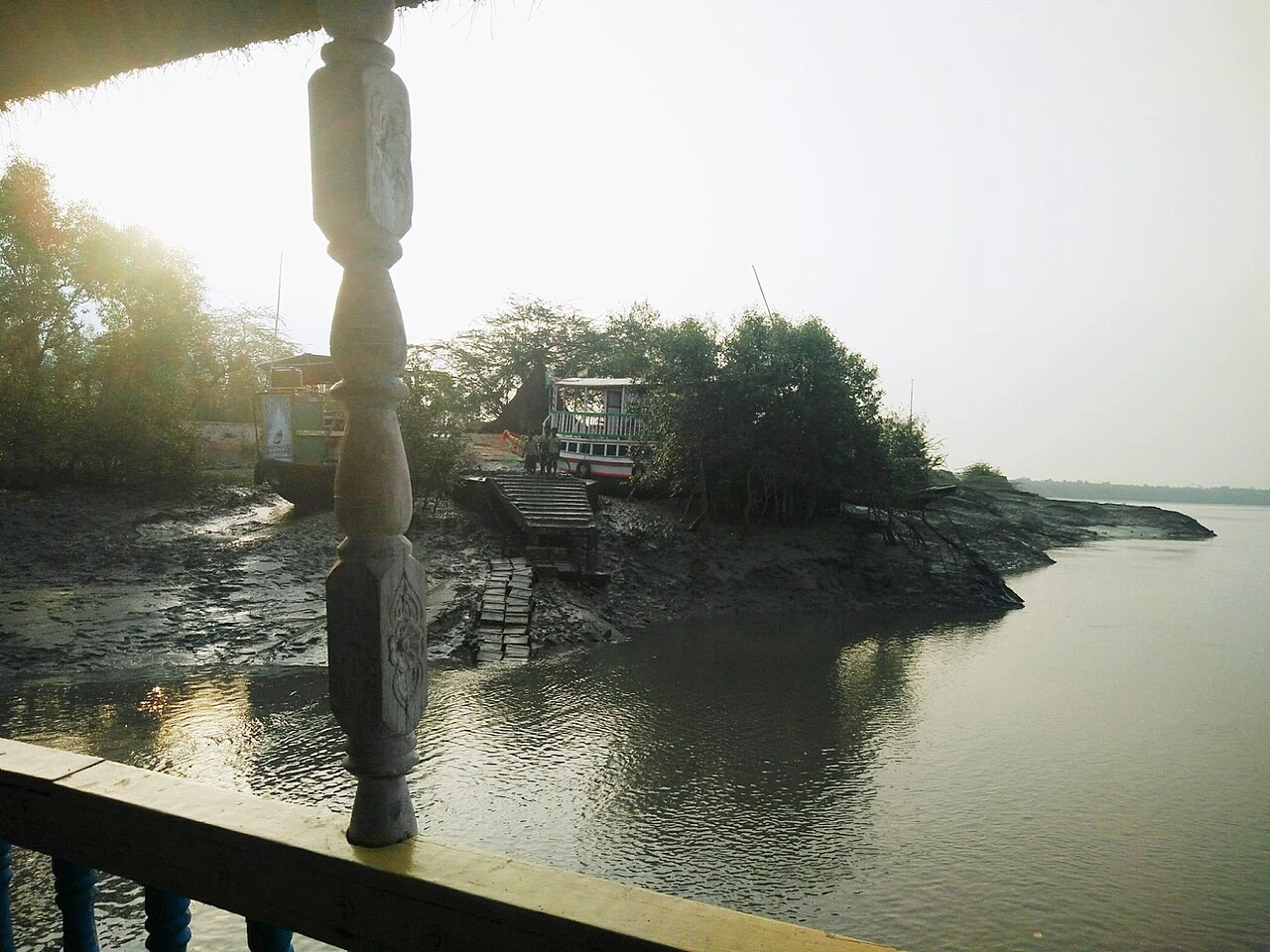
The tiger is an important part of the ecosystem, but a sighting is uncertain. Mangrove roots, mudbanks, birds and changes in the channel itself are central to understanding the place. The forests help shelter coastlines and provide habitat for many organisms. A good excursion leaves space for these quieter observations rather than treating the river journey as empty time between watchtowers.
Boats, entry points and actual access
The tiger reserve’s official guide explains that visitors enter in registered boats. Godkhali and Dhamakhali are common boarding points, but the actual departure location depends on the arranged trip. Confirm the boat, guide, permitted itinerary and safety equipment before travel. The map below identifies Godkhali as one orientation point; it does not imply that every tour departs there or that a public ferry authorises entry into protected forest.
Respect the forest and the people beside it
The reserve’s rules require approved routes, quiet inside the forest and appropriate visitor behaviour. Do not discard waste, use drones, swim or step ashore outside authorised places. Ask about weather and operational restrictions close to departure; river travel can be affected by changing conditions. When visiting settlements, seek permission before photographing residents and support locally made goods where appropriate. Human livelihoods are part of the wider landscape, while the protected core remains subject to forest rules. Read the reserve’s current instructions before choosing an operator.
Getting there
Godkhali access to the Indian Sundarbans
- Local railway option
- Canning railway station
- Major long-distance railway option
- Sealdah railway station
Take a local train to Canning or arrive at Sealdah and continue towards the operator’s jetty. The reserve itself is reached by boat.
Travel source: Official destination and visitor guide · West Bengal Sundarban Affairs · visitor season
Official destination and visitor guide
Best time to visit
October–March is the preferred cooler season. Boat travel remains dependent on local weather and tidal conditions.
Season & festival references: Official destination and visitor guide · West Bengal Sundarban Affairs · visitor season
Reviewed 21 November 2026. Seasonal windows are guidance; confirm weather, access and the current event programme before booking.
Arrival points apply to the named approach. A gateway is a practical travel option, not a claim that it is the closest stop. Confirm passenger services and the onward transfer before booking.
Sources & further reading
Read the evidence and traditions behind this guide.
Official information & map
Official visitor information / read more · Open location in Google Maps
Official sources reviewed in October 2026. Recheck access and operational notices before travel.