Official website and visitor information
This monument appears in the Ministry of Culture’s list of ASI ticketed monuments. Visitor categories and any additional admission are determined by the booking portal.
Ministry of Culture · ticketed monuments
Use the ASI portal to select this monument, the date and the applicable visitor category. Check the current admission price and any separate museum or special-access ticket before paying.
A new capital takes shape
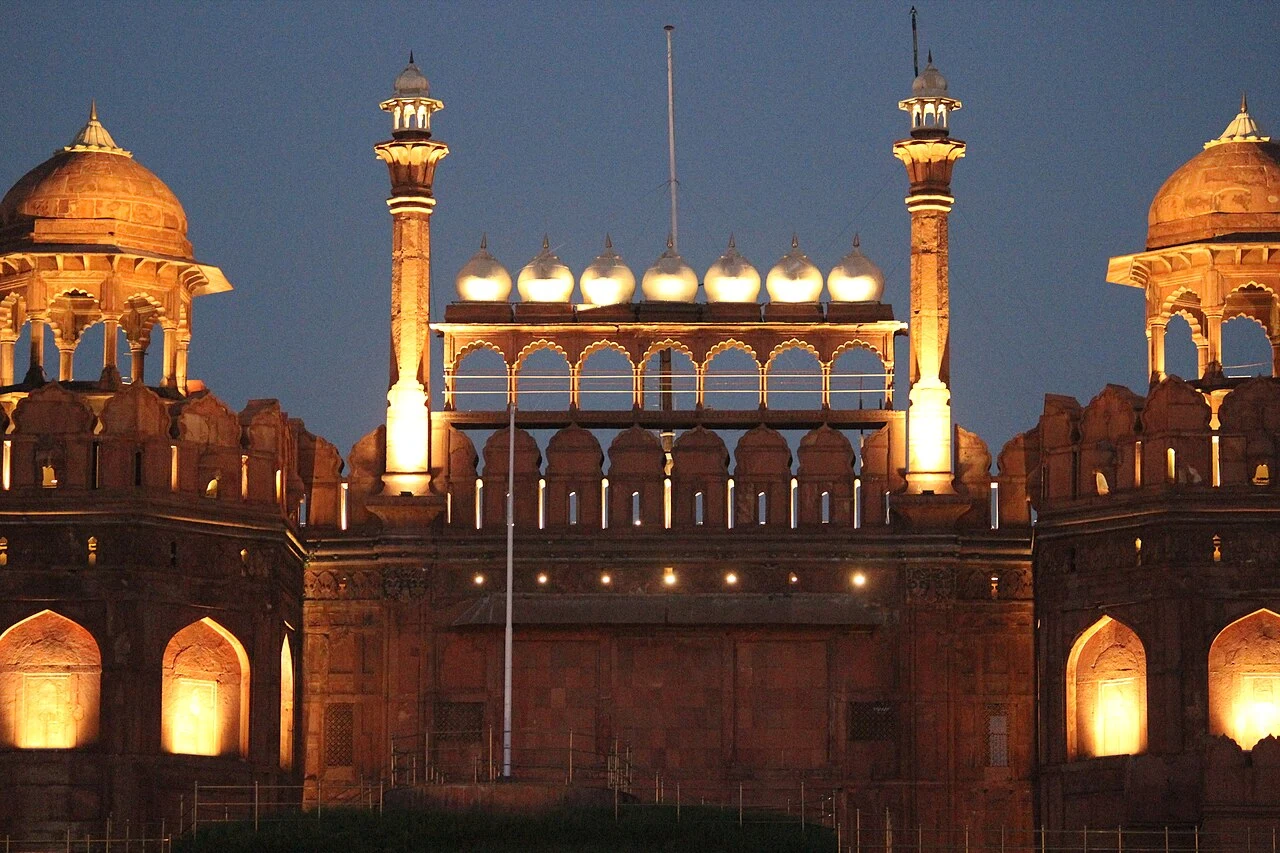
The Red Fort was the palace-fort of Shahjahanabad, the capital established by Mughal emperor Shah Jahan. Its red sandstone enclosure creates a powerful first impression, but the inner buildings reveal a more intimate world of pavilions, gardens and carefully directed water. The UNESCO property also includes neighbouring Salimgarh, an older fort dating to 1546. These are connected histories rather than a single building constructed at one moment.
What to look for inside
UNESCO highlights the Nahr-i-Behisht, a water channel linking the private pavilions, and the combination of Persian, Timurid and Indian architectural traditions. Try reading the layout as a sequence: movement from public approach to increasingly restricted royal space was part of how the court displayed authority. Water and gardens were elements of both comfort and symbolic design. The complex subsequently experienced alteration and loss, so the surviving buildings should not be mistaken for the entire original palace.
Objects make the history more personal
Delhi Tourism’s museum guide describes paintings, manuscripts, inscriptions and material associated with the last Mughal emperor, Bahadur Shah Zafar. Such objects can connect monumental architecture with individual lives and the upheaval of 1857. Consult the on-site labels and current museum information: displays and access may change. Distinguish original buildings, later interventions and reconstructed explanations when reading the site.
Planning a thoughtful visit
Allow time for both architecture and interpretation rather than treating the entrance façade as the whole attraction. Check the official visitor information for security restrictions and museum access before setting out. Bring a plan for sun exposure and walking, and ask specifically about step-free routes when relevant. The links below support further reading and practical planning; the map identifies the fort, not a guaranteed open entrance.
Getting there
Red Fort, Old Delhi
- Local railway option
- Delhi Junction (Old Delhi)
- Major long-distance railway option
- New Delhi railway station
- Airport gateway
- Indira Gandhi International Airport, Delhi (DEL)
These are city railway gateways, not Metro stations or a measured closest-stop ranking. Use local transport for the final approach.
Travel source: Official destination and visitor guide · Incredible India · Delhi travel information
Official destination and visitor guide
Best time to visit
October–March: the cooler Delhi season is generally better for outdoor sightseeing; check local weather and air-quality advisories.
Season & festival references: Official destination and visitor guide · Incredible India · Delhi travel information
Reviewed 21 November 2026. Seasonal windows are guidance; confirm weather, access and the current event programme before booking.
Arrival points apply to the named approach. A gateway is a practical travel option, not a claim that it is the closest stop. Confirm passenger services and the onward transfer before booking.
Sources & further reading
Read the evidence and traditions behind this guide.
Official information & map
Official visitor information / read more · Open location in Google Maps
Official sources reviewed in October 2026. Recheck access and operational notices before travel.