Official website and visitor information
Kaziranga has several safari ranges, not a single interchangeable entrance. Match your booking, reporting point and accommodation to the selected range.
Official destination and visitor guide · Government of India · Kaziranga access
Why the landscape matters
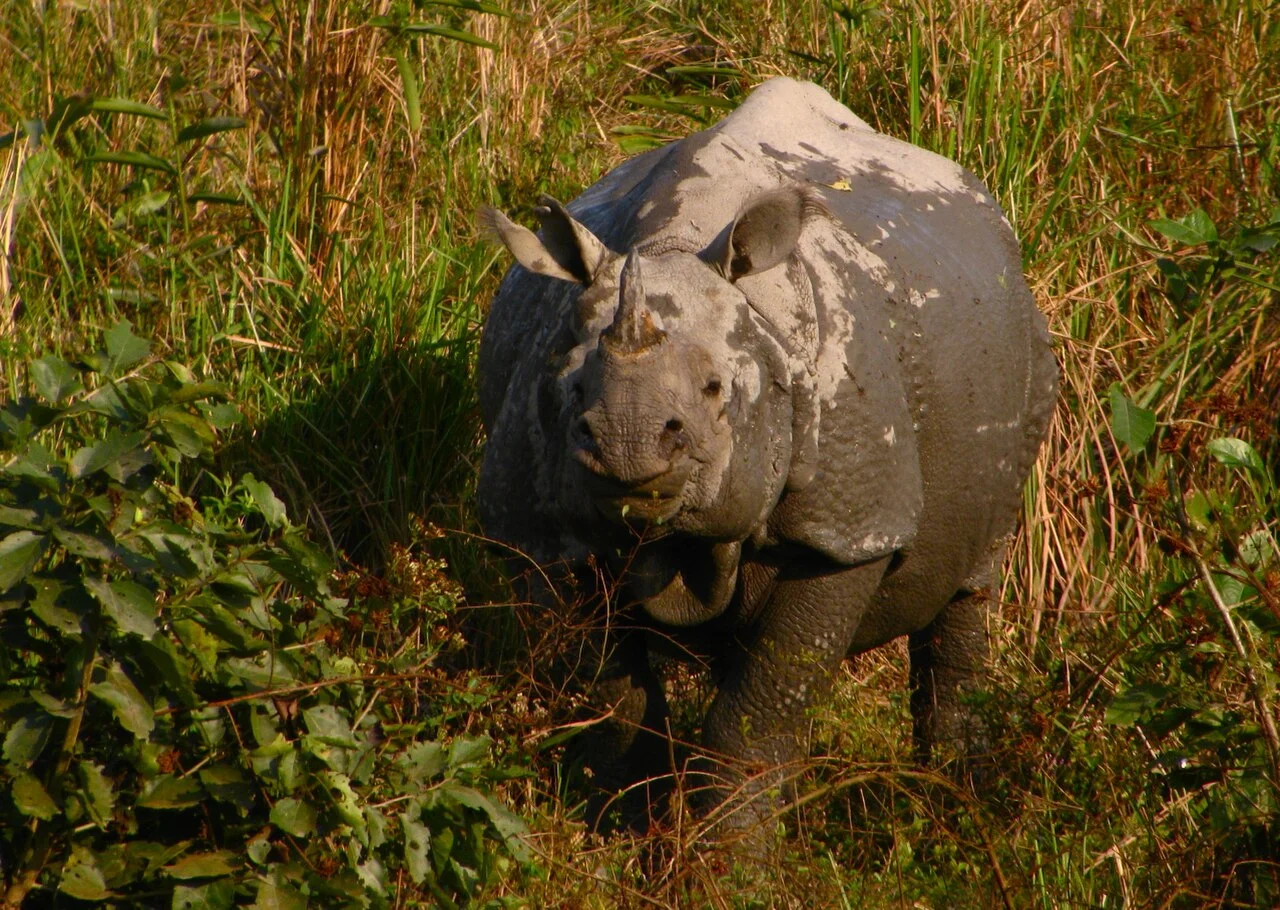
Kaziranga is famous for the greater one-horned rhinoceros, but its significance extends beyond a single animal. UNESCO describes a Brahmaputra floodplain of tall grasslands, shallow water bodies and wooded patches. River movement, deposition and flooding reshape this mosaic. Conservation here involves protecting an ecological process as well as protecting individual species.
What makes Kaziranga special
The park is an important stronghold for rhinos and also supports elephants, wild water buffalo, tigers and many birds. Avoid judging a visit only by whether a tiger appears. Watching animals feed, noticing tracks from the vehicle or comparing wetland birds can be equally revealing. A guide’s explanation of how grassland, water and woodland fit together can turn a distant sighting into a much more memorable encounter.
Choose a range and travel realistically
Assam Tourism identifies the central, western, eastern and Burapahar ranges as distinct visitor areas. A booking for one range does not mean unrestricted access to the whole park. Discuss the actual entrance, vehicle arrangement and authorised route before finalising transport. Opening decisions depend on local conditions, so do not assume that dates copied from an older article guarantee access. The official tourism and forest pages below are the appropriate starting points for current arrangements.
Travel with the animals’ space in mind
Keep expectations flexible: sightings cannot be guaranteed, and a responsible operator should not promise close contact. Follow the guide and forest staff, remain on authorised routes and avoid noise, feeding or litter. Bring binoculars if available and give other visitors room to observe. The map below points to the Kohora visitor area for orientation, not permission to enter a protected area independently. Planning around the confirmed range and its reporting point is more useful than simply navigating towards the centre of the national park.
Getting there
Kohora entrance, Kaziranga
- Local railway option
- Jakhalabandha railway station (Kohora approach)
- Major long-distance railway option
- Furkating Junction
- Airport gateway
- Jorhat Airport (JRH)
Choose the safari range before choosing the railhead: Jakhalabandha serves the Kohora approach; Furkating is a mainline alternative.
Travel source: Official destination and visitor guide · Government of India · Kaziranga access
Official destination and visitor guide
Best time to visit
November–April is the usual wildlife-visiting season. The park’s notified opening and usable ranges depend on flood and road conditions.
Season & festival references: Official destination and visitor guide · Government of India · Kaziranga access
Reviewed 21 November 2026. Seasonal windows are guidance; confirm weather, access and the current event programme before booking.
Arrival points apply to the named approach. A gateway is a practical travel option, not a claim that it is the closest stop. Confirm passenger services and the onward transfer before booking.
Sources & further reading
Read the evidence and traditions behind this guide.
Official information & map
Official visitor information / read more · Open location in Google Maps
Official sources reviewed in October 2026. Recheck access and operational notices before travel.