Official website and visitor information
Amber Fort uses Rajasthan’s monument booking arrangements. It is not an ASI ticket booking for the entire Jaipur city circuit.
Official destination and visitor guide · RTDC · seasonal guidance
Two places, two kinds of urban thinking
Amber and Jaipur should be read together without treating them as one monument. Jaipur was founded in 1727 under Sawai Jai Singh II. UNESCO recognises its planned urban form, commercial streets, large public squares and continuing traditions of craft. Amber is the earlier hillside palace setting outside that city. Moving between them reveals a shift from a fortified landscape to a carefully organised urban centre.
What makes Amber memorable
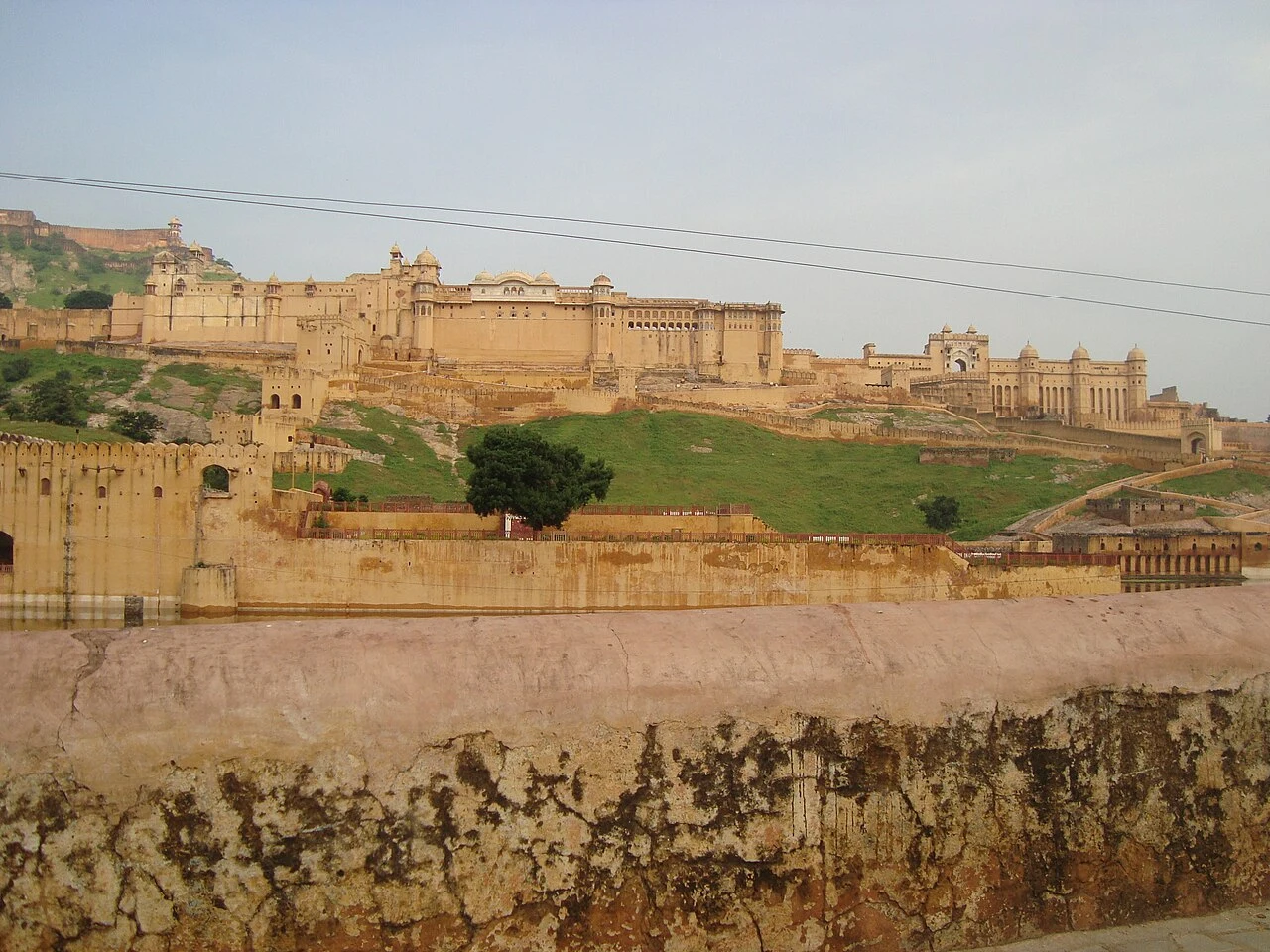
Rajasthan Tourism highlights the public audience hall, mirror-work interiors and the connection with Jaigarh through tunnels. Notice how courts, gateways and changing levels regulate movement through the palace. The strong outer appearance gives way to decorated inner spaces. Rather than rushing through a checklist, choose a few details—mirrors, painted surfaces or a framed view—and ask how light, privacy and ceremony shaped their design. Access to individual sections can change.
Read Jaipur at street level
UNESCO’s account makes the living city central to its significance. Look at the relationship between shopfronts, broad streets and the squares known as chaupars. Crafts and trade are part of the city’s heritage, not merely souvenirs beside it. A respectful walk includes asking before photographing people at work and recognising that homes and shops continue to serve residents. Jaipur’s urban World Heritage property is distinct from Amber’s inclusion in the separate Hill Forts of Rajasthan property.
Planning a manageable route
Give the hill palace and old city separate blocks of time; traffic and the distance between them make a hurried single stop unsatisfying. Check official booking and access arrangements for Amber. For anyone with mobility limitations, ask about slopes and steps in advance rather than assuming a palace is step-free. The map below points to Amber; use Rajasthan Tourism to plan the wider city visit.
Getting there
Jaipur and Amber Fort
- Local railway option
- Jaipur Junction
- Major long-distance railway option
- Jaipur Junction
- Airport gateway
- Jaipur International Airport (JAI)
Jaipur Junction is the recommended city gateway and major rail hub; continue by road to Amber. The same station serves both local arrival and longer-distance journeys; a second minor station is not needed.
Travel source: Official destination and visitor guide · RTDC · seasonal guidance
Official destination and visitor guide
Best time to visit
October–March: Rajasthan’s cooler months are generally most comfortable for forts and city walks.
Season & festival references: Official destination and visitor guide · RTDC · seasonal guidance
Reviewed 21 November 2026. Seasonal windows are guidance; confirm weather, access and the current event programme before booking.
Arrival points apply to the named approach. A gateway is a practical travel option, not a claim that it is the closest stop. Confirm passenger services and the onward transfer before booking.
Sources & further reading
Read the evidence and traditions behind this guide.
Official information & map
Official visitor information / read more · Open location in Google Maps
Official sources reviewed in October 2026. Recheck access and operational notices before travel.