Official website and visitor information
Three temples, one World Heritage property
The Great Living Chola Temples comprise Brihadisvara at Thanjavur, Brihadisvara at Gangaikondacholapuram and Airavatesvara at Darasuram. These eleventh- and twelfth-century temples reflect different generations of Chola royal patronage. Thanjavur’s temple was commissioned by Rajaraja I and completed around 1010. The Ministry of Tourism’s account identifies its dedication to Shiva and its importance within the larger Chola architectural tradition. These are three separate places, not three buildings within a single enclosure.
Begin with the tower at Thanjavur
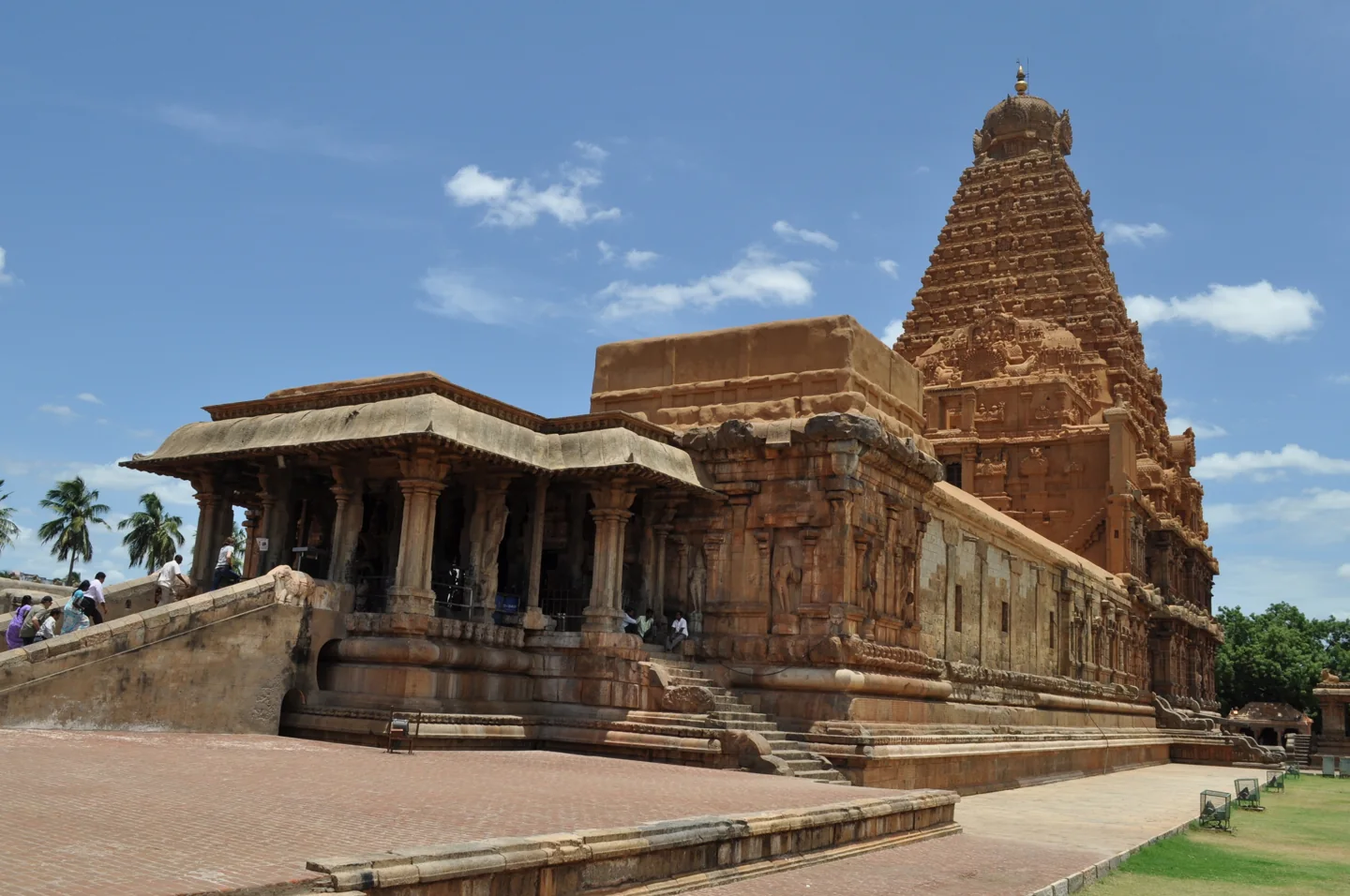
The dominant vimana rises above the sanctum, distinct from the entrance gateways. At ground level, look for the relationship between the shrine, Nandi pavilion, halls and enclosing spaces. Incredible India highlights the temple’s inscriptions, paintings and monumental Nandi, widening the story beyond engineering alone. Its architecture can be read as a record of patronage, artistic skill and worship. Claims that the temple casts no shadow should not replace observation or a sourced explanation of its design.
Compare rather than rank
UNESCO contrasts the strong profile of Thanjavur’s tower with the more curved form at Gangaikondacholapuram, associated with Rajendra I. Darasuram’s Airavatesvara, built under Rajaraja II, works at a different scale and includes an elaborately carved, chariot-shaped front hall. Looking at these differences makes a three-site journey worthwhile: each develops a shared architectural language in its own way. A smaller building can reward attention just as richly as a taller one.
Why the word living matters
UNESCO describes continuing rituals based on Agamic traditions, alongside festivals, processions and craft practices. The temples are therefore places of worship as well as protected monuments. Leave space for devotees, follow photography and access instructions, and confirm opening arrangements at each site. Plan travel between the towns instead of treating the heritage listing as a single stop. Start with the official Thanjavur guide below; use the UNESCO record to explore all three components and their distinctive features.
Getting there
Thanjavur, Brihadisvara Temple
- Local railway option
- Thanjavur Junction
- Major long-distance railway option
- Tiruchirappalli Junction
- Airport gateway
- Tiruchirappalli International Airport (TRZ)
These arrival points apply to Brihadisvara at Thanjavur. The other Great Living Chola Temple sites require separate road planning.
Travel source: Official destination and visitor guide · Government of Tamil Nadu · regional visitor guide
Official destination and visitor guide
Best time to visit
October–March is a practical cooler-season window for the Thanjavur heritage circuit.
Season & festival references: Official destination and visitor guide · Government of Tamil Nadu · regional visitor guide
Reviewed 21 November 2026. Seasonal windows are guidance; confirm weather, access and the current event programme before booking.
Arrival points apply to the named approach. A gateway is a practical travel option, not a claim that it is the closest stop. Confirm passenger services and the onward transfer before booking.
Sources & further reading
Read the evidence and traditions behind this guide.
Official information & map
Official information / read more · Open location in Google Maps · Map: Gangaikondacholapuram · Map: Darasuram
Sources reviewed in October 2026. Confirm current visitor access with the responsible authority before travelling.