Official website and visitor information
The story behind the gateway
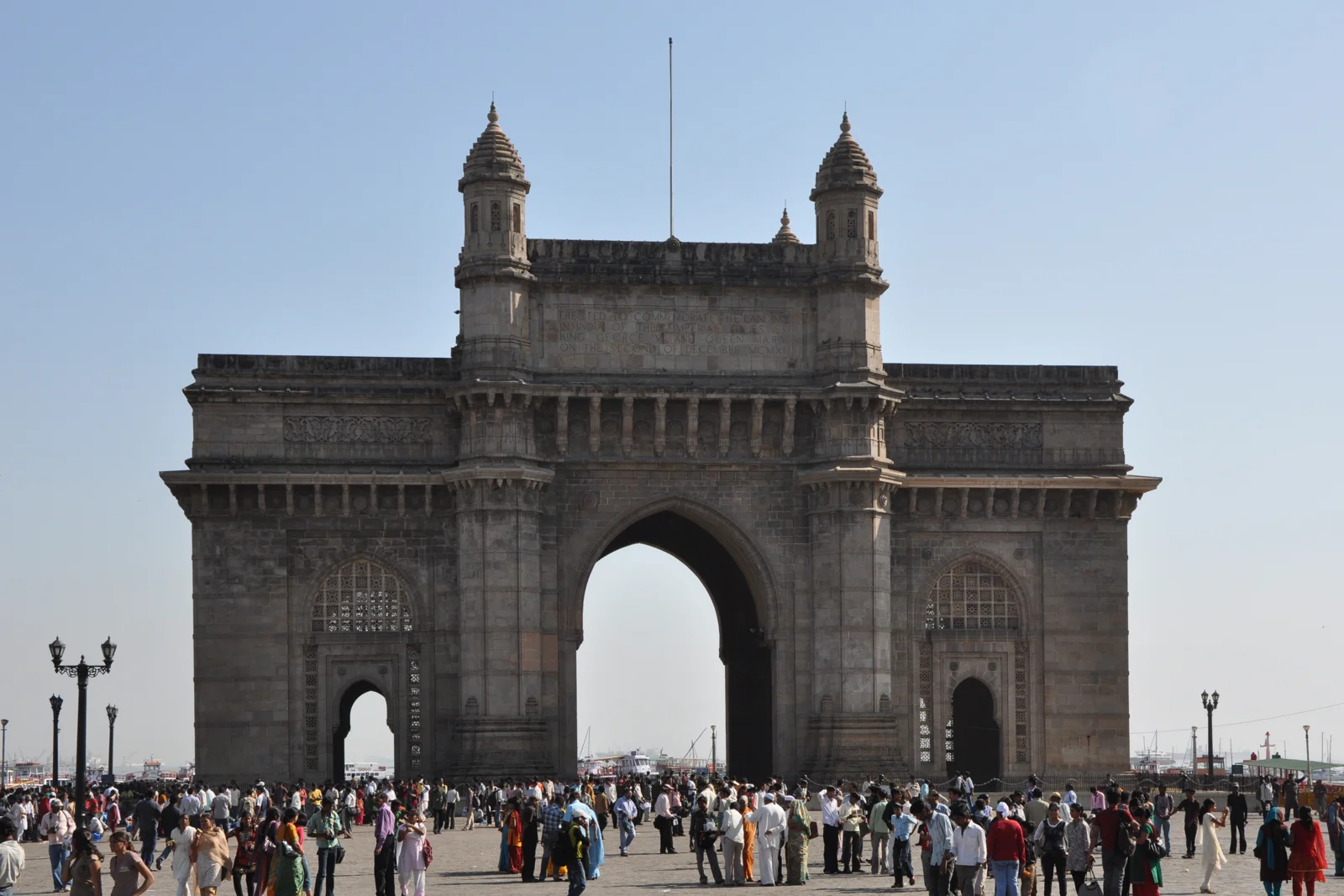
At Apollo Bunder in South Mumbai, the Gateway of India faces the Arabian Sea. It was commissioned to commemorate the 1911 visit of King George V and Queen Mary, when Mumbai was known as Bombay under British rule. Architect George Wittet’s final design was approved in 1914, and the monument was completed in 1924. The arch therefore commemorates the royal visit; it was not already standing in its finished form when the royal couple arrived.
The Mumbai City district administration describes its later use as a ceremonial entrance for viceroys and governors. Its origins belong to documented colonial history rather than a scriptural or mythological account. Read the district administration’s historical overview.
What makes its architecture special
The district’s heritage account identifies the 26-metre-high basalt arch as Indo-Saracenic architecture. Incredible India describes a design combining Indian, Islamic and Western architectural elements. Notice how the large central opening, smaller arches, decorative surfaces and domed turrets work together: the outline is memorable from a distance, while the details reward a slower look.
Try comparing the broad silhouette with the smaller carved patterns. A photograph records its shape, but looking from more than one angle helps reveal the depth of the openings and the relationship between the monument and the waterfront.
A place to begin exploring Mumbai
The national tourism guide records the formal unveiling on 4 December 1924 by the Earl of Reading. Today it presents the Gateway as one of Mumbai’s defining landmarks and a departure point for ferries towards the Elephanta Caves. The harbour setting is part of the experience: the monument makes sense as an entrance approached from the sea, not simply as an isolated arch.
The Gateway of India is in Mumbai, Maharashtra. India Gate is a different monument in New Delhi; check the city name when searching for directions or planning an itinerary.
Planning your visit
Use the map below to locate the monument at Apollo Bunder. Allow time to walk, look closely and pause by the waterfront, rather than treating the visit only as a photograph stop. Keep pedestrian routes clear and follow on-site security directions.
If you plan an Elephanta excursion, check current ferry operations, weather conditions, the return service and the cave site’s opening arrangements separately. A monument information page does not confirm a ferry booking. The official links below provide further reading; confirm current access notices before travelling. Ask about step-free access and any assistance you need in advance.
Getting there
Gateway of India, Mumbai
- Local railway option
- Churchgate railway station
- Major long-distance railway option
- Chhatrapati Shivaji Maharaj Terminus
Churchgate serves suburban Western Railway trains; CSMT is a major long-distance terminus.
Travel source: Official destination and visitor guide · Maharashtra Tourism · Mumbai · Mumbai municipal visitor information
Official destination and visitor guide
Best time to visit
October–February: cooler, drier weather is preferable for Mumbai walks. Monsoon rain can affect outdoor and boat plans.
Season & festival references: Official destination and visitor guide · Maharashtra Tourism · Mumbai · Mumbai municipal visitor information
Reviewed 21 November 2026. Seasonal windows are guidance; confirm weather, access and the current event programme before booking.
Arrival points apply to the named approach. A gateway is a practical travel option, not a claim that it is the closest stop. Confirm passenger services and the onward transfer before booking.
Sources & further reading
Read the evidence and traditions behind this guide.
Official information & map
Official visitor information / read more · Open location in Google Maps
Sources reviewed on 21 October 2026. Recheck access and travel arrangements before your visit.
Photograph by Joe Ravi, original on Wikimedia Commons, licensed under CC BY-SA 3.0. Resized and converted to WebP; responsive display may crop. The adapted photograph retains that licence.
